Middle East Conflict Drives Brent Crude Above $100 as Supply Concerns Mount
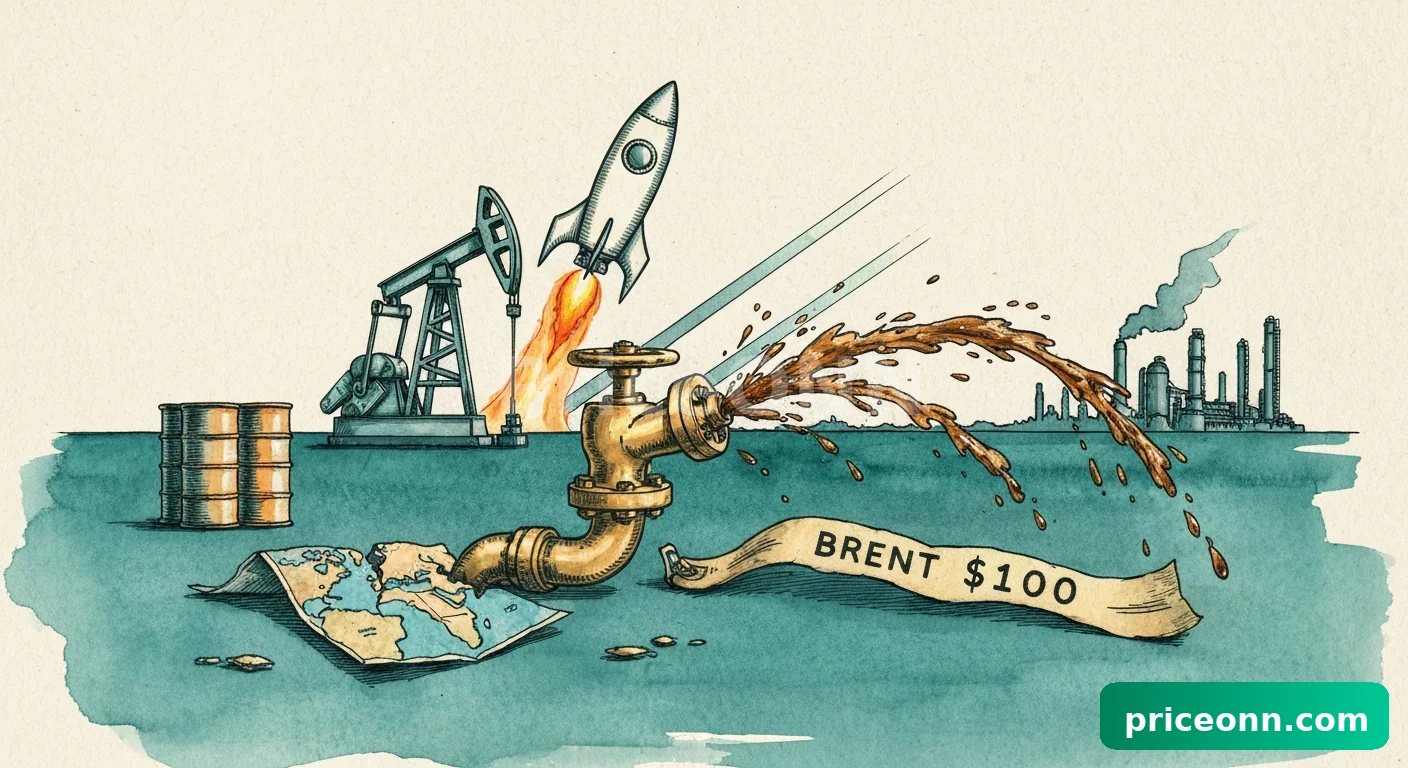
Brent crude oil has broken above the $100 per barrel mark, trading as high as $101.96, a level not seen in years, as geopolitical tensions in the Middle East intensify and supply disruptions ripple through the market.
Market Context
The surge in oil prices comes amid heightened conflict in the Middle East, specifically involving Iran and the United States. Recent events, including reported attacks on Iran's Kharg Island and disruptions to shipping in the Strait of Hormuz, have fueled concerns about potential supply shortages. These events are layered on top of existing concerns about global oil production and inventories, creating a perfect storm for price volatility.
The price of West Texas Intermediate (WTI) crude is also climbing, trading at $97.22 per barrel, up more than $7 week-over-week. Market data indicates that the number of active drilling rigs in the United States has seen a slight increase, with the total rig count reaching 553. Oil rigs specifically rose by 1 to 412. Despite this increase, the overall rig count remains below year-ago levels, suggesting a cautious approach by US producers.
Analysis & Drivers
Several factors are contributing to the current market dynamics. The most significant is the escalating conflict in the Middle East. The U.S. military has reportedly targeted military facilities on Iran's Kharg Island, a critical hub for Iranian oil exports. While oil infrastructure was reportedly spared, the threat of further action looms large, particularly if Iran disrupts shipping in the Strait of Hormuz.
The Strait of Hormuz is a vital chokepoint through which approximately 20% of the world's oil supply flows. Any disruption to this waterway could have significant consequences for global energy markets. The destruction of much of Iran's navy by the United States since late February has done little to ease concerns, as Iran can still disrupt traffic through asymmetric warfare tactics using the Islamic Revolutionary Guards Corps (IRGC) naval forces.
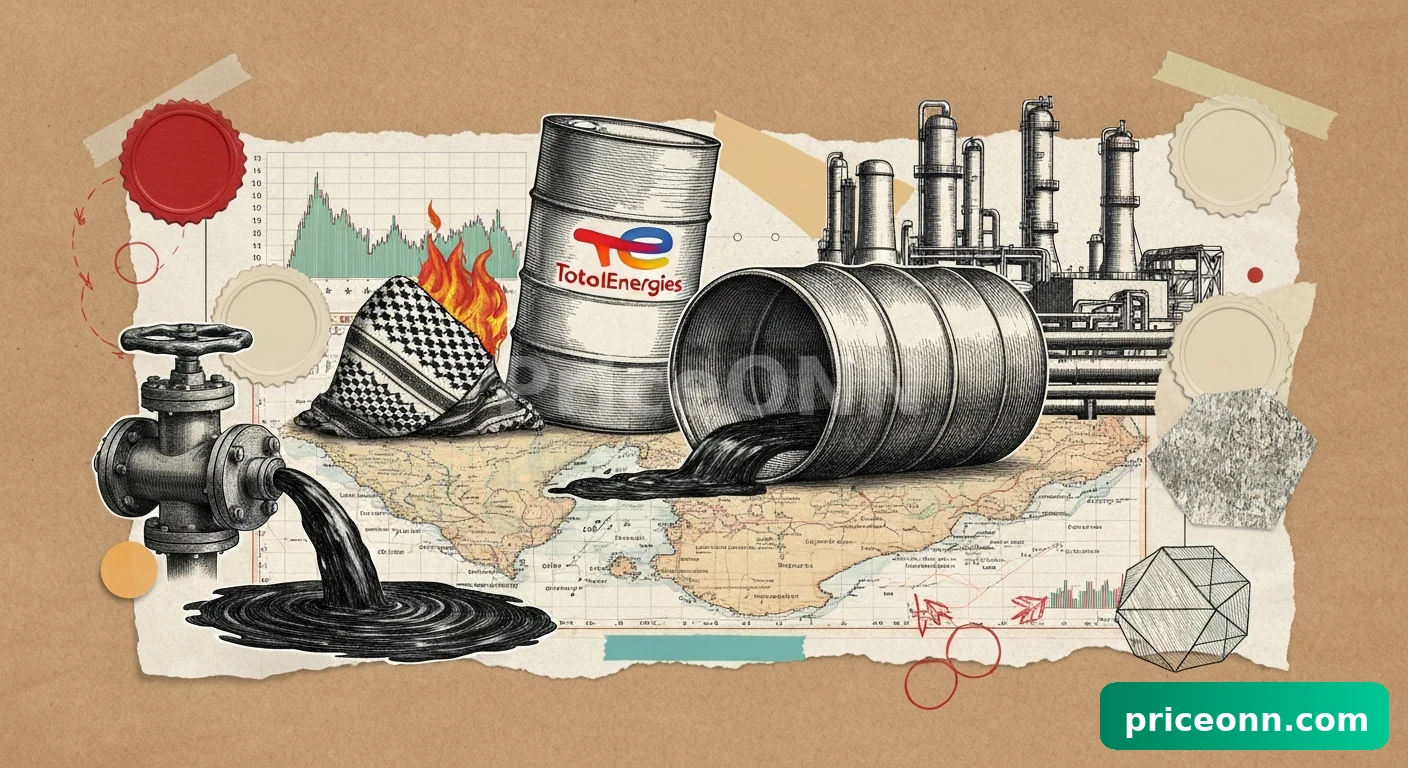
Adding to the supply concerns, TotalEnergies, a major international energy company, has announced that approximately 15% of its global oil and gas production has been shut in due to the conflict. This includes production in Qatar, Iraq, and UAE offshore. Although onshore production in the UAE remains unaffected, the overall reduction in TotalEnergies' output has further tightened the market. The company estimates that the offline production represents about 10% of its upstream cash flow.
Trader Implications
Traders should closely monitor geopolitical developments in the Middle East, as they are likely to be the primary driver of oil prices in the near term. Key levels to watch for Brent crude are the $100 mark, which now acts as a psychological support level, and the recent high of $101.96. A break above this level could signal further upside potential, while a failure to hold above $100 could lead to a pullback.
For WTI crude, the $95 and $100 levels are important to watch. A sustained move above $100 could attract further buying interest. Traders should also pay attention to inventory data and rig counts, as these provide insights into the supply side of the equation. Risk management is crucial in this volatile environment. Consider using stop-loss orders to limit potential losses.
- Watch for news regarding the Strait of Hormuz
- Monitor statements from OPEC+ regarding potential production increases
- Track U.S. inventory levels and rig counts
A senior market analyst stated that "the market is pricing in a significant risk premium due to the uncertainty surrounding Middle East supply. Any escalation of the conflict could send prices even higher."
Outlook
The outlook for oil prices remains highly uncertain, with geopolitical risks dominating the landscape. While increased U.S. drilling activity could potentially offset some of the supply disruptions, the impact of the Middle East conflict is likely to be the overriding factor in the near term. Upcoming OPEC+ meetings will be closely watched for any signals regarding potential production adjustments. Market sentiment is likely to remain bullish as long as tensions remain elevated and supply concerns persist. Traders should remain vigilant and adapt their strategies to the evolving market dynamics.