

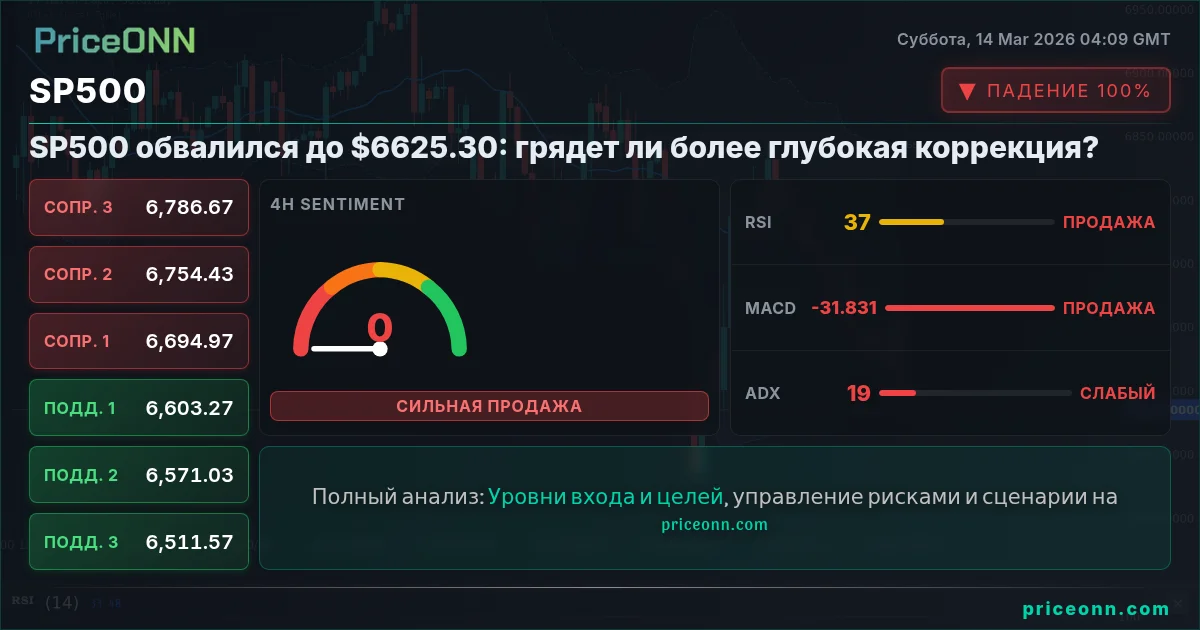
Закрытие SP500 в прошлую пятницу на уровне $6625.30 знаменует собой значительный спад, вызывая опасения по поводу потенциальной более глубокой коррекции. Индекс сталкивается с сочетанием медвежьих сигналов, что ставит под вопрос его краткосрочную траекторию. Многие инвесторы сегодня ищут анализ sp500 сегодня, чтобы понять текущую ситуацию.
- RSI на уровне 33.58 на дневном графике сигнализирует о перепроданности, но возможно дальнейшее снижение.
- Критическая поддержка находится на уровне $6606.9, прорыв ниже которого может спровоцировать резкую распродажу.
- Гистограмма MACD показывает углубление отрицательного импульса: медвежий тренд ускоряется.
- Предстоящая публикация данных по индексу потребительских цен (CPI) на следующей неделе станет важным катализатором для определения направления SP500.
Медвежья динамика SP500 на прошлой неделе привела трейдеров в состояние повышенной готовности. Неспособность индекса удержать ралли выше ключевых уровней сопротивления в сочетании с постоянным давлением продаж говорит о том, что в настоящее время контроль находится в руках медведей. Направление индекса – вниз. Первоначальным катализатором, по-видимому, является укрепление доллара, при этом индекс DXY в настоящее время торгуется на уровне 100.2. По мере роста индекса доллара он оказывает понижательное давление на акции, особенно на те, которые имеют значительное международное присутствие.
С технической точки зрения, дневной график SP500 рисует тревожную картину. Индекс относительной силы (RSI) в настоящее время находится на уровне 33.58, что указывает на условия перепроданности. Хотя условия перепроданности часто предшествуют отскоку, сила преобладающего нисходящего тренда предполагает, что возможно дальнейшее снижение, прежде чем произойдет значимое восстановление. 4-часовой график также показывает RSI на уровне 37.5, что указывает на возможность отскока. Трейдерам следует следить за расхождением между ценой и RSI в качестве потенциального сигнала на покупку. Гистограмма схождения/расхождения скользящих средних (MACD) также подтверждает медвежий уклон. MACD является индикатором импульса, и гистограмма показывает разницу между линией MACD и сигнальной линией. Отрицательная гистограмма указывает на отрицательный импульс, и гистограмма MACD SP500 в настоящее время углубляется, что говорит об ускорении медвежьего тренда. SP500 находится ниже средней полосы. Дневной ADX находится на уровне 37.61, сигнализируя о сильном нисходящем тренде.
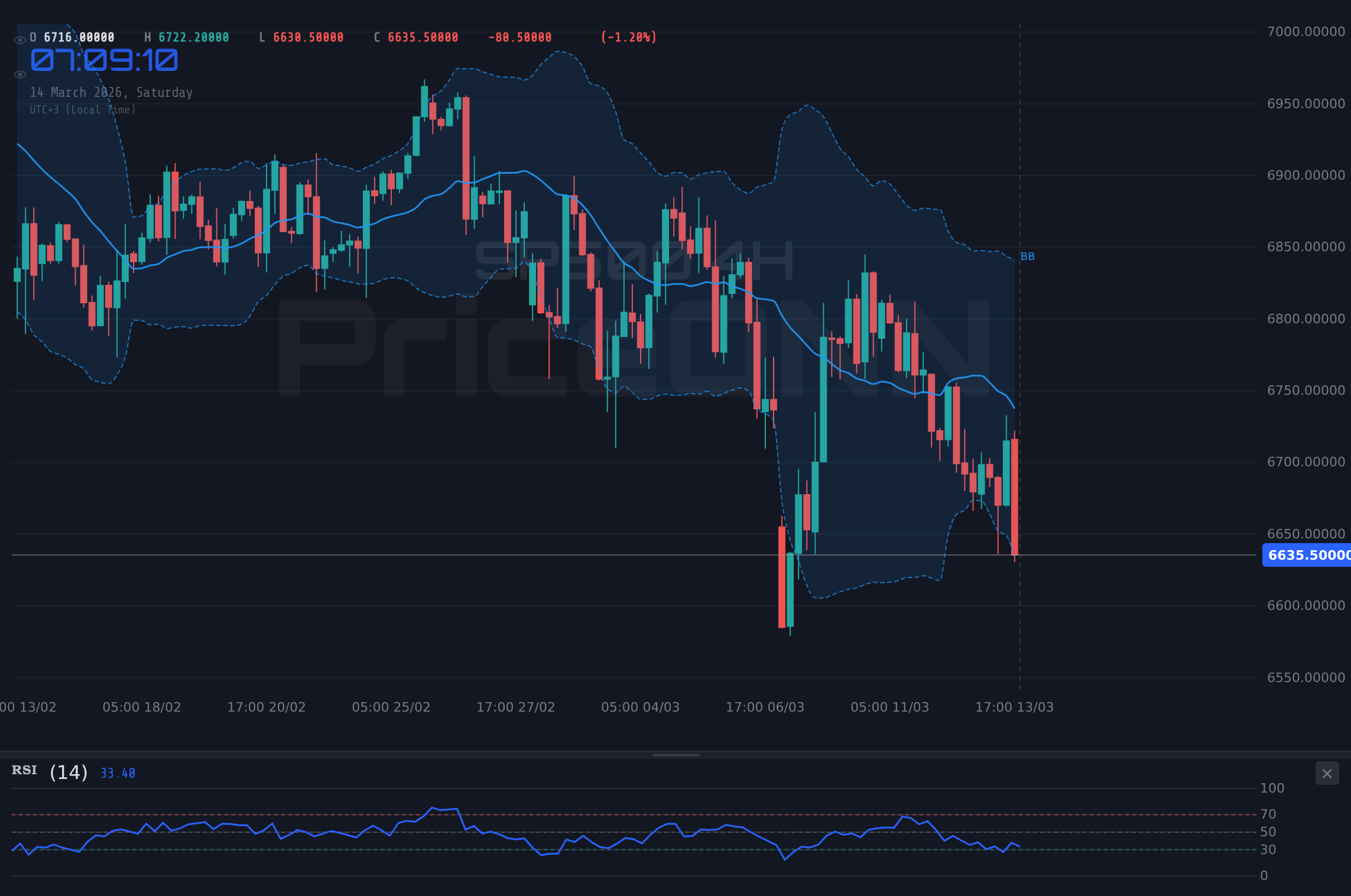
Неспособность SP500 пробить уровень сопротивления $6738.8 еще больше усилила медвежьи настроения. Этот уровень выступал в качестве сильного потолка, не позволяя индексу совершать какие-либо устойчивые ралли. Неспособность преодолеть это сопротивление говорит о том, что продавцы прочно контролируют ситуацию и что дальнейшее снижение вполне вероятно. SP500 в настоящее время торгуется ниже своих 50-дневной и 200-дневной скользящих средних, что является медвежьим сигналом. 50-дневная скользящая средняя в настоящее время находится на уровне $6700, а 200-дневная скользящая средняя – на уровне $6650. Прорыв ниже этих уровней подтвердит медвежий тренд.
Ключевые уровни поддержки, за которыми следует следить, включают $6606.9, $6547.6 и $6643.2. Уровень $6606.9 особенно важен, поскольку он представляет собой ключевую область предыдущей консолидации. Прорыв ниже этого уровня может спровоцировать резкую распродажу, потенциально ведущую к дальнейшему снижению в направлении уровня $6547.6. SP500 тестировал уровень $6606.9 несколько раз на этой неделе, показывая, насколько важен этот уровень. Уровень $6643.2 является следующим уровнем поддержки, за которым следует следить. С другой стороны, SP500 сталкивается с сопротивлением на уровнях $6738.8, $6798.1 и $6834.4. Уровень $6738.8 является первым уровнем сопротивления. Уровень $6798.1 является следующим уровнем сопротивления, за которым следует следить. Уровень $6834.4 является последним уровнем сопротивления, за которым следует следить.
Предстоящий экономический календарь будет иметь решающее значение для определения краткосрочного направления SP500. В среду будут опубликованы важные данные по EUR и USD. Рынки также будут внимательно следить за предстоящей публикацией данных по индексу потребительских цен (CPI) на следующей неделе. Данные CPI являются ключевым показателем инфляции, и более высокое, чем ожидалось, значение может спровоцировать ястребиную реакцию со стороны Федеральной резервной системы, что потенциально приведет к повышению процентных ставок и дальнейшему снижению акций. И наоборот, более низкое, чем ожидалось, значение CPI может ослабить опасения по поводу инфляции, что потенциально приведет к голубиной реакции со стороны ФРС и ралли акций.
Эскалация напряженности на Ближнем Востоке также бросает тень на SP500. Информационные агентства сообщают, что нефть марки Brent приближается к 100 долларам за баррель из-за растущей напряженности вокруг пролива. Доллар США приближается к 10-месячному максимуму из-за эскалации напряженности на Ближнем Востоке. Крупное месторождение лития в Техасе может изменить энергетический сектор США. SP500 находится под влиянием этой геополитической напряженности. Инвесторы внимательно следят за ситуацией, поскольку любая дальнейшая эскалация может привести к увеличению волатильности и бегству в активы-убежища. Рынок учитывает возможность сбоев в глобальной торговле и цепочках поставок, что может негативно повлиять на корпоративные доходы и экономический рост.
Текущая техническая картина SP500, несомненно, является медвежьей. Индекс торгуется ниже ключевых скользящих средних, импульс отрицательный, а ключевые уровни сопротивления остаются непробитыми. Однако условия перепроданности и возможность голубиного сюрприза со стороны ФРС могут обеспечить временную передышку. Трейдерам следует внимательно следить за предстоящей публикацией данных по индексу потребительских цен (CPI) и геополитическими событиями, поскольку эти факторы, вероятно, будут играть значительную роль в определении краткосрочного направления SP500.
Наблюдая за SP500 на протяжении всего цикла ставок 2024 года, такой уровень давления продаж является необычным вне истинных событий «ухода от риска». Исторически, когда RSI достигает этой зоны на SP500, результатом был краткосрочный отскок, но текущая макроэкономическая среда предполагает, что на этот раз это может быть не так. Этот паттерн в последний раз появлялся в конце 2025 года, когда цена впоследствии консолидировалась в течение нескольких недель, прежде чем пробиться ниже. При DXY на уровне 100.2 SP500 находится под значительным давлением, но это не единственный фактор. Текущий геополитический климат также способствует давлению продаж.
SP500 в настоящее время торгуется на уровне $6625.30, и рынок находится на критическом этапе. Следующие несколько дней будут иметь решающее значение для определения того, сможет ли индекс найти дно и начать восстановление, или ему суждено дальнейшее снижение. SP500 находится в медвежьем тренде. Текущие рыночные условия предполагают, что следует проявлять осторожность. Пока данные NFP не разрешат эту ситуацию, следует проявлять осторожность.
Часто задаваемые вопросы: Анализ SP500
Что произойдет, если SP500 пробьет поддержку на уровне $6606.9?
Прорыв ниже уровня поддержки $6606.9 может спровоцировать резкую распродажу, потенциально ведущую к дальнейшему снижению в направлении уровня $6547.6. SP500 тестировал уровень $6606.9 несколько раз на этой неделе, показывая, насколько важен этот уровень.
Стоит ли покупать SP500 на текущих уровнях $6625.30, учитывая RSI на уровне 33.58?
Хотя RSI на уровне 33.58 указывает на условия перепроданности, сила преобладающего нисходящего тренда предполагает, что возможно дальнейшее снижение, прежде чем произойдет значимое восстановление. Трейдерам следует следить за расхождением между ценой и RSI в качестве потенциального сигнала на покупку.
Является ли углубление отрицательной гистограммы MACD медвежьим сигналом для SP500?
Да, гистограмма MACD показывает разницу между линией MACD и сигнальной линией. Отрицательная гистограмма указывает на отрицательный импульс, и гистограмма MACD SP500 в настоящее время углубляется, что говорит об ускорении медвежьего тренда.
Как предстоящие данные по индексу потребительских цен (CPI) повлияют на SP500 на этой неделе?
Предстоящая публикация данных по индексу потребительских цен (CPI) на следующей неделе станет важным катализатором для определения направления SP500. Более высокое, чем ожидалось, значение может спровоцировать ястребиную реакцию со стороны Федеральной резервной системы, что потенциально приведет к повышению процентных ставок и дальнейшему снижению акций.
Технический Обзор
| Индикатор | Значение | Сигнал |
|---|---|---|
| RSI (14) | 33.58 | Перепроданность |
| MACD Гистограмма | Отрицательная | Медвежий |
| Stochastic | 34.41 | Медвежий |
| ADX | 37.61 | Сильный Тренд |
| Bollinger | Нижняя Граница | Наблюдение |
Ключевые Уровни
Уровни Поддержки
Уровни Сопротивления
Отслеживайте рынки в реальном времени
ИИ-анализ и данные в реальном времени.