
Is the AUD at Risk After RBA's Narrow Rate Hike Amid Shifting Global Inflation Trends?


The Australian Dollar (AUD) is under the spotlight following the Reserve Bank of Australia's (RBA) closely watched monetary policy decision. In a split 5-4 vote, the RBA's Monetary Policy Board opted to raise the official cash rate by 25 basis points, bringing the benchmark rate to 4.1%. This move, while anticipated by many market participants, underscores a growing divergence in global inflation narratives and introduces a layer of uncertainty for AUD traders.
Market Context
The RBA's decision on March 17, 2026, marked a significant moment, signaling that the central bank's assessment of domestic capacity pressures and the inflationary impact of geopolitical events, particularly the conflict in the Middle East and its effect on oil prices, remains a primary concern. While the rate hike itself was largely priced in, the narrowness of the 5-4 vote suggests a less unified board than perhaps initially expected. This division raises questions about the RBA's future policy path, with a follow-up hike in May now appearing less certain, though still retained as a base case by some analysts. The board's consensus that a hike was necessary, with the debate centering more on timing, indicates that inflation risks are far from subsided, keeping further tightening on the table until inflation trends clearly abate.
Analysis & Drivers
The RBA's concerns are multi-faceted. Domestically, the board perceives ongoing capacity pressures within the Australian economy, contributing to inflation remaining above target. This is compounded by a recent spike in inflation expectations, partly fueled by the Middle East conflict and its subsequent impact on global energy prices, notably petrol. This mirrors broader global trends where inflation, after showing signs of easing, is experiencing renewed upward pressure. In the United States, for instance, the core Personal Consumption Expenditures (PCE) deflator has climbed to 3.1% year-over-year as of January, its highest level since March 2024, after a low of 2.6% in April of the previous year. This inflationary resurgence in the US has even led a dovish policymaker to adjust their year-end Federal Funds Rate projection upwards, from a range of 2-2.25% to 2.5%-2.75%. The drivers for this US inflation include escalating goods prices stemming from protectionist trade policies and a resilient labor market, constrained by immigration policies and only sluggish job creation. This complex global backdrop means that the RBA's decision is not made in a vacuum, and the AUD's trajectory will be heavily influenced by these international monetary policy shifts and inflation data.
Trader Implications
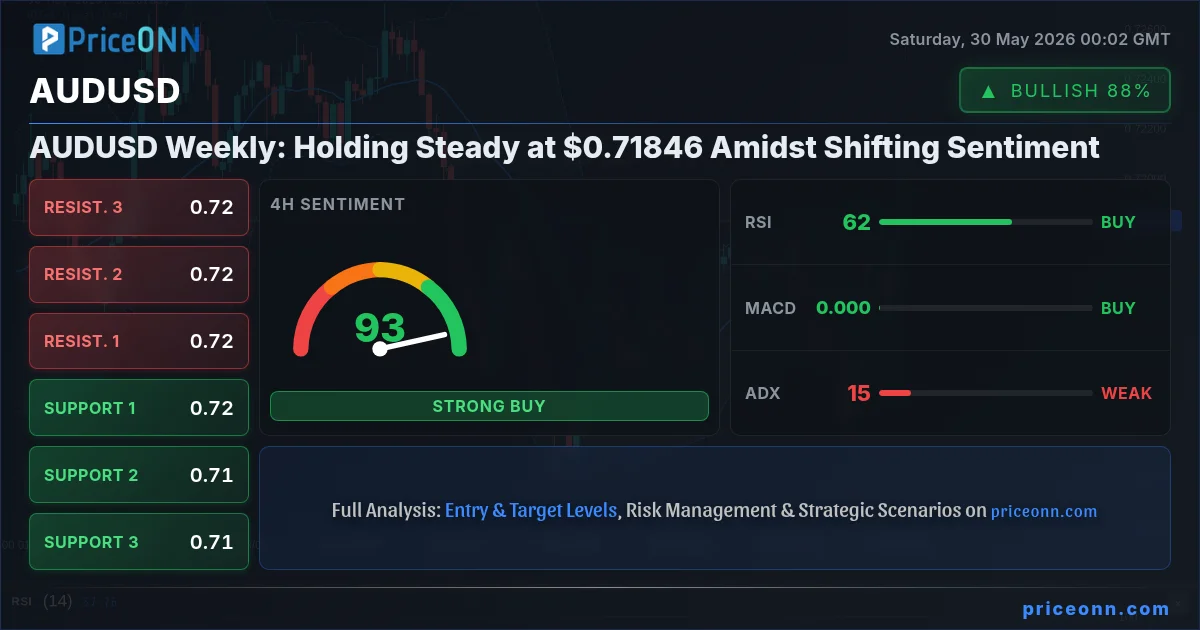
For forex traders, the RBA's split decision presents both opportunities and risks. The immediate implication is increased volatility for the Australian Dollar. Key levels to watch for AUD/USD will be the recent lows around 0.6550 and the immediate resistance near 0.6620. A hawkish interpretation of the RBA's statement, emphasizing the continued threat of inflation and the possibility of further hikes, could support the AUD in the short term. However, the underlying uncertainty from the divided vote and the potential for other major central banks, like the US Federal Reserve, to maintain or even adjust their own hawkish stances could cap AUD gains. Traders should closely monitor upcoming Australian employment figures and inflation data, as well as global commodity prices, particularly oil, which directly impacts Australia's terms of trade and inflation outlook. The ongoing Middle East conflict remains a significant wildcard, capable of disrupting energy markets and influencing central bank policies worldwide.
Outlook
The path forward for the AUD appears contingent on the RBA's ability to navigate domestic inflationary pressures while remaining sensitive to global economic currents. While the central bank has signaled a commitment to combating inflation, the narrowness of its recent decision suggests that future policy moves will be data-dependent and potentially subject to further internal debate. The market will be looking for clearer signs of sustained inflation decline or a significant weakening in domestic demand before the RBA pauses its tightening cycle. Until then, the AUD is likely to remain sensitive to shifts in global risk sentiment, commodity prices, and the monetary policy signals emanating from other major economies, particularly the United States.
Frequently Asked Questions
What is the current RBA cash rate after the latest decision?
The Reserve Bank of Australia (RBA) has raised its cash rate by 25 basis points to 4.1% following its March 2026 monetary policy meeting. This decision was made by a narrow 5-4 vote.
What are the main concerns driving the RBA's decision?
The RBA's primary concerns include perceived domestic capacity pressures contributing to inflation and the inflationary impacts of the Middle East conflict on global energy prices, such as petrol. These factors are keeping inflation risks elevated.
What is the outlook for the Australian Dollar (AUD) following this rate hike?
The outlook for the AUD remains mixed. While the rate hike offers some support, the narrow voting margin indicates potential policy uncertainty. Traders will be watching key levels around 0.6550 (support) and 0.6620 (resistance) amidst global inflation trends and commodity price movements.
Track markets in real-time
Empower your investment decisions with AI-powered analysis, technical indicators and real-time price data.
Join Our Telegram Channel
Get breaking market news, AI analysis and trading signals delivered instantly to your Telegram.
Join Channel PriceONN News
The US Dollar experienced a notable dip as a renewed ceasefire between the US and Iran spurred a rally in global equities, particularly in tech stocks. However, persistent core PCE inflation at 3.3% YoY continues to fuel 'higher for longer' rate expectations.
PriceONN News
The US Dollar experienced a notable decline last week as markets priced in a potential diplomatic resolution to the US-Iran conflict, leading to a drop in oil prices and Treasury yields. This shift in sentiment suggests a move away from stagflation fears towards a more stable economic outlook.
PriceONN News
USD/JPY is testing the critical 160 level as stalled US-Iran negotiations and hawkish Federal Reserve rhetoric fuel inflation concerns and a potential for further rate hikes. Traders are closely watching upcoming US Non-Farm Payrolls and Eurozone CPI data for direction.
PriceONN News
The USD/JPY pair is flirting with the 160 level as stalled US-Iran negotiations and hawkish Federal Reserve rhetoric fuel inflation concerns. Traders are closely watching upcoming US Non-Farm Payrolls and Eurozone CPI data.
PriceONN News
EUR/USD stalled below 1.1660 as the US Dollar defied expectations, refusing to weaken despite reports of a US-Iran ceasefire extension. Market participants remain cautious, awaiting concrete confirmation and assessing lingering inflationary pressures.
PriceONN News
EUR/USD closed at 1.1640, showing resilience amid mixed signals. Easing US-Iran tensions initially pressured the dollar, but persistent inflation concerns and political ratification hurdles are keeping the greenback surprisingly steady.
PriceONN News
The EUR/USD faces headwinds as core US PCE inflation unexpectedly rose to 3.3% year-over-year, reinforcing a 'higher for longer' interest rate narrative. Meanwhile, a US-Iran ceasefire extension boosted global risk appetite, potentially drawing capital away from safe-haven currencies.
PriceONN News
EUR/USD stabilized around 1.1640 as reports of a US-Iran ceasefire extension and potential Strait of Hormuz reopening eased inflation fears. However, the US Dollar's resilience suggests lingering caution among forex traders.
PriceONN News
USDJPY has returned to the area of previous interventions. The ECB is moving towards a rate hike in June. The US dollar retreated on Friday amid new record highs for stock indices and rumours of amendments to the US-Iran agreement. However, tit-for-tat exchanges between the adversaries pushed the dollar index back into the support zone […] The post Yen Braces for a New Storm appeared first on ActionForex.
PriceONN News
Markets are pricing in a potential de-escalation in the US-Iran conflict, leading to a significant drop in crude oil prices and a weakening US Dollar as diplomatic efforts appear to be gaining traction.
PriceONN News
Canada's economy showed signs of a slowdown in early 2026, but upcoming May jobs data is expected to reveal a modest uplift. Analysts anticipate the unemployment rate to fall to 6.8%.
PriceONN News
Canada's economy showed signs of life in early 2026, with analysts expecting a moderate job growth of around 25,000 positions and a potential dip in the unemployment rate to 6.8% for May.