
Is the Australian Dollar Set for Further Gains After RBA Rate Hike?


The Australian Dollar (AUD) is under scrutiny following the Reserve Bank of Australia's (RBA) decision to lift its benchmark cash rate by 25 basis points to 4.10%. This move, executed via a closely divided 5-4 vote by the RBA's Monetary Policy Board (MPB), underscores persistent concerns over inflation and capacity pressures within the Australian economy, potentially setting the stage for further AUD appreciation if market sentiment solidifies.
Market Context
The RBA's decision to hike rates was not entirely unexpected, but the narrowness of the 5-4 majority highlighted internal debate within the board. This split decision comes amidst a backdrop of rising inflation expectations, partly fueled by geopolitical tensions in the Middle East that have driven up global oil prices. The RBA cited perceived domestic capacity pressures and the inflationary impact of higher energy costs as key drivers for the rate adjustment. While inflation has retreated significantly from its 2022 peak, it accelerated in the latter half of 2025, prompting the central bank to act. Market data shows that private sector demand growth was stronger than anticipated in late 2025, although the composition of this growth, with robust business investment but softer consumption, presented a mixed picture. Nevertheless, the central bank believes that capacity pressures are now greater than previously assessed, with a tight labor market and low unemployment rates contributing to this view.
Analysis & Drivers
The RBA's latest monetary policy decision is influenced by several converging factors. Firstly, the persistent domestic capacity pressures suggest that demand is outpacing supply, a condition that naturally leads to upward price pressures. This is exacerbated by the recent surge in oil prices, a direct consequence of the Middle East conflict, which tends to filter through to broader inflation metrics, particularly through higher fuel costs and elevated short-term inflation expectations. Analysts note that the central bank is attempting to preemptively manage inflation risks to ensure they do not remain above target for an extended period. Information released since the February meeting indicated that some of the recent inflation uptick was indeed due to these greater capacity pressures. Furthermore, the resilience of the labor market, with the unemployment rate remaining lower than expected and labor underutilization at low rates, provides the RBA with room to tighten policy without immediately jeopardizing employment growth. The central bank also acknowledged that the full effects of interest rate reductions implemented in 2025 are yet to be felt across the aggregate economy, suggesting a lag in monetary policy transmission.
Trader Implications
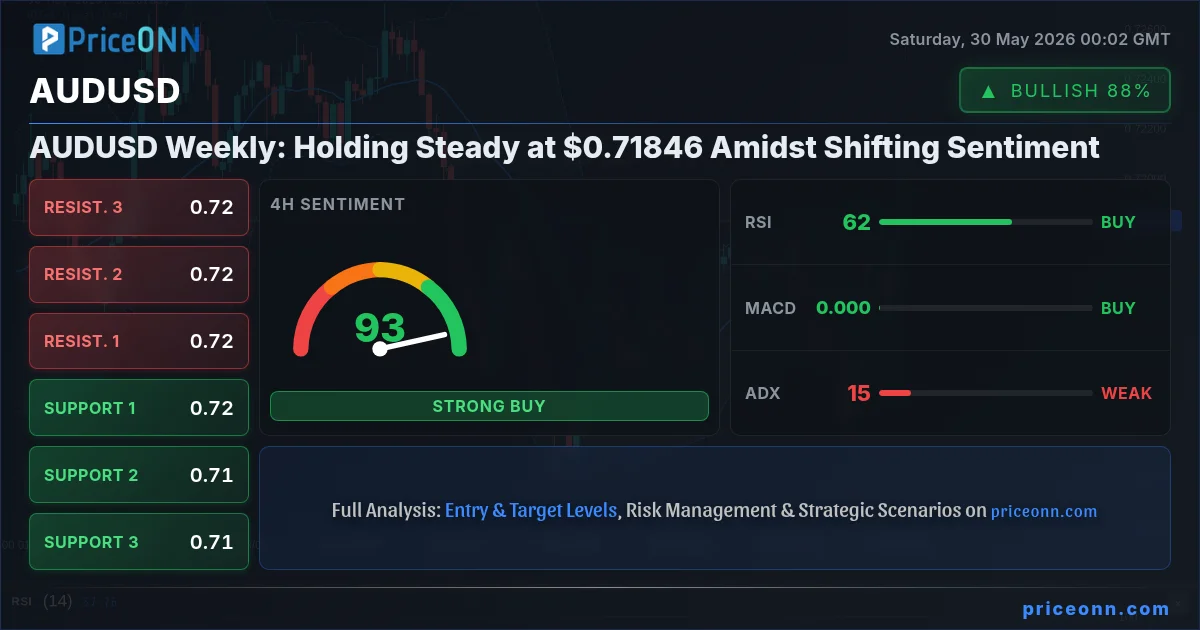
For forex traders, the RBA's hawkish pivot presents a potential opportunity. The 4.10% cash rate now stands as a significant differentiator compared to some other major central banks. Traders will be closely watching the AUD/USD pair for signs of sustained upward momentum. Key support levels to monitor for AUD/USD include 0.6650 and 0.6580. Conversely, a break above 0.6720 could signal further upside potential towards 0.6800. The central bank's indication that future rate hikes remain on the table, contingent on inflation risks, suggests that the RBA could continue its tightening cycle if incoming data warrants. The market's reaction to the split decision will be critical; a strong AUD in the coming days would validate the RBA's hawkish stance. However, any signs of dovishness or a pause in May, particularly if the Middle East conflict de-escalates or global economic sentiment sours, could lead to AUD weakness. Traders should also keep an eye on US economic data and the Federal Reserve's upcoming FOMC meeting for broader currency market direction.
Outlook
The RBA's decision to hike rates in a split vote introduces an element of uncertainty but also highlights the bank's commitment to combating inflation. The immediate outlook for the Australian Dollar will depend on how the market digests this news and the progression of inflation data in the coming months. While a May rate hike is still considered the base case by some analysts, its certainty hinges on the evolving geopolitical landscape and domestic economic conditions. If inflation continues to surprise to the upside and capacity pressures remain elevated, the AUD could find further support. Conversely, a softening in global demand or a resolution to the Middle East conflict could temper the RBA's hawkish stance, leading to a potential pullback in the currency.
Frequently Asked Questions
What is the current RBA cash rate after the latest decision?
Following its March meeting, the Reserve Bank of Australia increased the cash rate target by 25 basis points to 4.10%. This decision was made by a narrow 5-4 vote, indicating a divided board.
What are the main reasons behind the RBA's rate hike?
The primary drivers for the RBA's rate hike include perceived domestic capacity pressures that are fueling inflation, and the inflationary impact of the Middle East conflict leading to higher global oil prices. Short-term inflation expectations have also risen.
What is the outlook for the Australian Dollar (AUD) following this rate decision?
The AUD may see further gains if market sentiment remains positive towards the RBA's hawkish stance. Key resistance for AUD/USD is seen at 0.6720, with potential upside towards 0.6800. However, future moves will depend on inflation data and geopolitical developments.
Track markets in real-time
Empower your investment decisions with AI-powered analysis, technical indicators and real-time price data.
Join Our Telegram Channel
Get breaking market news, AI analysis and trading signals delivered instantly to your Telegram.
Join Channel PriceONN News
The US Dollar experienced a notable dip as a renewed ceasefire between the US and Iran spurred a rally in global equities, particularly in tech stocks. However, persistent core PCE inflation at 3.3% YoY continues to fuel 'higher for longer' rate expectations.
PriceONN News
The US Dollar experienced a notable decline last week as markets priced in a potential diplomatic resolution to the US-Iran conflict, leading to a drop in oil prices and Treasury yields. This shift in sentiment suggests a move away from stagflation fears towards a more stable economic outlook.
PriceONN News
Canada's economy showed signs of a slowdown in early 2026, but upcoming May jobs data is expected to reveal a modest uplift. Analysts anticipate the unemployment rate to fall to 6.8%.
PriceONN News
Canada's economy showed signs of life in early 2026, with analysts expecting a moderate job growth of around 25,000 positions and a potential dip in the unemployment rate to 6.8% for May.
PriceONN News
AUD/USD’s late break of 0.7183 resistance suggests that pullback from 0.7277 has already completed at 0.7076, after defending 55 D EMA. Initial bias is back on the upside this week for retesting 0.7277 high first. Firm break there will resume larger up trend. For now, risk will stay on the upside as long as 0.7076 […] The post AUD/USD Weekly Report appeared first on ActionForex.
PriceONN News
USD/JPY is testing the critical 160 level as stalled US-Iran negotiations and hawkish Federal Reserve rhetoric fuel inflation concerns and a potential for further rate hikes. Traders are closely watching upcoming US Non-Farm Payrolls and Eurozone CPI data for direction.
PriceONN News
The USD/JPY pair is flirting with the 160 level as stalled US-Iran negotiations and hawkish Federal Reserve rhetoric fuel inflation concerns. Traders are closely watching upcoming US Non-Farm Payrolls and Eurozone CPI data.
PriceONN News
EUR/USD stalled below 1.1660 as the US Dollar defied expectations, refusing to weaken despite reports of a US-Iran ceasefire extension. Market participants remain cautious, awaiting concrete confirmation and assessing lingering inflationary pressures.
PriceONN News
The New Zealand Dollar surged on Friday, with investors interpreting Reserve Bank of New Zealand (RBNZ) comments as a sign that interest rate hikes could resume sooner and be larger than previously anticipated. This hawkish pivot has created significant trading opportunities.
PriceONN News
EUR/USD closed at 1.1640, showing resilience amid mixed signals. Easing US-Iran tensions initially pressured the dollar, but persistent inflation concerns and political ratification hurdles are keeping the greenback surprisingly steady.
PriceONN News
The EUR/USD faces headwinds as core US PCE inflation unexpectedly rose to 3.3% year-over-year, reinforcing a 'higher for longer' interest rate narrative. Meanwhile, a US-Iran ceasefire extension boosted global risk appetite, potentially drawing capital away from safe-haven currencies.
PriceONN News
EUR/USD stabilized around 1.1640 as reports of a US-Iran ceasefire extension and potential Strait of Hormuz reopening eased inflation fears. However, the US Dollar's resilience suggests lingering caution among forex traders.