
Bitcoin at $64K: Sell-Off Triggered by Hawkish Comments from the New Fed Chair
 PriceONN Editorial Desk
Multi-source verification
PriceONN Editorial Desk
Multi-source verification
Global Risk Aversion Grips Digital Assets
The digital asset arena felt the tremors of a worldwide retreat from riskier investments this past session. Total cryptocurrency market value contracted by 2.6%, reaching approximately $2.2 trillion. This downturn was directly ignited by forceful commentary from the newly appointed Federal Reserve Chair, Warsh, signaling a potentially tighter monetary policy ahead. Such pronouncements often prompt investors to shed speculative holdings, and cryptocurrencies, despite their evolving nature, have once again demonstrated a strong correlation with the broader dollar and equity market movements.
While the general trend was downward, a flicker of resilience began to appear as trading progressed. Buyers started re-entering the market, a shift that coincided with a noticeable uptick in risk appetite within stock exchanges. This suggests that the initial panic may be subsiding, though the long-term implications remain to be seen.
Altcoin Volatility and Bitcoin's Critical Juncture
The altcoin sector bore the brunt of the sell-off, with notable exceptions. Stellar managed to climb 7.3%, Algorand saw a modest 1% gain, and Tron edged up by 0.7%. These positive performances were rare bright spots against a landscape of widespread declines.
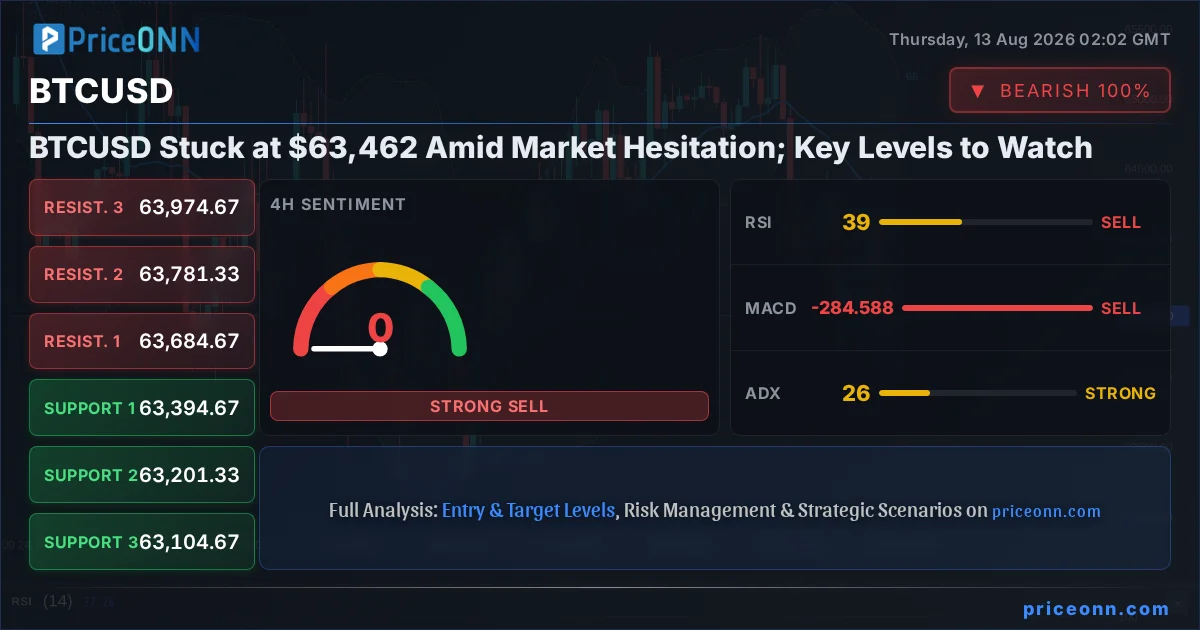
Conversely, some prominent decentralized exchange tokens faced significant pressure. Uniswap plunged by 14%, Zcash retreated 7.7%, and SushiSwap lost 6.1%. Bitcoin itself did not escape the contagion, slipping below the critical $64,000 mark and testing the lower bounds of its established two-week upward channel. The sustainability of this current trading range is now in question.
A decisive close below the recent lows, situated between $59,000 and $60,000, would serve as a strong signal that the current correction is deepening. Such a development could pave the way for further declines, with bearish targets potentially extending towards the $45,000 level.
Underlying Pressures and Shifting Holdings
The persistent selling pressure on Bitcoin is partly attributed to concerns surrounding potential further divestments by a major entity, as highlighted by QCP Capital. This entity might be compelled to liquidate more Bitcoin to satisfy dividend obligations. A key funding mechanism for acquiring new Bitcoin appears to be compromised. Specifically, Stretch (STRC) preference shares have been trading below their $100 par value for an extended period, thereby restricting the entity's capacity to leverage these shares for fresh Bitcoin acquisitions.
In a contrasting move, Arthur Hayes, a co-founder of BitMEX, has been actively increasing his stake in Ethereum, the second-largest cryptocurrency. Over a two-day span, approximately 4,400 ETH, valued at roughly $7.9 million, were transferred to a wallet associated with him, following the broader altcoin liquidation event.
The selling intensity in the altcoin market has reportedly reached its zenith over the last five years. Data from CryptoQuant indicates that the cumulative net volume of sales on centralized exchanges has neared $209 billion, representing the most severe figure recorded since the firm began tracking data in 2020. This widespread selling pressure has also impacted the ecosystem for meme coins, particularly those launched on the Solana blockchain via platforms like Pump.fun. Activity on these platforms has dramatically reduced, with the number of successful meme coin launches reportedly plummeting by 80% in just three months.
Reading Between the Lines
The recent price action in the cryptocurrency market, particularly Bitcoin's dip below $64,000, serves as a stark reminder of its sensitivity to macroeconomic signals. The Federal Reserve Chair's hawkish rhetoric acted as the immediate catalyst, but the underlying vulnerability was exposed by the correlation with traditional risk assets. The fact that Stellar, Algorand, and Tron saw gains while major tokens like Uniswap and Bitcoin suffered highlights the fragmented nature of recovery attempts within the crypto space.
For traders, the break below the $59,000-$60,000 support zone is a critical watchpoint. A sustained move below this level could signal a more significant trend reversal, potentially opening the door to much lower prices. The news regarding the potential forced selling by a large holder adds another layer of uncertainty, as such actions can create unpredictable downward pressure. Meanwhile, strategic accumulation by figures like Arthur Hayes in Ethereum suggests a belief in its relative resilience or long-term value proposition amidst the broader market turmoil. The extreme selling volume on exchanges, reaching record levels, indicates capitulation among many shorter-term holders, which could eventually set the stage for a more sustainable bottom, but not without further volatility.
The implications extend beyond just Bitcoin and Ethereum. The broader crypto market cap's sensitivity to Fed policy and equity market sentiment means that traditional financial markets will remain a key barometer for digital asset performance. Investors should monitor the US Dollar Index (DXY) for signs of continued strength, which typically pressures risk assets, and the S&P 500 for its direction, as its movements often dictate crypto's broader risk appetite. The sharp decline in meme coin launches on Solana also points to a potential slowdown in speculative froth across various blockchain ecosystems, a trend that could affect venture capital flows into new projects. Watch for any further announcements from the Federal Reserve regarding interest rate policy and quantitative tightening, as these will likely dictate the near-term sentiment for risk assets.
Track markets in real-time
Empower your investment decisions with AI-powered analysis, technical indicators and real-time price data.
Join Our Telegram Channel
Get breaking market news, AI analysis and trading signals delivered instantly to your Telegram.
Join Channel PriceONN News
The Consumer Price Index (CPI) rose by 0.1% month-on-month (m/m) in July – in line with expectations. On a twelve-month basis, CPI edged down to 3.4% (from 3.5% in June). Energy costs fell by 1.5% m/m, led by a 2.9% m/m decline in prices at the pump. Food prices rose 0.1% m/m – its softest […] The post US: Inflationary Pressures Remain Subdued in July appeared first on ActionForex.
PriceONN News
US inflation eased as expected in July, reinforcing case for Fed to stay on hold while it waits for clearer evidence on both prices and labor market. Headline CPI rose from -0.4% to 0.1% m/m, while annual rate slowed from 3.5% y/y to 3.4%. Core CPI increased from 0.0% to 0.2% m/m, with annual core […] The post US CPI Slows to 3.4% as Core Inflation Eases to 2.5% appeared first on ActionForex.
PriceONN News
The USD index plummeted amid a decline in US employment. Gold is benefiting from the Fed’s reluctance to raise interest rates. The US dollar touched a seven-week low after an unexpected labour market report. Employment in July unexpectedly fell by 23K. The figures for May were revised down from 129K to 63K, and those for […] The post The Dollar Let the Labour Market Down appeared first on ActionForex.
PriceONN News
Whatever the inflation figures may be, the precious metal will come out on top. Japan and the US don’t want to give the yen’s fate to speculators. The US dollar continues to recover from the blow dealt by the labour market statistics. A rally in Treasury bond yields is driving the rise in the USD […] The post Gold as a Sure-Fire Bet appeared first on ActionForex.
PriceONN News
Germany’s benchmark index just made history, breaking above 26,500 for the first time ever, extending a rally that has already delivered close to 10% over the past twelve months. The move came on fresh optimism around a potential resolution to the Iran conflict, though that optimism proved short-lived: President Trump’s latest demands, that Tehran compensate […] The post DAX 40: Record Highs, Real Fundamentals, One Channel Left to Test appeared first on ActionForex.
PriceONN News
Brent oil price rose to the highest in over one week on Tuesday, in extension of Monday’s nearly 5% advance, following the latest verbal escalation by President Trump that quickly changed the sentiment and countered efforts of Iran and Oman to find solution for reopening of strategic Hormuz strait. The latest demands from President Trump […] The post Brent Oil Price Falls After Recovery Failed to Clear Important $90 Barrier appeared first on ActionForex.
PriceONN News
Hello fellow traders. In this technical article we’re going to take a look at the Elliott Wave charts charts of Copper (HG_F) commodity published in members’ area of the website. As our members know, Copper Futures recently completed a pullback that provided a high-probability trading setup. The decline unfolded as a clear Elliott Wave Zig […] The post Copper (Hg_F) Elliott Wave: Targeting a Buy at the Blue Box appeared first on ActionForex.
PriceONN News
The NFIB’s Small Business Optimism Index rose 2.4 points to 99.8 in July, soundly beating expectations for a roughly flat reading of 97.5. Eight out of the ten index subcomponents improved during the month and two deteriorated. The largest improvement came from the net share of firms planning to increase employment (up 9 points to […] The post US: Small Business Optimism Spiked in July appeared first on ActionForex.
PriceONN News
Overnight, the RBA held its cash rate steady at 4.35%, as widely expected after June’s inflation data came in softer than forecast at 3.8% headline. Yet the accompanying statement struck a notably cautious tone, warning that trimmed mean inflation remains elevated and largely unchanged from the March quarter, with oil and related commodities still trading […] The post EUR/AUD: Two Central Banks on Hold, One Triangle About to Break appeared first on ActionForex.
PriceONN News
A deal to reopen the Strait of Hormuz is not inevitable. Oil prices are rising amid growing risks of an escalation of the conflict in the Middle East. The US dollar continued to recover from losses caused by the jobs report, against a backdrop of rising geopolitical tensions in the Middle East with traders squaring […] The post Brent Is Following a Path of Demands Rather Than Commitments appeared first on ActionForex.
PriceONN News
Gold rose to 4,400 USD per ounce on Tuesday, reaching a two-month high. Demand for the precious metal is growing rapidly, even amid heightened inflation risks and expectations of higher interest rates driven by elevated oil prices. Chinese institutional investors continue to build positions in gold as a defensive asset amid heightened volatility in other […] The post Gold Rallies: Long-Awaited Rise and Growing Safe-Haven Demand appeared first on ActionForex.
PriceONN News
RBA on hold as expected, recognising the data has broken against its hawkish narrative. Base case clearly an extended period on hold, but RBA will hike if upside risks to inflation materialise. As widely expected, the RBA Monetary Policy Board (MPB) kept the cash rate on hold at 4.35% at its August meeting. The accompanying […] The post RBA Holds at 4.35%, Narrows Risk of Hikes appeared first on ActionForex.