
Bitcoin Tumbles Below $65,000 as Global Risk Aversion Hits Crypto Hard

Bitcoin has experienced a significant downturn, falling below the $65,000 mark, as a pervasive global risk aversion sweeps through financial markets and disproportionately impacts digital assets. This sharp decline underscores the interconnectedness of modern markets, where cryptocurrencies are increasingly sensitive to broader macroeconomic anxieties, particularly inflationary pressures and a strengthening US Dollar.
Market Context: Risk-Off Sentiment Dominates
The year has been characterized by deceptive rallies across various asset classes, and the cryptocurrency sector has been unable to carve out a sustained independent upward trajectory. What appeared recently as a potential decoupling from traditional market malaise has quickly proven to be a false dawn. Market data shows a broad-based retreat from riskier assets, with cryptocurrencies suffering alongside equities and even some traditional safe havens facing headwinds.
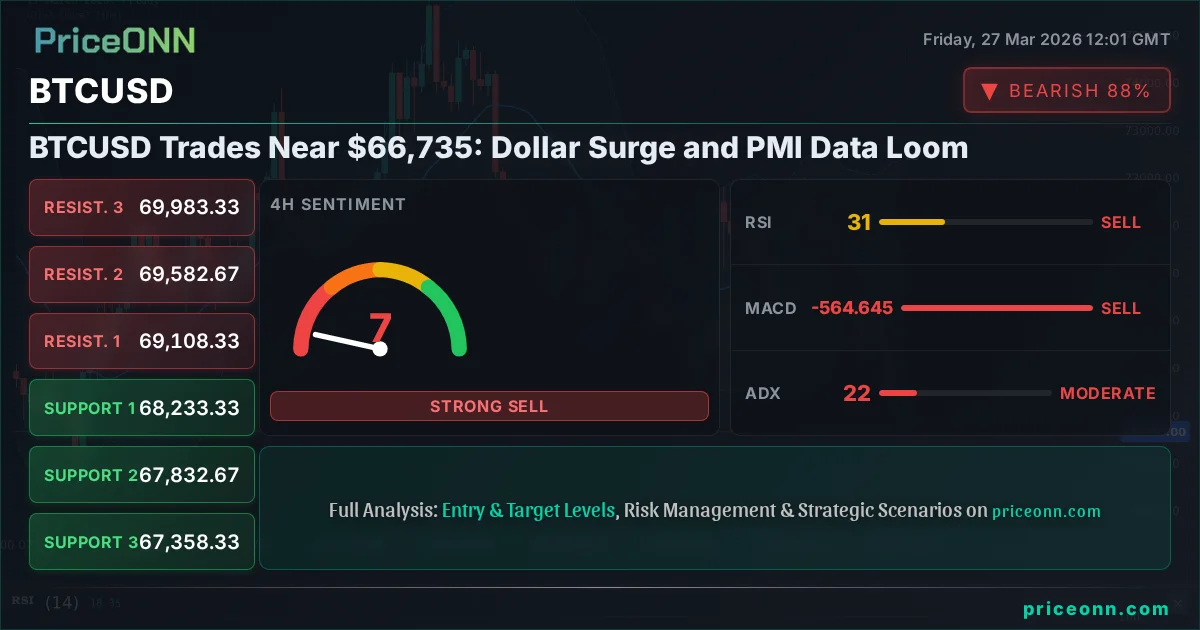
The primary driver appears to be persistent inflationary concerns and the consequent hawkish stance from central banks, which bolsters the US Dollar. When the greenback strengthens, assets priced in dollars, including Bitcoin and Ethereum, often face selling pressure. This dynamic is further complicated by rising energy prices, which add to inflation worries and create an uncertain economic outlook. Despite historical perceptions of Bitcoin offering diversification, its recent price action demonstrates a clear correlation with risk sentiment. Following the issuance of the 20 millionth Bitcoin, the flagship cryptocurrency briefly tested levels above $75,000, but this momentum proved unsustainable. The failure to consolidate these gains has triggered a sharp sell-off, with some digital assets experiencing declines of up to 2% in a single day. Altcoins, typically more volatile, are finding it exceptionally difficult to withstand this downward pressure, leading to widespread selling across the entire digital asset spectrum.
Analysis & Drivers: Inflation, Fed, and Dollar Strength
The current market turmoil is deeply rooted in macroeconomic factors that are shaping global financial sentiment. Analysts point to a confluence of pressures: persistent inflation, which erodes purchasing power and prompts tighter monetary policy, and geopolitical uncertainties that add to market volatility. The US Federal Reserve's stance on interest rates remains a critical factor. While the market may anticipate rate cuts, any indication of a prolonged period of higher-for-longer rates or renewed inflation concerns can swiftly dampen risk appetite.
The strengthening US Dollar acts as a significant headwind for cryptocurrencies. As the dollar gains value, the cost of dollar-denominated assets increases for holders of other currencies, potentially leading to reduced demand. Furthermore, rising energy costs, particularly for oil, contribute to inflationary fears and can lead investors to shift capital away from speculative assets like cryptocurrencies towards more tangible or perceived safe-haven assets, although even these are not immune in the current environment. The recent volatility in Bitcoin, failing to hold its highs after a significant milestone (20 million BTC minted), suggests that underlying demand may not be robust enough to absorb selling pressure in a risk-averse environment.
Trader Implications: Watch Support Levels and Risk Sentiment
For traders, the immediate implication is to exercise caution and monitor key technical levels. Bitcoin's break below $65,000 signals a potential continuation of the downtrend. Key support levels to watch include the $60,000 psychological barrier and potentially the $55,000 area. A sustained break below these levels could indicate further downside potential.
Conversely, a recovery above $68,000 would be necessary to signal a potential short-term reversal, with resistance likely to be encountered around the $70,000 to $72,000 range. Given the prevailing risk-off sentiment, traders should be wary of sharp, sudden moves in either direction. It is advisable to reduce leverage and focus on risk management. The correlation with traditional markets, particularly equities and the US Dollar Index (DXY), should be closely monitored. Any positive shifts in inflation data or central bank commentary that eases monetary policy fears could provide a catalyst for a crypto rebound. However, until such shifts occur, the path of least resistance appears to be downwards.
Outlook: Cautious Sidelines Likely
The outlook for Bitcoin and the broader cryptocurrency market remains cautious in the short term. The prevailing macroeconomic headwinds show little sign of abating, suggesting that risk aversion could persist. Traders and investors will be closely watching upcoming economic data releases, particularly inflation figures and central bank statements, for any signs of a shift in market sentiment. Until a clearer picture emerges regarding inflation control and monetary policy direction, digital assets are likely to remain under pressure, with any rallies being met with skepticism and potential selling.
Frequently Asked Questions
What is the current price of Bitcoin and what is the immediate support level?
Bitcoin has recently fallen below $65,000. The next significant support level traders are watching is the $60,000 psychological mark, with further downside risk towards $55,000 if this level fails to hold.
Why are cryptocurrencies falling despite the recent Bitcoin issuance milestone?
Cryptocurrencies are falling due to a broader market risk-off sentiment driven by inflation fears and a strong US Dollar. Bitcoin's failure to sustain its price above $75,000 after the 20 million BTC issuance highlighted that macroeconomic factors are currently overriding specific crypto catalysts.
What should traders look out for to anticipate a potential cryptocurrency rebound?
Traders should monitor upcoming inflation data and central bank commentary for any indications of a shift towards looser monetary policy. A sustained break back above $68,000 for Bitcoin, coupled with easing US Dollar strength, could signal a potential rebound.
Track markets in real-time
Empower your investment decisions with AI-powered analysis, technical indicators and real-time price data.
Join Our Telegram Channel
Get breaking market news, AI analysis and trading signals delivered instantly to your Telegram.
Join Channel

PriceONN