
Brent Crude Tops $100 as US Strikes in Iran Threaten Oil Flows

Brent crude oil prices have surged past $100 a barrel, reaching $101.96, marking the first time this threshold has been breached in years. This spike follows escalating tensions in the Middle East, specifically a US military strike on Iran's Kharg Island, raising significant concerns about potential disruptions to global oil supply.
Market Context
The surge in Brent crude prices reflects growing anxiety over the security of oil flows from the Persian Gulf. Kharg Island is a critical export hub for Iran, handling approximately 90% of the nation's crude shipments, primarily destined for Asian markets. The US military action, which targeted military facilities on the island, has introduced a new layer of uncertainty into an already volatile market. While the US president stated that oil infrastructure was intentionally spared, a warning was issued that any interference with shipping in the Strait of Hormuz could lead to a change in this policy. The Strait of Hormuz is a vital chokepoint through which about 20% of the world's oil supply flows.
Supporting this bullish sentiment, the latest data indicates a slight increase in US drilling activity. The total number of active oil and gas rigs in the United States rose to 553 this week. Specifically, the number of oil rigs increased by 1 to 412, while gas rigs also saw a rise of 1, reaching 133. However, it is important to note that the overall rig count remains below year-ago levels.
Analysis & Drivers
Several factors are contributing to the current market dynamics. The most immediate driver is the geopolitical risk associated with the US strike on Kharg Island and the potential for further escalation. Even though Iran's conventional naval fleet has been largely decimated, the Islamic Revolutionary Guards Corps (IRGC) Navy retains the capability to harass shipping in the Persian Gulf, posing a threat to maritime traffic. This asymmetric warfare capability means Iran can still disrupt oil flows without a traditional navy.
Furthermore, reports suggest that some Gulf oil producers, including Iraq, Kuwait, and Saudi Arabia, are curtailing oil production due to logistical challenges and uncertainty surrounding shipping routes. This reduction in supply, combined with the potential for further disruptions, is putting upward pressure on prices.
The US Energy Information Administration (EIA) recently reported that weekly US crude oil production fell by 18,000 barrels per day to 13.678 million barrels per day. While still a substantial figure, it is below the all-time high, adding to concerns about supply constraints.
Trader Implications
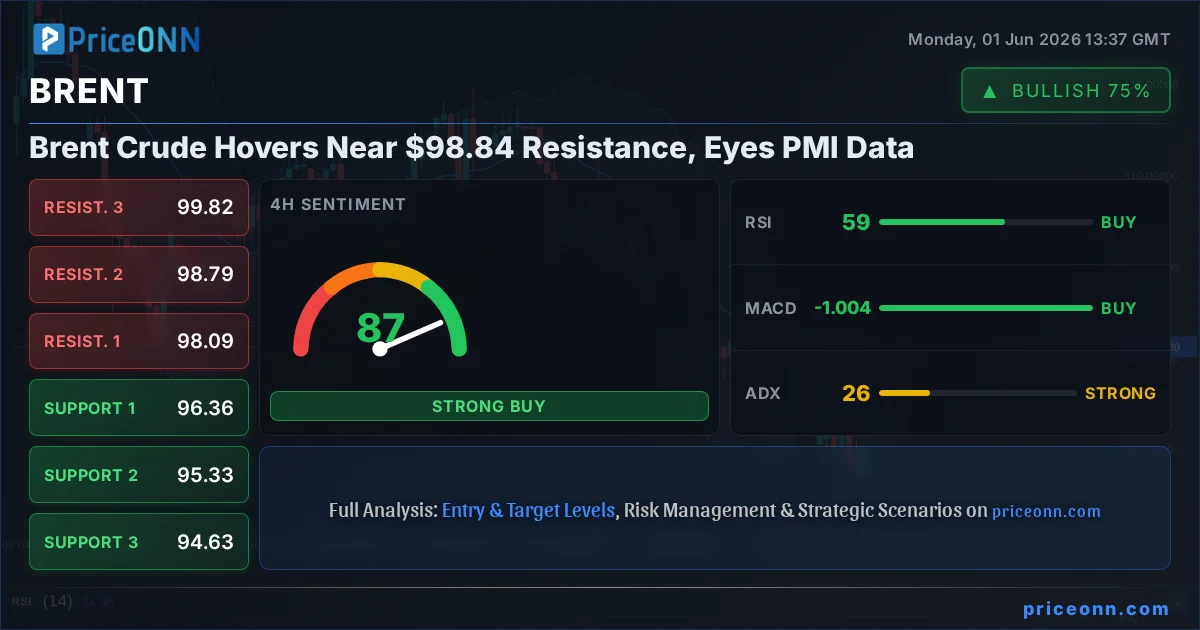
Traders should closely monitor developments in the Middle East, particularly any further military action or threats to shipping in the Strait of Hormuz. Key price levels to watch include the $102 mark for Brent crude, which could act as a resistance level. A break above this level could signal further upside potential. Support levels are likely around $98-$100. Given the heightened volatility, risk management is crucial. Traders should consider using stop-loss orders to protect against unexpected price swings.
Here are some key factors for traders to consider:
- Geopolitical risk: Monitor news flow for any escalation in the Middle East.
- Supply disruptions: Assess the impact of any potential disruptions to oil flows from the Persian Gulf.
- Technical analysis: Identify key support and resistance levels for Brent and WTI crude.
- Risk management: Use stop-loss orders to limit potential losses.
Outlook
The outlook for oil prices remains highly uncertain, with geopolitical tensions likely to remain a dominant factor. If the situation in the Middle East continues to escalate, we could see further price spikes in the short term. However, a de-escalation of tensions could lead to a pullback in prices. In the longer term, the balance between supply and demand will be crucial. Increased US drilling activity could help to alleviate some of the supply concerns, but this will take time to materialize. Traders should remain vigilant and adapt their strategies to the evolving market conditions.
Track markets in real-time
Empower your investment decisions with AI-powered analysis, technical indicators and real-time price data.
Join Our Telegram Channel
Get breaking market news, AI analysis and trading signals delivered instantly to your Telegram.
Join Channel PriceONN News
Brent crude prices surged towards the mid-$90s amid fears of supply disruptions from Middle East tensions, only to pare gains later as whispers of a potential US-Iran diplomatic understanding emerged.
PriceONN News
Crude oil prices experienced a significant drop, with WTI futures falling over 1.8% to $87.25, as optimism grew for a U.S.-Iran deal potentially reopening the Strait of Hormuz.
PriceONN News
(RTTNews) - Crude oil prices have tumbled on Friday as expectations of the U.S. and Iran signing a Memorandum of Understanding run high. The MoU would allow for immediate reopening of the Strait of Hormuz and pave the way for the resumption of oil and energy trade.
PriceONN News
Crude oil futures experienced a dramatic intraday reversal on Thursday, soaring overnight on geopolitical fears only to pull back significantly as reports of a potential diplomatic understanding between the U.S. and Iran emerged.
PriceONN News
Crude oil futures experienced a dramatic intraday reversal, soaring to $92.52 before pulling back significantly on Thursday. The volatile session was driven by shifting geopolitical narratives and U.S. inventory data.
PriceONN News
Crude oil futures experienced a dramatic reversal, soaring overnight to $92.52 before plummeting nearly 6% to $89 a barrel. This volatility was driven by escalating US-Iran tensions followed by reports of a potential preliminary diplomatic understanding.
PriceONN News
(RTTNews) - Crude oil futures skyrocketed overnight but have shown a significant pullback over the course of the trading day on Thursday.
PriceONN News
Crude oil benchmarks experienced a sharp decline of over 5% this week, driven by renewed optimism surrounding U.S.-Iran peace talks and a potential easing of Middle East tensions. Both Brent and WTI futures saw significant drops as market sentiment shifted towards de-escalation.
PriceONN News
Global oil prices are treading water after a significant 5% slump, as market sentiment grapples with cautious optimism over Middle East de-escalation efforts versus lingering geopolitical uncertainties. Brent crude hovers near $104.72 and WTI near $98.07.
PriceONN News
The Iran war suddenly turned what had started as a year of oversupply in global oil and LNG markets into the worst oil and gas supply disruption in history. Three months after the U.S.-Israeli strikes on Iran began on February 28, the world has already lost 1 billion barrels of crude oil supply, oil and gas prices have found a new, much higher floor, and whipsaw with violent volatility nearly every day, trade routes have shifted, and tanker rates have spiked. Actual supply shortages are...
PriceONN News
The Iran war has handed the United States a rare opportunity: a new dawn of energy dominance in an increasingly fractured world. With coordinated US-Israeli strikes disrupting the Strait of Hormuz from late February, roughly 20% of global LNG supply has been stripped from the market since early March. Prices have surged across Asia and Europe. And into that vacuum, American gas has flowed. The numbers speak for themselves. US LNG exports to Asia jumped sharply in April, with nearly a quarter of...
PriceONN News
Crude oil prices experienced a significant downturn as market sentiment shifted towards optimism about a potential US-Iran Memorandum of Understanding that could reopen the Strait of Hormuz. WTI futures fell nearly 2% on the news.