
Could a UK Profit Cap Tame Soaring Energy Bills Amid Middle East Tensions?

Calls are intensifying within the United Kingdom for the government to explore a temporary cap on the profits of energy producers and retailers. This proposal emerges as a response to concerns that households could face another severe price shock, with current volatility in energy markets directly linked to heightened geopolitical tensions in the Middle East.
Market Context
The energy landscape has become increasingly precarious, with Brent crude oil prices recently surging past the $100 per barrel mark. Prices even touched a high of $119 before experiencing some retracing. Concurrently, natural gas markets have witnessed significant price fluctuations, largely attributed to attacks on critical infrastructure in the Gulf region. Market data indicates that these disruptions have the potential to create a substantial supply shock, with millions of barrels of oil production being temporarily sidelined. This scenario raises concerns about sustained inflationary pressures and a potential slowdown in economic growth.
Analysis & Drivers
The primary driver behind the current market volatility is the escalating conflict in the Middle East. Attacks on key energy infrastructure have directly impacted supply expectations, creating a risk premium in oil and gas prices. Industry reports suggest that the immediate threat to supply routes and production facilities is the main catalyst for the price surge. In response, UK government officials have reportedly met with energy producers and retailers, issuing warnings against perceived 'opportunistic rip-offs' during this period of heightened market stress. A senior government advisor, appointed to address the cost-of-living crisis, has specifically urged ministers to consider a temporary profit cap, suggesting it could be a more direct intervention than existing windfall taxes. The proposal aims to prevent excessive profiteering during periods of extreme market swings, ensuring that consumers are not unduly burdened by crisis-driven price hikes.
Trader Implications
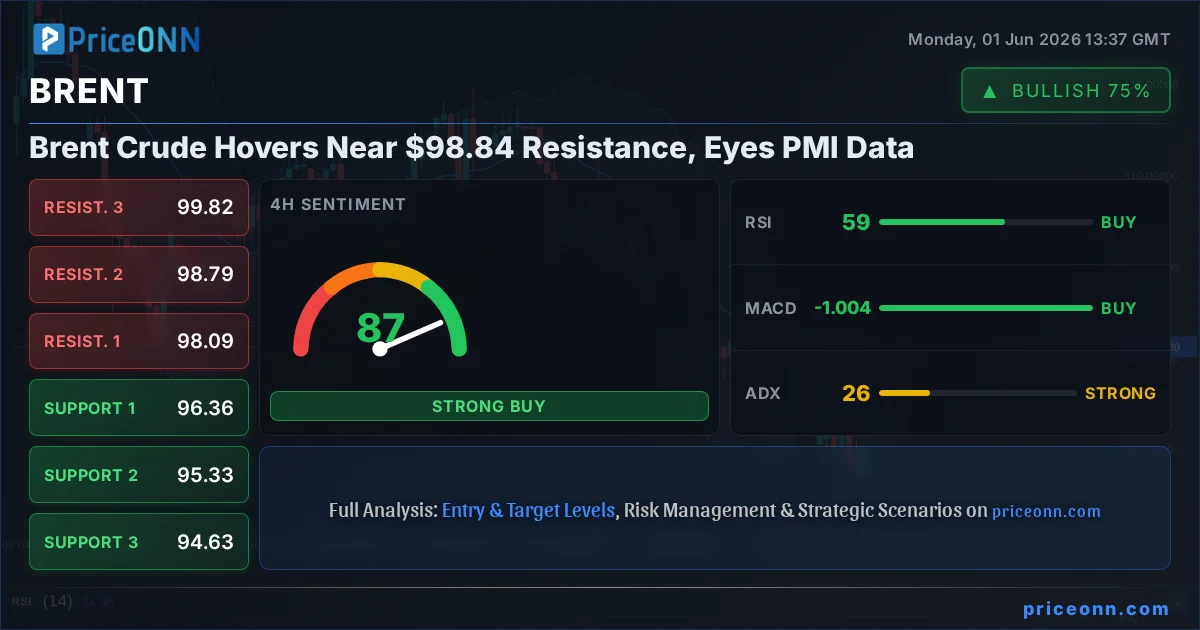
Traders should closely monitor geopolitical developments in the Middle East, as any further escalation or de-escalation will likely dictate immediate price movements in crude oil and natural gas. Key technical levels to watch for Brent crude include the recent high of $119 as a potential resistance point, with $100 acting as a significant psychological and support level. For natural gas, market participants will be scrutinizing news related to infrastructure security and potential supply disruptions. The ongoing debate around a profit cap in the UK adds a layer of regulatory risk that could influence the trading strategies of companies operating in the region. Traders should consider the potential for increased volatility and be prepared for sharp price swings based on geopolitical news flow and any official policy announcements regarding profit margins.
Outlook
The near-term outlook for energy prices remains highly sensitive to the geopolitical situation in the Middle East. Should tensions persist or intensify, further upward pressure on oil and gas prices is likely, potentially reigniting inflation concerns. Conversely, a swift de-escalation could lead to a significant price correction. The UK government's response to the calls for a profit cap will also be a critical factor to watch. While a temporary cap might offer some relief to consumers, it could also introduce uncertainty for energy companies and potentially impact investment decisions. Market participants should remain vigilant for any official statements or policy shifts that could alter the supply-demand dynamics or introduce new regulatory frameworks.
Frequently Asked Questions
What is the current price level for Brent crude oil?
Brent crude oil prices recently surged past $100 per barrel and briefly touched $119 amid escalating Middle East tensions.
What is the proposed solution to protect UK consumers?
A proposal suggests a temporary cap on the profits of energy producers and retailers to prevent profiteering during periods of extreme market volatility, aiming to shield consumers from excessive price shocks.
What are the key risks for energy traders in the coming weeks?
Key risks for energy traders include further geopolitical escalation in the Middle East impacting supply, potential regulatory intervention such as a profit cap in the UK, and significant price volatility around the $100 and $119 levels for Brent crude.
Track markets in real-time
Empower your investment decisions with AI-powered analysis, technical indicators and real-time price data.
Join Our Telegram Channel
Get breaking market news, AI analysis and trading signals delivered instantly to your Telegram.
Join Channel PriceONN News
Brent crude prices surged towards the mid-$90s amid fears of supply disruptions from Middle East tensions, only to pare gains later as whispers of a potential US-Iran diplomatic understanding emerged.
PriceONN News
Crude oil futures experienced a dramatic reversal, soaring overnight to $92.52 before plummeting nearly 6% to $89 a barrel. This volatility was driven by escalating US-Iran tensions followed by reports of a potential preliminary diplomatic understanding.
PriceONN News
Crude oil benchmarks experienced a sharp decline of over 5% this week, driven by renewed optimism surrounding U.S.-Iran peace talks and a potential easing of Middle East tensions. Both Brent and WTI futures saw significant drops as market sentiment shifted towards de-escalation.
PriceONN News
The Iran war suddenly turned what had started as a year of oversupply in global oil and LNG markets into the worst oil and gas supply disruption in history. Three months after the U.S.-Israeli strikes on Iran began on February 28, the world has already lost 1 billion barrels of crude oil supply, oil and gas prices have found a new, much higher floor, and whipsaw with violent volatility nearly every day, trade routes have shifted, and tanker rates have spiked. Actual supply shortages are...
PriceONN News
The Iran war has handed the United States a rare opportunity: a new dawn of energy dominance in an increasingly fractured world. With coordinated US-Israeli strikes disrupting the Strait of Hormuz from late February, roughly 20% of global LNG supply has been stripped from the market since early March. Prices have surged across Asia and Europe. And into that vacuum, American gas has flowed. The numbers speak for themselves. US LNG exports to Asia jumped sharply in April, with nearly a quarter of...
PriceONN News
Cuba has been experiencing a worsening energy crisis for several years, which previously led it to rely heavily on Venezuela for its fuel. Following the United States’ intervention in Venezuela in February, the energy crisis has grown even worse, as Cubans face regular blackouts and the economy suffers. Cuba requires about 100,000 barrels a day to power its grid and meet the regular transportation demands. It fulfils just 40 percent of this demand domestically. In January, the Trump...
PriceONN News
Crude oil prices experienced a significant drop, with WTI futures falling over 1.8% to $87.25, as optimism grew for a U.S.-Iran deal potentially reopening the Strait of Hormuz.
PriceONN News
Crude oil prices experienced a significant downturn as market sentiment shifted towards optimism about a potential US-Iran Memorandum of Understanding that could reopen the Strait of Hormuz. WTI futures fell nearly 2% on the news.
PriceONN News
(RTTNews) - Crude oil prices have tumbled on Friday as expectations of the U.S. and Iran signing a Memorandum of Understanding run high. The MoU would allow for immediate reopening of the Strait of Hormuz and pave the way for the resumption of oil and energy trade.
PriceONN News
Crude oil futures experienced a dramatic intraday reversal on Thursday, soaring overnight on geopolitical fears only to pull back significantly as reports of a potential diplomatic understanding between the U.S. and Iran emerged.
PriceONN News
Crude oil futures experienced a dramatic intraday reversal, soaring to $92.52 before pulling back significantly on Thursday. The volatile session was driven by shifting geopolitical narratives and U.S. inventory data.
PriceONN News
(RTTNews) - Crude oil futures skyrocketed overnight but have shown a significant pullback over the course of the trading day on Thursday.