
Crude Oil Market Split: Physical Shortages Clash with Paper Optimism


Crude oil markets are displaying a growing disconnect, with futures trading around $100 per barrel while physical crude benchmarks are soaring on supply fears amid rising tensions around the Strait of Hormuz.
Market Context
The paper and physical crude oil markets are telling two different stories. While futures contracts initially spiked to $119 per barrel earlier in the week, they have since retreated, suggesting a belief that supply disruptions will be short-lived. In contrast, the physical market is flashing warning signs. The premium of physical Dubai crude over its paper equivalent has jumped to $38 per barrel, an extraordinary level that reflects intense competition for available supply. This divergence highlights a fundamental disagreement about the severity and duration of the current crisis.
Analysis & Drivers
The Strait of Hormuz is a critical chokepoint, with approximately 20% of global oil supply passing through it daily. Any disruption to this flow has immediate and significant consequences. Several factors are contributing to the widening gap between paper and physical markets:
- Geopolitical Risk: Escalating tensions in the Middle East are fueling fears of prolonged supply disruptions.
- Physical Demand: Asian refiners are scrambling to secure physical cargoes, driving up spot prices.
- Refined Product Shortages: Jet and diesel cracks have soared to record levels, particularly in Europe, exacerbating the supply crunch.
- Emergency Stock Releases: While the IEA has announced a coordinated release of 400 million barrels of emergency stocks, the impact will take time to materialize, with U.S. releases alone expected to take around 120 days to complete.
Trader Implications
Traders should closely monitor the spread between paper and physical crude benchmarks. A widening spread suggests that the futures market is underpricing the risk of supply disruptions. Key levels to watch include:
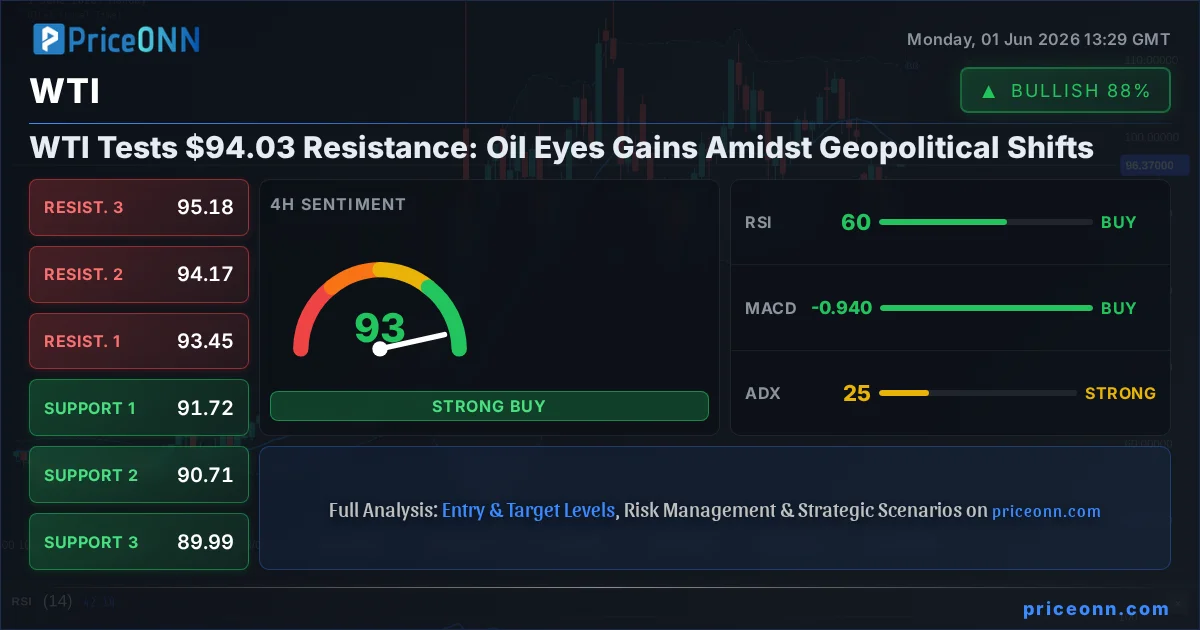
- Upside Risk: A sustained break above $110 per barrel in WTI crude futures could signal a broader recognition of supply risks.
- Downside Support: Key support levels in the $90-$95 per barrel range may be tested if tensions ease or emergency stock releases prove effective.
Traders should also be aware of the potential for increased volatility in refined product markets, particularly diesel and jet fuel, as shortages persist.
The IEA has characterized the current situation as potentially the most significant supply disruption in the history of the oil market. Some analysts are even discussing the possibility of $200 oil. The coming weeks will be crucial in determining whether the futures market catches up to the realities of the physical market.
Track markets in real-time
Empower your investment decisions with AI-powered analysis, technical indicators and real-time price data.
Join Our Telegram Channel
Get breaking market news, AI analysis and trading signals delivered instantly to your Telegram.
Join Channel PriceONN News
The Iran war suddenly turned what had started as a year of oversupply in global oil and LNG markets into the worst oil and gas supply disruption in history. Three months after the U.S.-Israeli strikes on Iran began on February 28, the world has already lost 1 billion barrels of crude oil supply, oil and gas prices have found a new, much higher floor, and whipsaw with violent volatility nearly every day, trade routes have shifted, and tanker rates have spiked. Actual supply shortages are...
PriceONN News
Crude oil prices experienced a significant drop, with WTI futures falling over 1.8% to $87.25, as optimism grew for a U.S.-Iran deal potentially reopening the Strait of Hormuz.
PriceONN News
Crude oil prices experienced a significant downturn as market sentiment shifted towards optimism about a potential US-Iran Memorandum of Understanding that could reopen the Strait of Hormuz. WTI futures fell nearly 2% on the news.
PriceONN News
(RTTNews) - Crude oil prices have tumbled on Friday as expectations of the U.S. and Iran signing a Memorandum of Understanding run high. The MoU would allow for immediate reopening of the Strait of Hormuz and pave the way for the resumption of oil and energy trade.
PriceONN News
Crude oil futures experienced a dramatic intraday reversal on Thursday, soaring overnight on geopolitical fears only to pull back significantly as reports of a potential diplomatic understanding between the U.S. and Iran emerged.
PriceONN News
Crude oil futures experienced a dramatic intraday reversal, soaring to $92.52 before pulling back significantly on Thursday. The volatile session was driven by shifting geopolitical narratives and U.S. inventory data.
PriceONN News
Crude oil futures experienced a dramatic reversal, soaring overnight to $92.52 before plummeting nearly 6% to $89 a barrel. This volatility was driven by escalating US-Iran tensions followed by reports of a potential preliminary diplomatic understanding.
PriceONN News
(RTTNews) - Crude oil futures skyrocketed overnight but have shown a significant pullback over the course of the trading day on Thursday.
PriceONN News
(RTTNews) - A report released by the Energy Information Administration on Thursday showed crude oil inventories in the U.S. decreased by less than expected in the week ended May 22nd.
PriceONN News
The market’s faith in an imminent US-Iran peace breakthrough has clearly weakened today - but it has not disappeared yet. Oil prices jumped again in after fresh military escalation around the Strait of Hormuz reignited fears of prolonged supply disruptions across the Gulf. Brent crude pushed back toward the mid-$90s after new U.S. strikes inside […] The post Brent Oil Holding Below $100 Suggests Markets Still See Room for a US-Iran Deal appeared first on ActionForex.
PriceONN News
(RTTNews) - Extending the losses from yesterday's session, crude oil prices have gone into freefall on Wednesday as investor expectations on a potential U.S.-Iran agreement continue to rise despite the U.S. refusing to ease its demands.
PriceONN News
(RTTNews) - Crude oil prices have tumbled on Tuesday as optimism about a U.S.-Iran peace deal that could lead to reopening of the Strait of Hormuz soon grows despite reports of fresh U.S. strikes on Iran yesterday.