
Crude Oil Slides As U.S. Pauses Its Planned Attacks On Iran
 PriceONN Editorial Desk
Multi-source verification
PriceONN Editorial Desk
Multi-source verification

Geopolitical Calm Cools Oil Markets
Oil prices experienced a notable downturn today, snapping a three-day winning streak. The shift followed surprising news that the United States has indefinitely suspended planned military strikes against Iran. This de-escalation arrives as diplomatic channels appear to be warming, with Iran having recently submitted a peace proposal through Pakistan.
Despite the temporary reprieve from immediate conflict, the critical Strait of Hormuz remains a focal point of concern for market participants. This vital shipping lane, a chokepoint for a significant portion of global oil, has been effectively closed since the escalation of tensions on February 28. The continued blockage is exerting pressure on worldwide oil inventories.
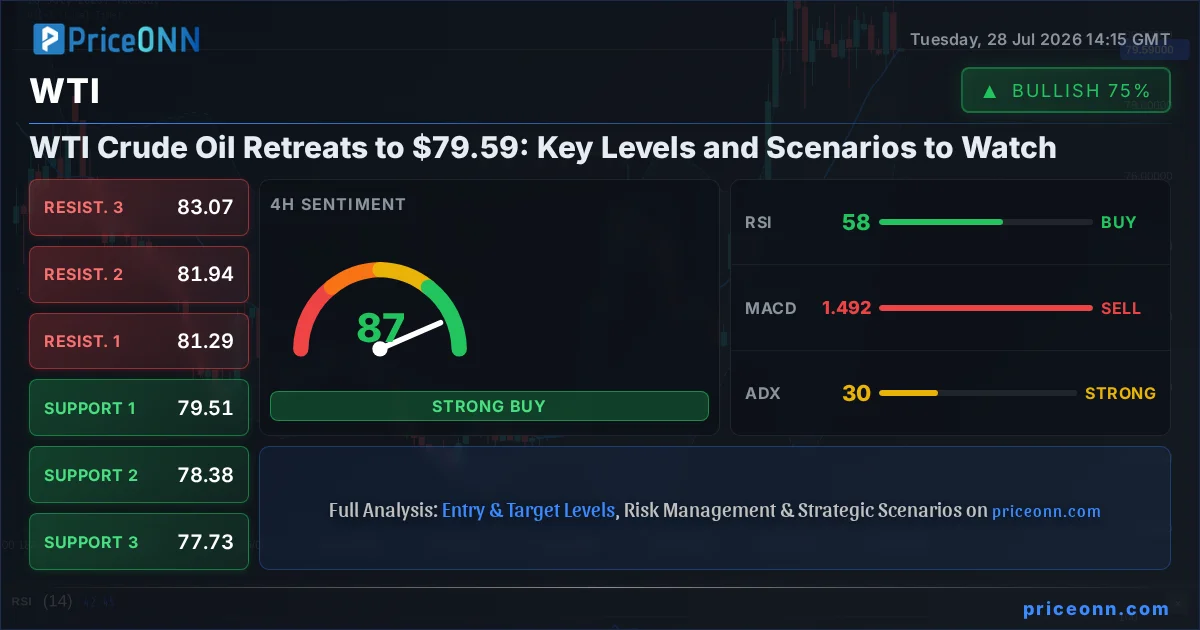
West Texas Intermediate (WTI) crude for June delivery saw a modest decrease, trading down by approximately $0.07, or 0.1 percent, settling around $108.59 per barrel. This price action reflects the market's immediate reaction to the U.S. decision to stand down, signaling a reduced immediate threat to supply.
Diplomatic Dance and Supply Chain Jitters
The White House confirmed the halt in planned operations against Iran via social media. President Donald Trump indicated that this decision was made at the behest of leaders from Qatar, Saudi Arabia, and the United Arab Emirates. These nations reportedly expressed optimism regarding the ongoing negotiations between the U.S. and Iran.
Trump reiterated a firm stance, emphasizing that Iran must not acquire nuclear weapons, regardless of any potential agreement. He also issued a clear warning, stating that a large-scale military response would be swiftly reinstated should diplomatic efforts falter. This dual approach signals a strategy of pressure and potential dialogue.
Iran's semi-official Tasnim news agency reported that a 14-point proposal, aimed at de-escalating the conflict and fostering confidence, was formally presented to the U.S. via Pakistani intermediaries. A spokesperson for Iran's Foreign Ministry confirmed ongoing negotiations, highlighting Pakistan's role as a mediator.
The economic toll of the prolonged conflict is substantial. Americans have reportedly spent an additional $45 billion on gasoline and diesel this year compared to the same period last year, according to data. While the immediate threat of an attack has receded, the uncertainty surrounding the reopening of the Strait of Hormuz continues to cast a shadow over the energy markets.
Market Ripple Effects
The continued closure of the Strait of Hormuz has led to a significant increase in the number of tankers carrying Iranian crude and petrochemicals waiting in the Persian Gulf. Reports indicate that nearly 49 tankers are currently idled, a stark rise from 29 vessels prior to the U.S. naval blockade initiated on April 13. This bottleneck is a critical factor influencing global oil prices.
Divergent views and potential actions are emerging among international allies. While NATO members had previously distanced themselves from the U.S.-Iran conflict, economic pressures may be prompting a reconsideration of their positions. Discussions are reportedly underway within NATO regarding potential measures to ensure safe passage through the Strait of Hormuz should it remain inaccessible by early July. The alliance is navigating the complexities of achieving unanimous consent among its members.
The broader energy landscape shows signs of strain. Recent reports from the International Energy Agency (IEA) and the Organization of Petroleum Exporting Countries (OPEC) indicated a rapid depletion of global crude oil stockpiles. These organizations have also revised their demand growth forecasts downward for 2026, suggesting a complex interplay of supply constraints and shifting demand expectations.
Meanwhile, the U.S. dollar index saw a slight uptick, trading at 99.25, an increase of 0.26 points or 0.26%. This movement in the dollar can influence commodity pricing, as many are denominated in U.S. dollars.
Trader Takeaways
The halt in U.S. military action against Iran introduces a significant element of uncertainty into the oil market, temporarily easing immediate supply fears. However, the market's focus will likely pivot back to the persistent closure of the Strait of Hormuz and the ongoing diplomatic negotiations. Traders should monitor the progress of these talks closely, as any breakdown could lead to a swift re-escalation and a renewed surge in oil prices.
The key risk remains the potential for miscalculation or a failure to reach a durable agreement, which could quickly reignite geopolitical tensions. The increasing number of laden tankers near the Strait of Hormuz highlights the growing supply chain pressure. This situation could also have knock-on effects on other energy-related commodities and potentially influence inflation expectations.
Investors and traders should pay close attention to the actions and statements from key players like the U.S. Iran, and mediating nations. Furthermore, the stance of international bodies such as NATO and their potential involvement in ensuring maritime security will be critical. The market is currently balancing the prospect of de-escalation against the tangible, ongoing disruption to global oil flows.
Track markets in real-time
Empower your investment decisions with AI-powered analysis, technical indicators and real-time price data.
Join Our Telegram Channel
Get breaking market news, AI analysis and trading signals delivered instantly to your Telegram.
Join Channel PriceONN News
WTI crude oil plunged by more than 7% on 27 July 2026 after the US suspended a series of strikes against Iran over the weekend, raising hopes of a diplomatic solution and the reopening of shipping through the Strait of Hormuz. Brent crude also fell below $90 per barrel. Meanwhile, Bloomberg reported […] The post WTI Analysis: Gap Breaks Short-Term Trend as Price Remains Trapped Between the Poc and Profile Boundary appeared first on ActionForex.
PriceONN News
Oil prices continued to trend lower in early Asian trade on Tuesday as a fourth night passed without any attacks from either Iran or the United States. At the time of writing, WTI crude was trading at $81.55 per barrel, down 1.28% on the session, while Brent crude had slipped to $87.36 per barrel, a decline of 1.13%. On Monday, President Trump sought to boost hopes of a diplomatic resolution between Washington and Tehran by claiming that the U.S. was engaged in "good talks" with Iran. Iranian...
PriceONN News
(RTTNews) - Crude oil prices have gone into a tailspin on Monday, extending the losses from Friday's plunge after the U.S. halted nearly two weeks of military attacks against Iran following which near-term oil supply-disruption concerns reduced.
PriceONN News
Oil prices plunged by more than 5% in early Asian trade on Monday as the U.S. and Iran halted attacks after two weeks of escalation that had driven Brent above $100. At the time of writing, WTI crude was trading at $84.47, down 5.39%, while Brent crude had fallen to $91.80, a decline of 5.15%. The retreat came after Washington signaled on Friday that it would temporarily halt its bombing campaign against Iran. Talking to Face the Nation on Sunday, U.S. Ambassador to the United Nations Mike...
PriceONN News
Oil prices gave up earlier gains on Friday after reports that Pakistan is trying to broker a return to U.S.-Iran nuclear negotiations. China is strongly backing the effort as the conflict and the closure of the Strait of Hormuz continue to threaten its energy security and weigh on its economy. Brent crude for September delivery fell 4.4% to trade at $96.36 per barrel at 1.35 pm ET while WTI crude for September delivery was down 3.6% to change hands at $88.86/bbl. However, Standard Chartered...
PriceONN News
The Houthi threats to shipping in the Red Sea and its chokepoint, the Bab el-Mandeb Strait, have forced at least one oil tanker carrying Saudi crude to Asia to choose the much longer route through the Suez Canal, the Mediterranean, and around Africa. The supertanker Olympic Luck, partially laden with Saudi crude at Yanbu on the Red Sea, transited the Suez Canal into the Mediterranean late on Sunday, according to shipping data monitored by Bloomberg. The U-turn from Bab el-Mandeb indicates that...
PriceONN News
U.S. airlines are grappling with soaring jet fuel costs again after the return of hostilities in the Middle East shattered the three-week-long U.S.-Iran ‘deal to make a deal’ and sent Brent crude oil prices soaring past $100 per barrel again. The U.S. jet fuel market has been tightening since March, although there haven’t been concerns about any shortages in America, unlike in Europe, which in April was supposed to run out of stockpiles within six weeks. Europe didn’t see shortages, but the...
PriceONN News
At the beginning of Donald Trump’s first term as U.S. President in 2017, a senior White House official commented off-the-record to OilPrice.com that: “We’re not going to put up with any more crap from the Saudis.” The comment had followed the end of the 2014-2016 Oil Price War that had seen the Kingdom rally its fellow OPEC members to ramp up their collective oil production in order to crash oil prices to cause the bankruptcy of as many American shale oil producers as possible, as analysed in...
PriceONN News
The spike in oil prices and slowing private investments have been weighing on India’s economic growth, which is now seen at 6.6% in the fiscal year to March 2027, a full percentage-point drop from the 7.7% GDP growth in the prior fiscal year, a of economists showed on Tuesday. Nearly three dozen economists were surveyed between July 21 and 27 for the poll, in which some experts flagged weaker real economic activity than the headline figures have suggested in the past five months...
PriceONN News
The anti-government protests in Libya over power cuts and high electricity bills over the past few days escalated on Tuesday, with protesters entering the Mellitah Oil and Gas complex and threatening to halt gas and fuel supplies for both the domestic and international markets. Libya’s capital Tripoli has been the main stage of protests against the Government of National Unity led by Abdul Hamid Dbeibah. Protesters blocked streets and roads out of the capital earlier this week as a sign of...
PriceONN News
Saudi Arabia may raise the price of the crude it ships to Asia via the Suez Canal, Reuters has reported, to reflect higher shipping costs due to the Houthi maritime blockade in the Red Sea. The price hike could reach $5 per barrel of crude. Citing unnamed sources, the publication said Aramco was responding to the need to redirect oil flows from its Red Sea port of Yanbu to the Ain Sukhra port in Egypt, from where the crude gets transported via the Suez-Mediterranean pipeline to the port of Sidi...
PriceONN News
Crude oil prices are retreating after Brent hit $100 again last week as the United States and Iran took a break from hostilities over the weekend. Yet with the outcome of the war still highly uncertain, the outlook for stock markets has dimmed. Add to that Big Tech’s AI spending binge and fresh warnings about energy commodity shortages, and we are looking at extended market turbulence ahead. Last week saw a rare pile-up of adverse market developments that must have shaken the confidence of many...