Crude Oil Soars As Fresh Attacks In Gulf Hint War Could Drag On

Oil Prices Surge on Renewed Geopolitical Fears
Crude oil experienced a significant upward movement Friday, climbing sharply as a new wave of attacks originating from Iran targeted energy infrastructure in Kuwait. This development has reignited global concerns over a potentially prolonged conflict in the Persian Gulf, casting a shadow over earlier hopes for a swift resolution. The specter of major production disruptions is once again dominating market sentiment, pushing prices firmly higher.
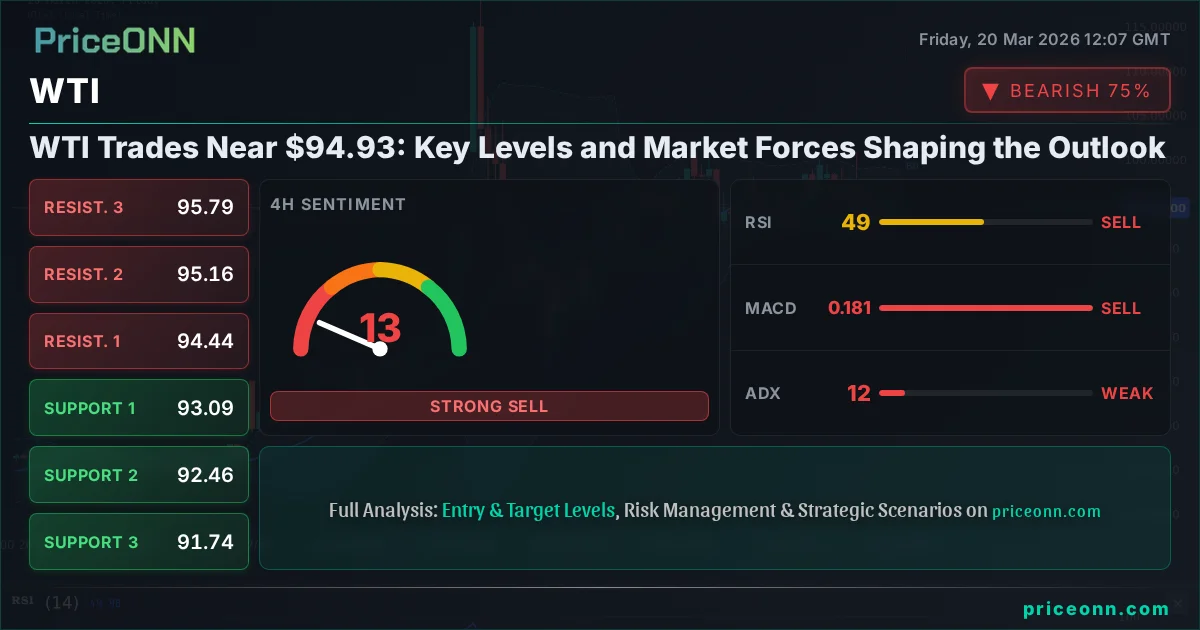
West Texas Intermediate (WTI) Crude for April delivery was last observed trading at $97.82 per barrel, marking a gain of $1.68, or 1.75%. This price action caps a three-week period of escalating oil costs, directly linked to the intensifying conflict between U.S.-Israel allied forces and Iran, which commenced on February 28.
The recent escalation follows Israel's targeting of Iran's South Pars gas field, a facility crucial for Iran's domestic energy needs. Iran's response was swift and retaliatory, striking energy installations across Saudi Arabia, Qatar, and the United Arab Emirates, with a particularly massive blow landing on Qatar's primary Liquefied Natural Gas (LNG) plant in Ras Laffan. The state-owned QatarEnergy confirmed extensive damage, estimating that repairs could exceed a year, a revelation that sent shockwaves through the global energy markets.
Compounding the supply concerns, Iran's prior actions, including the blockade of the vital Strait of Hormuz, had already forced Arab nations to curtail production due to severe storage limitations. Amidst this volatile backdrop, U.S. President Trump had urged Israel to exercise restraint regarding attacks on Iran's critical energy infrastructure. Israeli Prime Minister Benjamin Netanyahu acknowledged this request, stating that Israel would refrain from targeting Iran's energy facilities, while also suggesting that U.S.-Israel actions had significantly degraded Iran's strategic capabilities, potentially shortening the conflict's duration. This communication had initially buoyed traders, signaling a potential de-escalation.
However, Friday's assault on Kuwait's Mina Al-Ahmadi refinery, a facility processing approximately 346,000 barrels per day, by Iranian drones has dramatically reversed that sentiment. The resulting fires in multiple processing units have rekindled fears of a wider, escalating conflict, directly impacting immediate supply.
In an effort to mitigate the price pressures, U.S. Treasury Secretary Scott Bessent indicated in a Fox Business interview that the U.S. is contemplating the release of nearly 140 million barrels of Iranian oil currently stranded at sea. This potential move aims not only to temper soaring global oil prices but also to prevent China from being the sole beneficiary of any supply imbalance, while opening avenues for other Asian nations like Malaysia, Singapore, Indonesia, Japan, and India. Bessent also hinted at further releases from the U.S. Strategic Petroleum Reserve to alleviate market strain.
This follows the Trump administration's earlier decision to ease sanctions on certain Russian oil shipments, allowing access to approximately 130 billion barrels for a 30-day period, a move designed to address the existing supply deficit. Nations heavily reliant on Arab oil and energy sources are now in a desperate search for alternatives, a dynamic that continues to underpin current oil prices and prevent a steeper decline.
A noticeable divergence was observed in recent trading sessions. While Brent Crude saw a surge, West Texas Intermediate (WTI) prices experienced more modest gains. This disparity is partly attributed to the latest U.S. Energy Information Administration (EIA) inventory report, which revealed a substantial build of 6.16 million barrels in U.S. crude stockpiles, bringing the total to 449.3 million barrels. Market observers suggest Brent's sensitivity to Strait of Hormuz disruptions, contrasted with WTI's closer ties to U.S. domestic supply stability, explains this performance gap. Many traders remain skeptical about the swift restoration of extensive oil and gas production, believing that even if safe passage through the Strait of Hormuz is re-established, the logistical recovery will be a protracted process.
Market Ripple Effects
The escalating conflict in the Middle East and its direct impact on crude oil prices create significant ripple effects across global markets. The immediate beneficiary, besides oil producers, is the US Dollar Index (DXY), which often strengthens during periods of geopolitical uncertainty as a safe-haven asset. Conversely, riskier assets such as emerging market equities and high-yield corporate bonds are likely to face headwinds as investors retreat to perceived safer investments.
Furthermore, the upward pressure on oil prices directly fuels inflation expectations. This could prompt central banks, particularly the U.S. Federal Reserve, to adopt a more hawkish stance, potentially delaying interest rate cuts or even considering further hikes if inflation proves persistent. This has direct implications for treasury yields, which could see upward pressure. Traders should closely monitor the energy sector stocks, as well as airline and transportation companies, which are highly sensitive to fuel costs. The renewed focus on supply disruptions also brings renewed attention to alternative energy investments and related ETFs, as the search for stable, long-term energy solutions intensifies.
Reading Between the Lines
While the immediate narrative centers on the physical attacks and production fears, the underlying dynamics involve complex geopolitical maneuvering and economic strategy. The U.S. Treasury Secretary's comments about releasing stranded Iranian oil and potentially tapping the SPR signal a clear intent to manage price volatility and prevent excessive market speculation. This also serves to counterbalance potential gains by adversaries and ensure broader global energy access.
The divergence between Brent and WTI prices highlights the market's granular understanding of supply chain vulnerabilities. Brent's direct link to the Strait of Hormuz makes it more susceptible to immediate geopolitical shocks, whereas WTI's pricing reflects a complex interplay of domestic production, storage levels, and U.S. policy decisions. The skepticism surrounding the speed of logistical recovery underscores a crucial point: even if immediate conflict subsides, the intricate network of shipping, refining, and distribution requires significant time to normalize. This suggests that elevated oil prices could persist longer than some anticipate, creating a sustained inflationary environment.
Track markets in real-time
Empower your investment decisions with AI-powered analysis, technical indicators and real-time price data.
Join Our Telegram Channel
Get breaking market news, AI analysis and trading signals delivered instantly to your Telegram.
Join Channel