
Why the US Refused to Ban Oil Exports as Brent Crude Tests $110

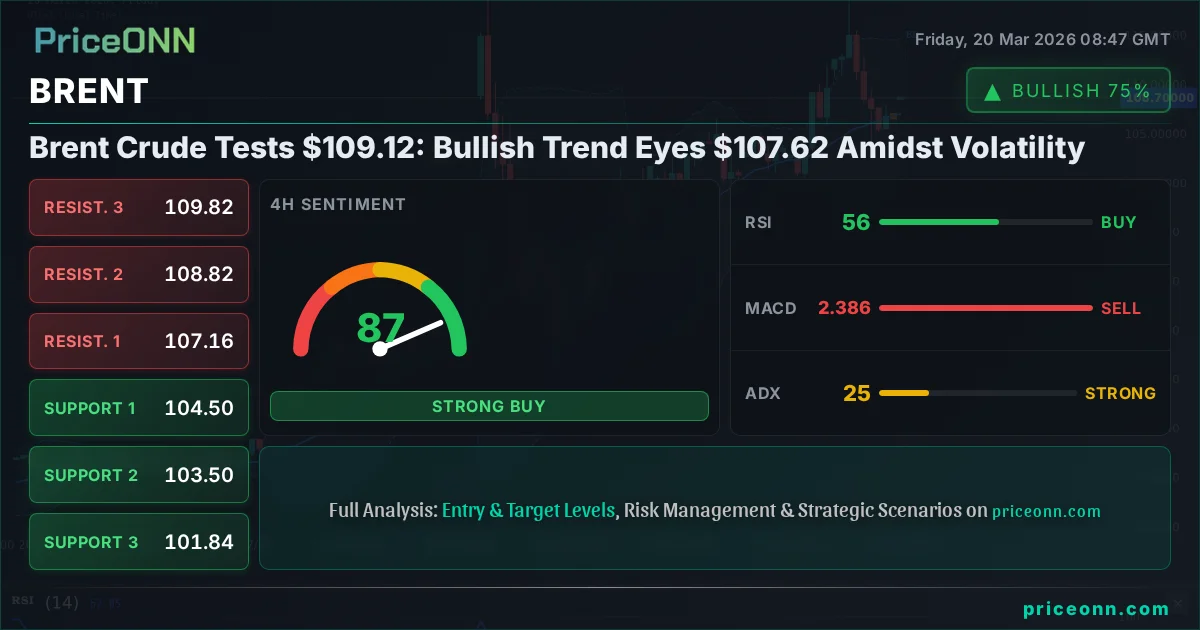
Brent crude futures have surged past the $106 mark and are testing levels near $110 per barrel, as U.S. gasoline prices climb towards $4 a gallon. In response to escalating energy costs and public pressure, the U.S. administration has made it clear that imposing a ban on oil exports is not under consideration. This stance comes at a critical juncture, with global supply chains strained by geopolitical events in the Middle East.
Market Context: Supply Fears Drive Prices Higher
The global oil market is navigating a complex landscape, marked by persistent disruptions to exports from the Middle East, now entering their third week. While prices experienced a slight pullback towards the end of the trading week, the overall trend indicates a significant weekly gain. Brent crude, a key international benchmark, has advanced from around $103 at the start of the week to trade near $106.71. West Texas Intermediate (WTI) futures have also seen volatility, retreating from highs above $99 to trade around $93.58.
The recent price softening late in the week was influenced by statements from global leaders acknowledging the need to restore unimpeded tanker traffic through the Strait of Hormuz. Additionally, remarks from U.S. officials suggesting a potential relaxation of sanctions on Iranian crude oil currently in floating storage added to the downward pressure. Speculation about further releases from the U.S. Strategic Petroleum Reserve also played a role.
Analysis & Drivers: Geopolitics and Export Bans
The administration's decision to forgo an oil export ban is rooted in a pragmatic assessment of its potential economic consequences. Industry experts warn that such a move would likely be counterproductive. U.S. fuel prices are intrinsically linked to global market benchmarks, meaning that restricting domestic exports would not necessarily translate into lower prices at the pump for consumers. Instead, limiting access to higher-priced international markets could reduce revenue for domestic producers, potentially discouraging further drilling at a time when increased supply is crucial.
Furthermore, the U.S. refining infrastructure is not configured to process all domestically produced crude. An export ban could lead to a regional glut along the Gulf Coast, while doing little to alleviate fuel shortages in consuming regions like the Northeast and West Coast. Critically, removing U.S. barrels from the global market would tighten international supply, paradoxically exerting further upward pressure on crude prices, which would then feed back into U.S. domestic fuel costs. This dynamic underscores why market data shows that export restrictions are not a viable solution for controlling energy prices.
The prevailing geopolitical climate, including reports of continued military actions in the Middle East despite diplomatic assurances, continues to be a primary driver of market sentiment. The fundamental challenge remains: reversing extensive damage and disruption to oil production and transportation infrastructure is a complex and time-consuming process that cannot be resolved instantly.
Trader Implications: Navigating Volatility
Traders should monitor several key factors. Firstly, the ongoing situation in the Middle East and any further disruptions to shipping lanes remain a paramount risk. Secondly, any concrete policy shifts regarding sanctions on oil-producing nations could significantly impact supply dynamics. Keep a close eye on Brent crude's ability to hold above the $105 support level and its potential to retest the $110 psychological mark. For WTI, the $92.50 level is a critical support zone; a break below could signal further downside.
The administration's commitment to avoiding export bans provides a degree of stability, but the market remains sensitive to supply-side shocks. Traders should also consider the potential for further releases from the Strategic Petroleum Reserve as a bearish factor, although its impact may be limited if not substantial. The disconnect between U.S. domestic fuel prices and global crude benchmarks highlights the complexity of the energy market, suggesting that direct intervention through export bans is unlikely to achieve the desired consumer relief.
Outlook: Supply Concerns to Persist
Looking ahead, the energy market is likely to remain volatile as geopolitical tensions persist and the practical challenges of restoring disrupted supply chains take time to resolve. While diplomatic efforts may aim to ease tensions, the immediate physical supply constraints are expected to keep a floor under oil prices. Market participants will be closely watching for any signs of de-escalation or, conversely, further escalation in the Middle East, which could trigger renewed price rallies. The focus remains on the physical availability of oil and the resilience of global trade routes.
Frequently Asked Questions
What is the current price trend for Brent crude?
Brent crude futures are currently trading near $106.71 per barrel, having seen a significant increase throughout the week, testing levels close to $110 amidst ongoing supply concerns.
Why is the US not banning oil exports despite high prices?
U.S. officials have stated that an export ban is not under consideration because it would likely be counterproductive. Market data indicates it would not significantly lower domestic gasoline prices but could reduce producer revenue and tighten global supply, pushing crude prices higher.
What are the key levels traders should watch for oil prices?
Traders should monitor Brent crude holding above $105 as support and watch for a potential retest of $110. For WTI, $92.50 is a critical support level; a breach could signal further declines.
Track markets in real-time
Empower your investment decisions with AI-powered analysis, technical indicators and real-time price data.
Join Our Telegram Channel
Get breaking market news, AI analysis and trading signals delivered instantly to your Telegram.
Join Channel


PriceONN