
Will Crude Oil Prices Stabilize as Iran Conflict Eases?
West Texas Intermediate (WTI) crude slipped below $93 per barrel and Brent crude retreated from highs above $119 on Friday, as geopolitical tensions in the Middle East showed signs of de-escalation. The sharp reversal in oil prices followed remarks from Israeli Prime Minister Benjamin Netanyahu suggesting the conflict with Iran could conclude sooner than anticipated, providing much-needed relief to energy markets.
Market Context
The oil market had been on a volatile trajectory, experiencing significant gains earlier in the week due to escalating conflict. An Israeli strike on Iran's South Pars gas field and subsequent Iranian attacks on regional energy infrastructure had sent shockwaves through global supply chains. These events briefly propelled Brent crude futures to intraday highs exceeding $119 per barrel on Thursday. However, sentiment shifted dramatically as Netanyahu stated that Israeli and U.S. forces had significantly degraded Iran’s capabilities, implying a shorter conflict duration. Crucially, he also indicated a willingness to halt further attacks on key energy assets like the South Pars field, reportedly at the request of U.S. President Trump, thereby mitigating immediate concerns about further critical infrastructure damage.
This geopolitical easing was reflected in broader financial markets. South Korean equities saw early gains, while U.S. stock futures also showed some recovery after earlier declines. The shift in risk appetite away from escalating conflict provided a cooling effect on commodity prices. Despite the pullback, oil prices remain elevated compared to pre-conflict levels, as the market grapples with the lingering effects of supply disruptions and the ongoing need to secure alternative energy sources.
Analysis & Drivers
The primary driver for the recent price volatility has been the conflict between Israel and Iran, and its potential impact on global energy supply. The Strait of Hormuz, a critical chokepoint for approximately 90% of India's Liquefied Petroleum Gas (LPG) imports and a significant transit route for oil, has been a focal point of concern. The successful expansion of LPG usage in India, driven by initiatives like the Pradhan Mantri Ujjwala Yojana scheme, has led to record consumption, with February 2026 demand reaching 2.8 million tonnes, a 10% year-on-year increase. This growing demand, coupled with domestic production satisfying only about 40% of needs, makes India particularly vulnerable to disruptions in Gulf supply chains.
The potential for a quicker resolution to the Iran conflict directly addresses these supply fears. Furthermore, market data indicates that the U.S. is exploring options to manage oil prices, including potential releases from its Strategic Petroleum Reserve and even considering the lifting of sanctions on some Iranian oil to alleviate supply shortages, particularly in Asia. The redirection of U.S. oil through the Panama Canal to Asian markets also highlights the logistical adjustments underway to compensate for disrupted flows.
Trader Implications
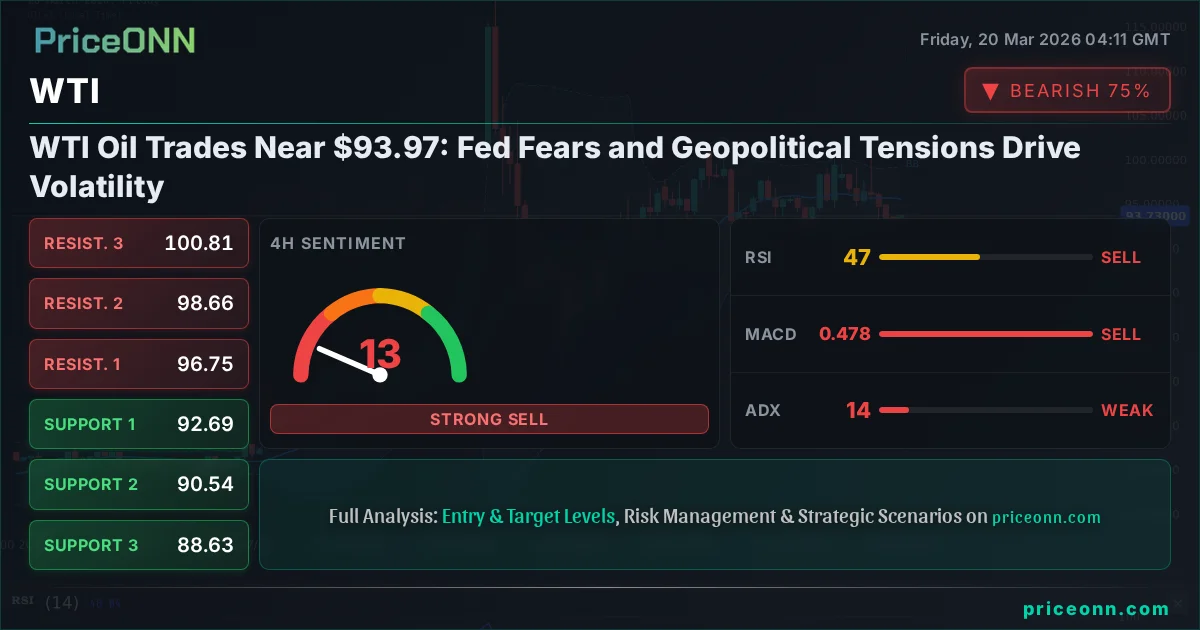
Traders should closely monitor diplomatic developments and any official statements from involved parties regarding the duration and scope of military actions. The $92.57 level for WTI and $105.18 for Brent represent key support levels following Friday's decline. A sustained break below these could signal further downside risk, while a re-escalation of conflict would likely send prices soaring again, potentially pushing Brent back towards the $119 per barrel mark.
Key technical levels to watch include immediate resistance for WTI at around $95 and for Brent near $108. The U.S. Treasury Secretary's comments on potential SPR releases also add a layer of potential price containment. Traders should remain vigilant for news regarding sanctions on Iranian oil and the effectiveness of logistical adjustments like U.S. oil rerouting. Given the rapid shifts in sentiment, strategies favoring short-term trading or hedging against volatility might be prudent.
Outlook
The immediate outlook for crude oil prices hinges on the continued de-escalation of the Iran conflict. If diplomatic efforts prevail and the Strait of Hormuz remains open for essential energy flows, prices are likely to stabilize, although they will remain sensitive to broader supply-demand fundamentals and inventory data. However, any resurgence in hostilities or significant supply disruptions could quickly reignite upward price pressure. The potential for increased Iranian oil supply, if sanctions are eased, could also act as a moderating factor on prices in the medium term.
Frequently Asked Questions
What caused the recent sharp decline in oil prices?
The decline was primarily driven by Israeli Prime Minister Netanyahu's statements suggesting the conflict with Iran could end sooner than expected. This eased fears of prolonged supply disruptions, causing WTI to fall to $92.57 and Brent to $105.18.
How vulnerable is India's LPG market to these disruptions?
India's LPG market is highly vulnerable, as approximately 90% of its imports come from the Middle East. Record consumption, driven by government schemes, means that around 60% of its total LPG needs must be imported, making it sensitive to any supply chain issues originating from the Gulf region.
What are the key price levels traders should watch for crude oil?
Traders should monitor WTI around the $92.57 support level and Brent around $105.18. Resistance for WTI is seen near $95, while Brent may face selling pressure around $108 if prices attempt to rebound.
Track markets in real-time
Empower your investment decisions with AI-powered analysis, technical indicators and real-time price data.
Join Our Telegram Channel
Get breaking market news, AI analysis and trading signals delivered instantly to your Telegram.
Join Channel

PriceONN