
Will the US Ban Oil Exports as Prices Soar Past $110?


Brent crude futures have surged past the $110 per barrel mark, while U.S. gasoline prices are hovering near $4 a gallon. Amidst escalating geopolitical tensions and their impact on global energy markets, pressure is mounting on Washington to intervene. However, administration officials have indicated that a ban on U.S. oil exports is not being considered, a move that could have significant unintended consequences.
Market Context
The current energy price shock is largely attributed to fallout from recent geopolitical events, specifically the conflict involving Iran. As global benchmarks like Brent crude climb, domestic U.S. fuel prices, including gasoline, have followed suit. The prospect of restricting U.S. crude exports, a potent policy tool, has been raised as a potential response to consumer price pressures. Market data shows that Brent crude has seen a significant upward trajectory in recent weeks, driven by supply disruption fears. U.S. gasoline prices, closely linked to international crude benchmarks, have also experienced sharp increases, nearing a critical psychological level for consumers.
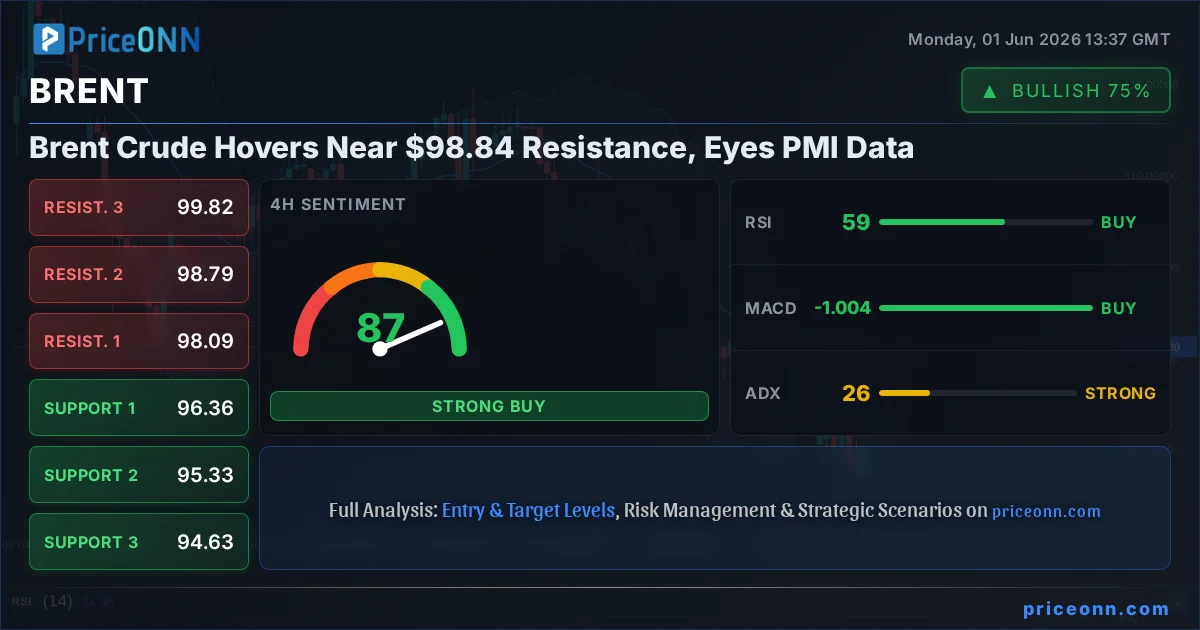
Analysis & Drivers
Industry experts and market analysts suggest that implementing an oil export ban would likely be counterproductive. The U.S. refining system is not configured to process all domestic crude production, meaning a ban would lead to a surplus in certain regions, such as the U.S. Gulf Coast. This surplus would not necessarily translate into lower prices for consumers in areas facing supply constraints, like the Northeast or West Coast, as fuel prices are dictated by global supply and demand dynamics.
Furthermore, removing U.S. barrels from the international market would tighten global supply, potentially driving crude prices even higher. This global price increase would then feed back into U.S. domestic fuel costs, negating the intended effect of the ban. Market data indicates that the U.S. is a significant exporter of crude oil, and its removal from global trade would create a substantial supply deficit. Producers, facing reduced access to lucrative international markets and potentially lower domestic prices due to refining bottlenecks, might also scale back drilling activities, further exacerbating supply concerns in the longer term.
Instead of export restrictions, the administration appears to be exploring less disruptive measures. These include drawing down the Strategic Petroleum Reserve (SPR) and potentially easing restrictions on existing Iranian crude shipments to increase market supply. These actions aim to address immediate price pressures without resorting to policies that could destabilize global energy trade and potentially harm domestic producers.
Trader Implications
Traders should closely monitor U.S. administration statements regarding energy policy. The explicit denial of export ban considerations provides a degree of certainty, but any shift in rhetoric could trigger volatility. Key price levels to watch include $110 for Brent crude and the $4 per gallon mark for U.S. gasoline. A sustained breach of these levels could lead to increased calls for more drastic measures, even if currently off the table.
For those trading crude oil futures (e.g., WTI, Brent) and gasoline contracts, the absence of an export ban suggests that global supply-demand fundamentals will remain the primary price drivers. However, the potential for SPR releases or changes in policy towards other oil-producing nations could introduce short-term price fluctuations. Traders should also be aware of the structural limitations of U.S. refining capacity, which could create regional price dislocations even without an export ban.
Consideration should be given to the potential for increased drilling activity if prices remain elevated and export markets are accessible, which could provide a longer-term bearish signal for crude prices. Conversely, any indication of escalating geopolitical conflict could reinforce bullish sentiment. The key takeaway for traders is to focus on global supply dynamics and the administration's commitment to maintaining open export markets.
Outlook
The energy markets will likely remain sensitive to geopolitical developments and the effectiveness of current supply-boosting measures. While the U.S. has signaled against an oil export ban, the sustained high prices for crude and gasoline mean that the pressure on policymakers to act will persist. Investors and traders should anticipate continued volatility as the market weighs geopolitical risks against potential supply responses. The coming weeks will be crucial in determining whether current supply levels, combined with SPR releases, can stabilize prices, or if further market intervention, short of an export ban, will be necessary.
Frequently Asked Questions
What is the current price of Brent crude?
Market data indicates that Brent crude futures have surged past $110 per barrel. This price level reflects significant supply concerns in the global energy market.
Could a U.S. oil export ban lower gasoline prices?
Analysts suggest an export ban would likely not lower U.S. gasoline prices and could even increase them. Removing U.S. oil from the global market would tighten international supply, driving crude prices higher, which in turn impacts domestic fuel costs.
What alternative actions is the U.S. considering to address high energy prices?
The U.S. administration is reportedly considering drawing down the Strategic Petroleum Reserve (SPR) and potentially easing restrictions on existing Iranian crude shipments to increase market supply, rather than imposing an export ban.
Track markets in real-time
Empower your investment decisions with AI-powered analysis, technical indicators and real-time price data.
Join Our Telegram Channel
Get breaking market news, AI analysis and trading signals delivered instantly to your Telegram.
Join Channel PriceONN News
Crude oil prices experienced a significant drop, with WTI futures falling over 1.8% to $87.25, as optimism grew for a U.S.-Iran deal potentially reopening the Strait of Hormuz.
PriceONN News
(RTTNews) - Crude oil prices have tumbled on Friday as expectations of the U.S. and Iran signing a Memorandum of Understanding run high. The MoU would allow for immediate reopening of the Strait of Hormuz and pave the way for the resumption of oil and energy trade.
PriceONN News
Crude oil futures experienced a dramatic intraday reversal on Thursday, soaring overnight on geopolitical fears only to pull back significantly as reports of a potential diplomatic understanding between the U.S. and Iran emerged.
PriceONN News
Crude oil futures experienced a dramatic intraday reversal, soaring to $92.52 before pulling back significantly on Thursday. The volatile session was driven by shifting geopolitical narratives and U.S. inventory data.
PriceONN News
(RTTNews) - Crude oil futures skyrocketed overnight but have shown a significant pullback over the course of the trading day on Thursday.
PriceONN News
Global oil prices are treading water after a significant 5% slump, as market sentiment grapples with cautious optimism over Middle East de-escalation efforts versus lingering geopolitical uncertainties. Brent crude hovers near $104.72 and WTI near $98.07.
PriceONN News
WTI Crude Oil futures experienced a sharp decline of over 5.6%, falling to $98.26 per barrel as diplomatic efforts between the U.S. and Iran gained significant momentum, easing supply disruption fears.
PriceONN News
Crude oil prices experienced a sharp decline, with WTI futures for July delivery falling 5.66% to $98.26. This drop is largely attributed to renewed diplomatic efforts aimed at de-escalating the U.S.-Iran conflict and easing tensions around the Strait of Hormuz.
PriceONN News
The Iran war suddenly turned what had started as a year of oversupply in global oil and LNG markets into the worst oil and gas supply disruption in history. Three months after the U.S.-Israeli strikes on Iran began on February 28, the world has already lost 1 billion barrels of crude oil supply, oil and gas prices have found a new, much higher floor, and whipsaw with violent volatility nearly every day, trade routes have shifted, and tanker rates have spiked. Actual supply shortages are...
PriceONN News
Crude oil prices experienced a significant downturn as market sentiment shifted towards optimism about a potential US-Iran Memorandum of Understanding that could reopen the Strait of Hormuz. WTI futures fell nearly 2% on the news.
PriceONN News
Brent crude prices surged towards the mid-$90s amid fears of supply disruptions from Middle East tensions, only to pare gains later as whispers of a potential US-Iran diplomatic understanding emerged.
PriceONN News
Crude oil futures experienced a dramatic reversal, soaring overnight to $92.52 before plummeting nearly 6% to $89 a barrel. This volatility was driven by escalating US-Iran tensions followed by reports of a potential preliminary diplomatic understanding.