
Why Did WTI Crude Oil Slip Below $94 Amid Middle East De-escalation Hopes?


West Texas Intermediate (WTI) crude oil experienced a downward drift, settling near $93.50 per barrel in early Asian trading on Friday. The benchmark US crude contract faced pressure as diplomatic overtures from leaders in the United States and Israel sought to soothe market anxieties that had been amplified by reported damage to critical energy infrastructure in the Persian Gulf.
Market Context: Geopolitical Tensions Ease, Prices Recede
The price action reflects a typical market reaction to perceived de-escalation in geopolitical hotspots. When tensions rise, oil prices often surge on fears of supply disruptions. Conversely, as diplomatic efforts gain traction and the immediate threat to energy flows diminishes, prices tend to recede. WTI, a globally recognized light sweet crude oil benchmark, is particularly sensitive to supply-side shocks originating from the Middle East due to the region's significant role in global oil production and transit routes.
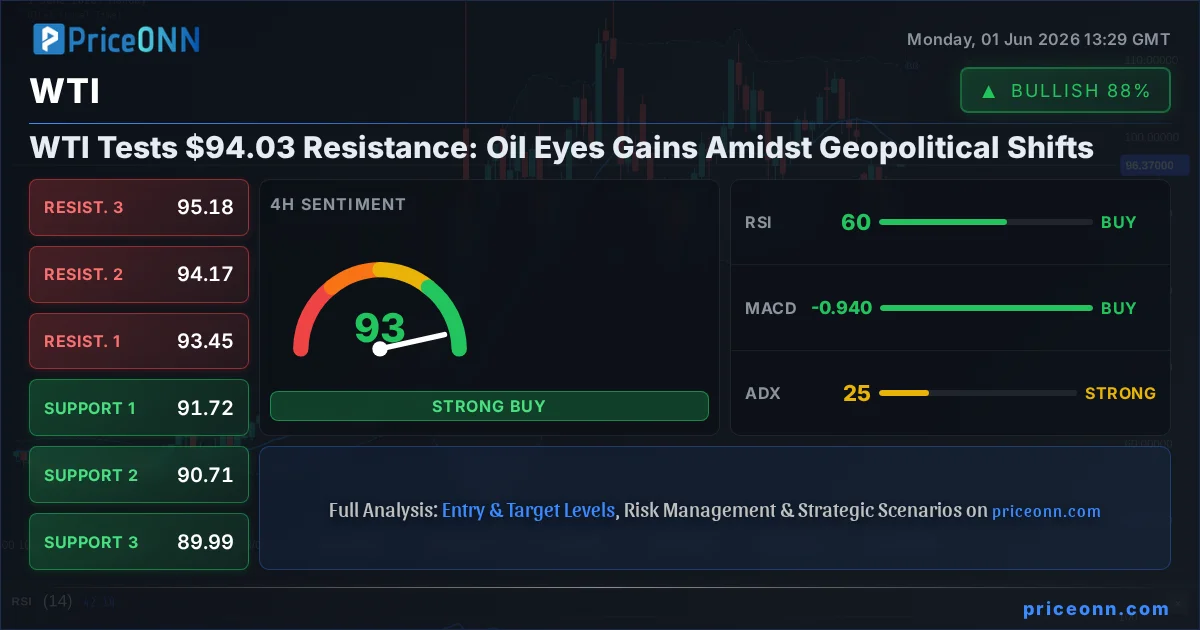
The damage to energy facilities, while concerning, appears to be less severe than initially feared, or at least, the market is now pricing in a reduced risk of widespread, prolonged disruption. This shift in sentiment, driven by leadership statements, has allowed traders to look past immediate fears and focus on other fundamental factors influencing the oil market.
Analysis & Drivers: Beyond the Headlines
While geopolitical developments often dominate short-term price movements in the energy sector, several underlying factors continue to shape the WTI trajectory. The fundamental balance of supply and demand remains paramount. Global economic health is a key determinant of oil consumption; a robust global economy typically translates to higher demand for energy, supporting prices. Conversely, signs of economic slowdown or recession can dampen consumption and exert downward pressure.
Production decisions by major oil-producing blocs, such as OPEC and its allies, also play a crucial role. Any shifts in their output quotas can significantly impact global supply levels. Furthermore, the strength of the US Dollar cannot be overlooked. As oil is priced in dollars, a stronger dollar typically makes oil more expensive for holders of other currencies, potentially reducing demand and weighing on prices. Conversely, a weaker dollar can have the opposite effect.
Market participants will continue to monitor inventory data released by the American Petroleum Institute (API) and the Energy Information Administration (EIA). These weekly reports provide crucial insights into the supply-demand picture within the United States, a major consumer and producer of oil.
Trader Implications: Watching Key Levels and Data
For traders, the current environment calls for a cautious approach, paying close attention to key technical levels and upcoming economic data. The slip below the $94 mark suggests that the immediate bullish sentiment driven by geopolitical concerns has abated. Key support levels to watch for WTI would be around the $92-$93 range, while resistance might be encountered near the recent highs around $95-$96.
Traders should closely monitor:
- Geopolitical Developments: Any renewed escalations or further de-escalation in the Middle East will be critical.
- Economic Data Releases: Key inflation and growth figures from major economies could influence demand expectations.
- OPEC+ Statements: Signals regarding future production policies will be closely watched.
- US Dollar Index (DXY): Movements in the dollar can impact oil's attractiveness to international buyers.
The recent price action indicates that while geopolitical risks can cause sharp, short-term spikes, the underlying market fundamentals will likely reassert themselves. A sustained move below $92 could signal further downside, while a firm break above $96 might suggest a re-engagement of bullish supply-driven narratives.
Outlook: Navigating Supply and Demand Fundamentals
Looking ahead, the WTI crude oil market appears poised to navigate a complex interplay of easing geopolitical fears and persistent fundamental drivers. While the immediate threat from the Middle East may have subsided, the potential for renewed volatility remains. Traders will be weighing this against global economic outlooks and OPEC+ supply management strategies. A sustained period of calm in the Middle East, coupled with signs of moderating global demand, could see WTI test lower support levels. Conversely, any unexpected supply disruptions or a stronger-than-anticipated economic rebound could provide a floor and potentially drive prices higher.
Frequently Asked Questions
What is the current price of WTI crude oil?
As of early Friday trading, West Texas Intermediate (WTI) crude oil was trading around $93.50 per barrel. This price reflects a slight decline from recent highs.
What caused the recent price drop in WTI?
The price drop was primarily driven by diplomatic efforts from US and Israeli leaders to calm concerns over damage to Middle East energy facilities. This easing of geopolitical tensions reduced the immediate fear of supply disruptions.
What should traders watch for in the WTI market next?
Traders should monitor ongoing geopolitical developments in the Middle East, key global economic data releases impacting demand, and any indications from OPEC+ regarding future production. Key support levels are seen around $92-$93, with resistance near $95-$96.
Track markets in real-time
Empower your investment decisions with AI-powered analysis, technical indicators and real-time price data.
Join Our Telegram Channel
Get breaking market news, AI analysis and trading signals delivered instantly to your Telegram.
Join Channel PriceONN News
Crude oil prices experienced a significant drop, with WTI futures falling over 1.8% to $87.25, as optimism grew for a U.S.-Iran deal potentially reopening the Strait of Hormuz.
PriceONN News
(RTTNews) - Crude oil prices have tumbled on Friday as expectations of the U.S. and Iran signing a Memorandum of Understanding run high. The MoU would allow for immediate reopening of the Strait of Hormuz and pave the way for the resumption of oil and energy trade.
PriceONN News
Crude oil futures experienced a dramatic intraday reversal on Thursday, soaring overnight on geopolitical fears only to pull back significantly as reports of a potential diplomatic understanding between the U.S. and Iran emerged.
PriceONN News
Crude oil prices experienced a significant downturn as market sentiment shifted towards optimism about a potential US-Iran Memorandum of Understanding that could reopen the Strait of Hormuz. WTI futures fell nearly 2% on the news.
PriceONN News
Crude oil futures experienced a dramatic intraday reversal, soaring to $92.52 before pulling back significantly on Thursday. The volatile session was driven by shifting geopolitical narratives and U.S. inventory data.
PriceONN News
(RTTNews) - Crude oil futures skyrocketed overnight but have shown a significant pullback over the course of the trading day on Thursday.
PriceONN News
(RTTNews) - Extending the losses from yesterday's session, crude oil prices have gone into freefall on Wednesday as investor expectations on a potential U.S.-Iran agreement continue to rise despite the U.S. refusing to ease its demands.
PriceONN News
(RTTNews) - Crude oil prices have tumbled on Tuesday as optimism about a U.S.-Iran peace deal that could lead to reopening of the Strait of Hormuz soon grows despite reports of fresh U.S. strikes on Iran yesterday.
PriceONN News
Iran's oil exports fell to their lowest level in at least six years in May as the U.S. naval blockade continued to choke off crude shipments and leave tens of millions of barrels stranded at sea. According to shipping data from Vortexa, Iran exported just 209,000 barrels per day (bpd) of crude oil and condensate in May, down from 1.34 million bpd in April and nearly 1.9 million bpd in March. Kpler had estimated May exports slightly higher at 260,000 bpd, but still the lowest level since the...
PriceONN News
The Iran war suddenly turned what had started as a year of oversupply in global oil and LNG markets into the worst oil and gas supply disruption in history. Three months after the U.S.-Israeli strikes on Iran began on February 28, the world has already lost 1 billion barrels of crude oil supply, oil and gas prices have found a new, much higher floor, and whipsaw with violent volatility nearly every day, trade routes have shifted, and tanker rates have spiked. Actual supply shortages are...
PriceONN News
Brent crude prices surged towards the mid-$90s amid fears of supply disruptions from Middle East tensions, only to pare gains later as whispers of a potential US-Iran diplomatic understanding emerged.
PriceONN News
Crude oil futures experienced a dramatic reversal, soaring overnight to $92.52 before plummeting nearly 6% to $89 a barrel. This volatility was driven by escalating US-Iran tensions followed by reports of a potential preliminary diplomatic understanding.