
Crude Oil Surges 4.4% as U.S.-Iran Peace Talk Hopes Fade


Crude oil prices experienced a significant surge of 4.43%, with WTI Crude Oil for May delivery climbing to $92.03 per barrel on Tuesday. This sharp uptick occurred as market sentiment shifted following the unsubstantiated nature of U.S. President Donald Trump's announcement regarding peace talks with Iran. The market had previously seen a sharp decline on Monday based on the initial, unconfirmed reports of diplomatic progress.
Market Context
The price action on Tuesday marked a stark reversal from the previous day's trading, where oil prices had plunged. Monday's decline was triggered by President Trump's statement suggesting that the U.S. and Iran had engaged in "very good and productive talks" aimed at ending hostilities, leading to a brief period of optimism that the conflict might be nearing a resolution. This sentiment was further bolstered by an order from the Department of Defense to postpone planned military strikes against Iran's energy infrastructure for a five-day period. However, this hopeful narrative was significantly undermined when Iran's semi-official Mehr news agency denied the existence of any ongoing U.S.-Iran negotiations, a stance later echoed by Iranian officials who stated that the Strait of Hormuz would not return to normal operations.
Analysis & Drivers
The primary driver for Tuesday's surge was the re-emergence of supply disruption fears stemming from the ongoing conflict in the Middle East. The war, now in its twenty-fifth day, has seen escalating tensions, including Israel's attack on Iran's South Pars gas field, which crippled its primary energy supply. Iran's retaliatory strikes on Qatar's largest Liquefied Natural Gas plant in Ras Laffan, disrupting operations for potentially over a year, and on Kuwait's Mina al-Ahmadi refinery, have further tightened the global energy supply.
Compounding these concerns is the continued blockage of the Strait of Hormuz since February 28th, which has stranded oil tankers and prevented them from reaching their destinations. This has led several Arab nations to scale down or cease production, creating significant demand and supply imbalances in the market. While the prospect of U.S.-Iran peace talks initially provided a temporary reprieve, the denial from Iranian authorities has refocused traders on the immediate physical risks to energy infrastructure and transit routes.
Adding another layer to the complex global supply picture, market data shows that U.S. crude oil inventories unexpectedly rose by 2.3 million barrels in the week ending March 20, according to the American Petroleum Institute. This build contrasts with analyst expectations of a 1.3 million barrel drawdown and follows a larger 6.556 million barrel increase in the prior week. Despite this domestic inventory build, the geopolitical tensions and supply concerns in the Middle East are currently overshadowing the inventory data.
Meanwhile, India's demand for Russian crude oil remains strong, with refiners securing approximately 60 million barrels for April delivery. These deals were reportedly struck at premiums of $5 to $15 per barrel above the global benchmark, indicating robust demand despite the shift from heavy discounts. This sustained demand for Russian oil, coupled with the rerouting of cargoes from China to India, has led to a significant decrease in Russian crude oil at sea, with Vortexa reporting a drop of over 20 million barrels in the first two weeks of March.
Trader Implications
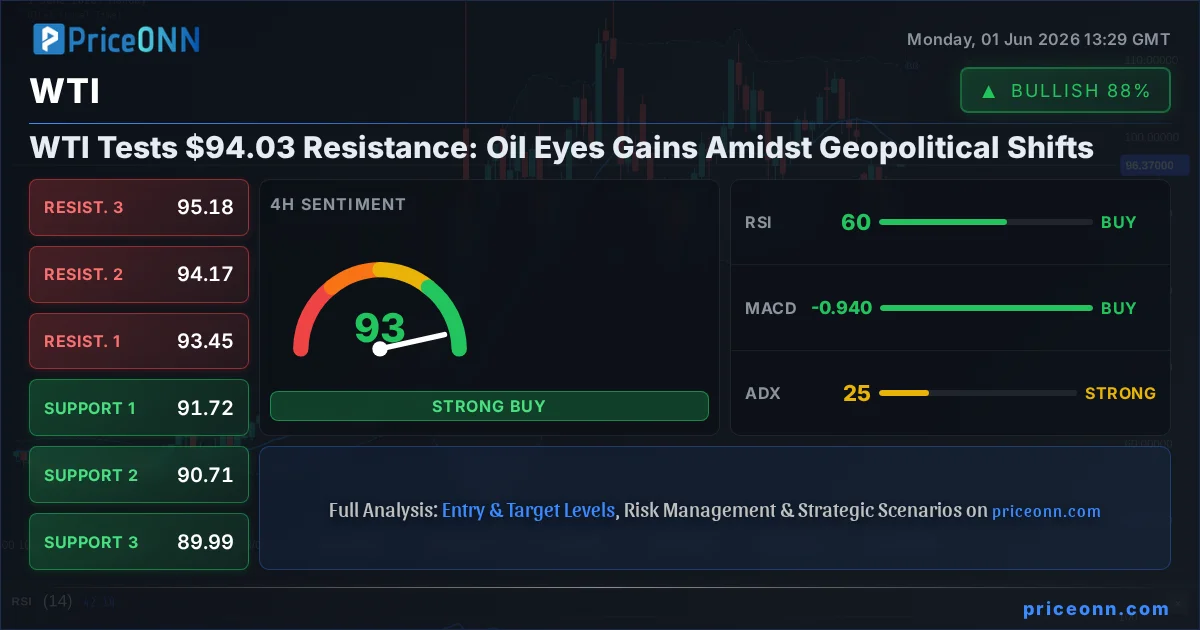
Traders should closely monitor developments regarding the Strait of Hormuz and any official statements from U.S. and Iranian officials. The $92.03 level for WTI now acts as a key indicator, with a sustained move above this potentially signaling further upside driven by persistent supply fears. Key resistance levels to watch are the recent highs established during the escalation phase of the conflict. Conversely, any concrete de-escalation or official confirmation of peace talks could trigger a sharp sell-off, with immediate support likely found around the $88-$90 price range.
The divergence between the unexpected rise in U.S. crude inventories and the geopolitical supply risks in the Middle East highlights the market's sensitivity to immediate threats. Traders should be prepared for heightened volatility, especially as the conflict continues without a clear resolution and the Strait of Hormuz remains a critical choke point. The resilience of Indian demand for Russian oil also plays a role in global balances, absorbing supply that might otherwise impact benchmark prices.
Outlook
The immediate outlook for crude oil prices remains heavily influenced by the geopolitical situation in the Middle East. Unless there is a clear path towards de-escalation or a resolution to the conflict and the blockage of the Strait of Hormuz, prices are likely to remain elevated and volatile. The ongoing demand from major importers like India for Russian crude, despite premiums, suggests underlying strength in global demand that is being constrained by supply-side risks. Traders should anticipate continued upward pressure on prices as long as these geopolitical uncertainties persist, with any positive news on peace talks potentially leading to sharp, but possibly short-lived, corrections.
Frequently Asked Questions
What is the current price of WTI Crude Oil?
As of Tuesday, WTI Crude Oil for May delivery was trading at $92.03 per barrel, marking a 4.43% increase for the day amid renewed geopolitical tensions.
Why did U.S. crude oil inventories increase unexpectedly?
U.S. crude oil inventories rose by 2.3 million barrels in the week ending March 20, contrary to analyst expectations of a drawdown. This build suggests that domestic demand or refinery activity may have softened temporarily, though it is currently being overshadowed by geopolitical supply concerns.
What is the outlook for crude oil prices given the current situation?
The outlook remains bullish in the short term, driven by persistent fears of supply disruptions in the Middle East and the ongoing blockage of the Strait of Hormuz. Prices are expected to remain volatile, with potential for further gains if geopolitical tensions escalate or remain unresolved.
Track markets in real-time
Empower your investment decisions with AI-powered analysis, technical indicators and real-time price data.
Join Our Telegram Channel
Get breaking market news, AI analysis and trading signals delivered instantly to your Telegram.
Join Channel PriceONN News
Crude oil prices experienced a significant drop, with WTI futures falling over 1.8% to $87.25, as optimism grew for a U.S.-Iran deal potentially reopening the Strait of Hormuz.
PriceONN News
Crude oil prices experienced a significant downturn as market sentiment shifted towards optimism about a potential US-Iran Memorandum of Understanding that could reopen the Strait of Hormuz. WTI futures fell nearly 2% on the news.
PriceONN News
(RTTNews) - Crude oil prices have tumbled on Friday as expectations of the U.S. and Iran signing a Memorandum of Understanding run high. The MoU would allow for immediate reopening of the Strait of Hormuz and pave the way for the resumption of oil and energy trade.
PriceONN News
Crude oil futures experienced a dramatic intraday reversal on Thursday, soaring overnight on geopolitical fears only to pull back significantly as reports of a potential diplomatic understanding between the U.S. and Iran emerged.
PriceONN News
(RTTNews) - Extending the losses from yesterday's session, crude oil prices have gone into freefall on Wednesday as investor expectations on a potential U.S.-Iran agreement continue to rise despite the U.S. refusing to ease its demands.
PriceONN News
(RTTNews) - Crude oil prices have tumbled on Tuesday as optimism about a U.S.-Iran peace deal that could lead to reopening of the Strait of Hormuz soon grows despite reports of fresh U.S. strikes on Iran yesterday.
PriceONN News
(RTTNews) - After surging early in the day, crude oil prices have tumbled over the course of the trading session on Thursday. With the downturn, crude oil is extending the losses from the two previous sessions, as investors watch the developments in U.S.-Iran peace talks.
PriceONN News
Global oil prices are treading water after a significant 5% slump, as market sentiment grapples with cautious optimism over Middle East de-escalation efforts versus lingering geopolitical uncertainties. Brent crude hovers near $104.72 and WTI near $98.07.
PriceONN News
Iran's oil exports fell to their lowest level in at least six years in May as the U.S. naval blockade continued to choke off crude shipments and leave tens of millions of barrels stranded at sea. According to shipping data from Vortexa, Iran exported just 209,000 barrels per day (bpd) of crude oil and condensate in May, down from 1.34 million bpd in April and nearly 1.9 million bpd in March. Kpler had estimated May exports slightly higher at 260,000 bpd, but still the lowest level since the...
PriceONN News
The Iran war suddenly turned what had started as a year of oversupply in global oil and LNG markets into the worst oil and gas supply disruption in history. Three months after the U.S.-Israeli strikes on Iran began on February 28, the world has already lost 1 billion barrels of crude oil supply, oil and gas prices have found a new, much higher floor, and whipsaw with violent volatility nearly every day, trade routes have shifted, and tanker rates have spiked. Actual supply shortages are...
PriceONN News
Crude oil futures experienced a dramatic intraday reversal, soaring to $92.52 before pulling back significantly on Thursday. The volatile session was driven by shifting geopolitical narratives and U.S. inventory data.
PriceONN News
(RTTNews) - Crude oil futures skyrocketed overnight but have shown a significant pullback over the course of the trading day on Thursday.