EUR/USD bounces off 1.1500 ahead of Fed interest rate decision
Dollar Dips as Markets Brace for Fed Policy Shift
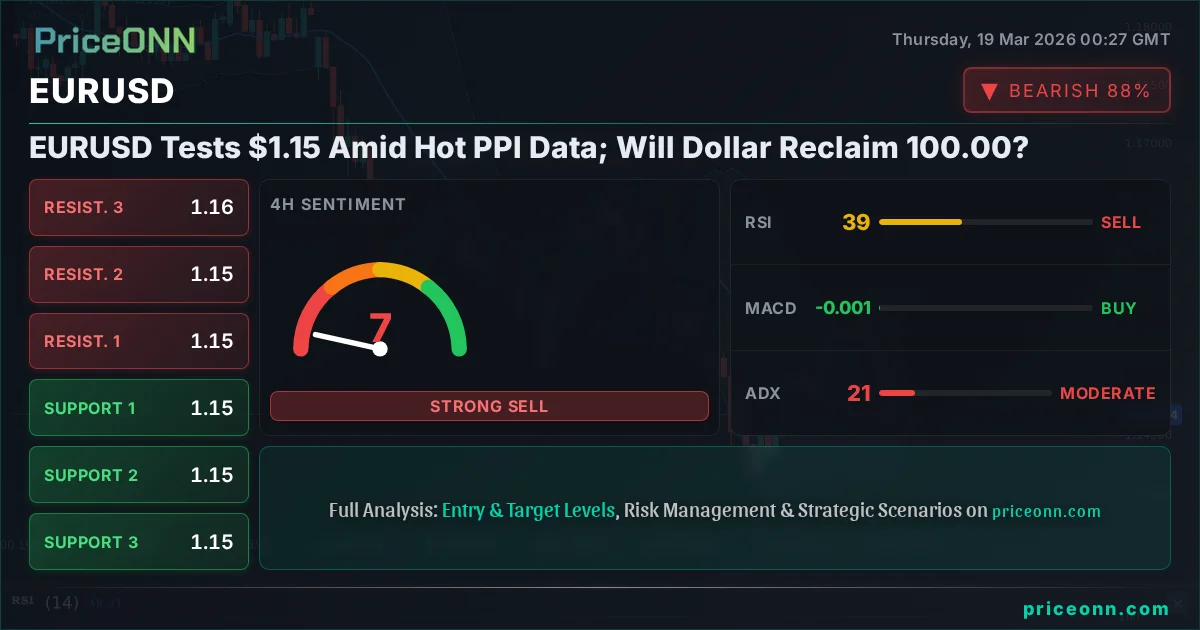
The EUR/USD currency pair staged a recovery on Wednesday, climbing back towards the 1.1500 handle. This move came as the US Dollar experienced a slight pullback from its session highs, providing a much-needed reprieve for the single currency. All eyes are now firmly fixed on the Federal Reserve, with its highly anticipated interest rate decision due at 18:00 GMT. Traders are seeking any hints about the future trajectory of monetary policy in the United States.
Inflation, a critical barometer of economic health, measures the escalation in the cost of a defined basket of goods and services. Typically reported as a monthly and yearly percentage change, headline inflation captures the overall price movement. Core inflation, however, offers a deeper insight by stripping out the more erratic components like energy and food. These volatile elements are often subject to geopolitical events and seasonal shifts, making them less reliable indicators for sustained price trends.
Economists and central bankers pay particular attention to core inflation. The mandate for most central banks is to maintain price stability, usually targeting an inflation rate around 2%. The Consumer Price Index (CPI) is the primary tool for tracking these price changes, reflecting the cost of a broad array of goods and services. Core CPI, by excluding the unpredictable food and fuel prices, provides a clearer picture of underlying inflationary pressures. When Core CPI breaches the 2% target, it typically signals a higher interest rate environment. Conversely, a dip below this threshold often prompts central bank action to lower rates.
The Inflation-Interest Rate Nexus
The relationship between inflation and currency strength might seem paradoxical. High inflation, counterintuitively, often leads to a stronger currency. This phenomenon is driven by central bank responses. To combat escalating prices, monetary authorities are compelled to raise interest rates. These higher rates act as a magnet for global capital, as investors are drawn to the prospect of greater returns on their investments. Consequently, increased capital inflows bolster the demand for the nation's currency, driving its value upward.
Conversely, when inflation cools, central banks may lower interest rates. This makes holding cash or interest-bearing assets less attractive. Historically, gold served as a primary hedge against rising inflation, valued for its ability to preserve purchasing power. While gold still retains its safe-haven appeal during periods of extreme market distress, its role as a go-to inflation hedge has diminished.
The reason for this shift lies in the opportunity cost associated with holding gold. When interest rates rise significantly to combat inflation, the yield offered by bonds or even simple savings accounts becomes much more appealing. Investors are less inclined to tie up capital in a non-yielding asset like gold when they can earn substantial returns elsewhere. Therefore, high interest rates, often a consequence of high inflation, present a headwind for gold prices. Lower inflation, leading to lower interest rates, conversely makes gold a more competitive investment, potentially boosting its appeal.
Market Ripple Effects
The Federal Reserve's policy decision today carries significant weight for multiple asset classes. The immediate focus will be on the US Dollar Index (DXY), which often reacts sharply to shifts in interest rate expectations. A hawkish tone from the Fed could propel the dollar higher, putting downward pressure on pairs like EUR/USD and GBP/USD.
Furthermore, the implications for bond markets are substantial. Higher-than-expected rate hike projections or a persistent hawkish stance could send Treasury yields climbing. This would increase borrowing costs across the economy and potentially dampen appetite for riskier assets like equities, particularly growth-oriented technology stocks. Conversely, a dovish surprise could offer a boost to equities and potentially see yields retreat.
Gold, as discussed, has a complex relationship with interest rate policy. If the Fed signals a more aggressive path of rate hikes, the opportunity cost of holding gold will rise, potentially capping its upside. However, if market participants perceive that the Fed is behind the curve on inflation, or if geopolitical risks escalate, gold could still find support despite rising rates, acting as a safe haven. Traders will be closely monitoring the Fed's commentary for any clues that might influence these dynamics.
Track markets in real-time
Empower your investment decisions with AI-powered analysis, technical indicators and real-time price data.
Join Our Telegram Channel
Get breaking market news, AI analysis and trading signals delivered instantly to your Telegram.
Join Channel