
Is the US Dollar Poised for Further Gains After Hawkish Fed and Oil Shock?

The US Dollar experienced a significant strengthening across major currency pairs, particularly against the Swiss Franc, in the wake of the Federal Reserve's latest policy decision. This hawkish pause, coupled with escalating geopolitical tensions and a surprising inflation print, has drastically altered market sentiment and currency valuations.
Market Context
Earlier in the trading session, markets exhibited a subdued demeanor, with investors adopting a cautious stance ahead of the Federal Reserve’s monetary policy announcement. However, this calm was shattered as the US trading session commenced. A palpable deterioration in risk appetite was evident, marked by a broad-based rebound in the US Dollar and a sell-off in equity futures. This abrupt shift was triggered by a dual shock: a sharp spike in oil prices and a significantly stronger-than-expected US Producer Price Index (PPI) report, both arriving just hours before the Fed's decision.
Oil prices, specifically West Texas Intermediate (WTI), surged dramatically following reports of Israeli and US airstrikes targeting Iran's South Pars gas field and the Asaluyeh energy complex. This development represents a critical escalation, breaking a prior market assumption that key energy infrastructure would remain untouched to avoid a global economic shock. The targeting of Asaluyeh moves the conflict beyond proxy skirmishes to direct attacks on vital economic arteries, raising the specter of broader supply disruptions from other regional energy producers.
Analysis & Drivers
The recent market turmoil stems from a confluence of potent factors. The geopolitical shock in the Middle East, with strikes on Iranian energy facilities, has introduced a significant risk premium into oil markets. The South Pars gas field is crucial for Iran's domestic supply, and its disruption during conflict could lead to heightened internal pressures and potentially more aggressive external responses, including threats to maritime oil flows through the Strait of Hormuz. Analysts note that this escalation significantly increases the probability of wider energy supply chain disruptions.
Simultaneously, inflation concerns have been reignited by the latest US PPI data. The report showed a 0.7% month-over-month increase in February, more than double the consensus forecast. On an annual basis, the PPI accelerated to 3.4% year-over-year, the fastest pace seen in a year. This data suggests that upstream price pressures are building, potentially feeding into consumer prices and complicating the Federal Reserve's efforts to bring inflation back to its 2% target. Market data indicates that this inflationary signal, arriving just before the Fed meeting, put significant pressure on policymakers.
The Federal Reserve's subsequent policy decision, while a pause in rate hikes, was interpreted as hawkish. Policymakers signaled a commitment to maintaining a restrictive monetary policy stance for a longer duration than many had anticipated, pushing back expectations for imminent rate cuts. This communication reinforced the US Dollar's strength, as higher-for-longer interest rates in the US become more attractive relative to other major economies.
Trader Implications
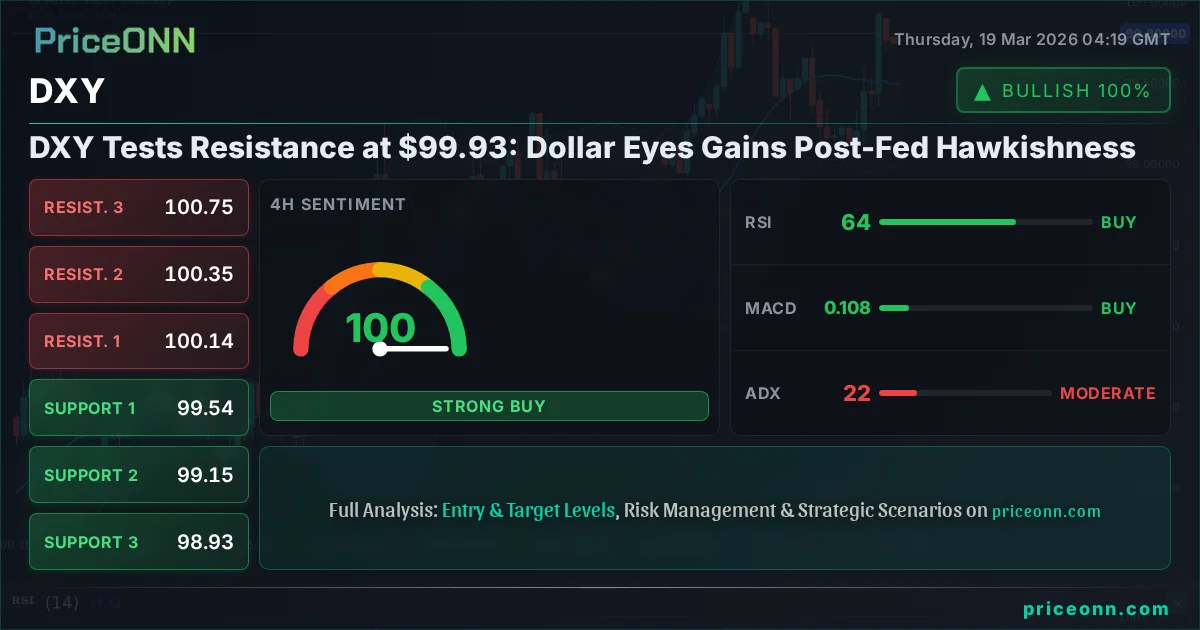
The current market environment presents a complex landscape for forex traders. The strengthening US Dollar, driven by the Fed's hawkish stance and a flight to safety amid geopolitical risks, suggests potential downside for riskier currencies and emerging market assets. Traders should closely monitor key US Dollar indices, such as the DXY, for signs of continued upward momentum. Key support for the Dollar Index is seen around the 103.50 level, with resistance potentially emerging near 104.50.
For currency pairs, the USD/CHF pair has shown pronounced gains, and traders might look for further upside targeting levels above 0.9000. Conversely, pairs like EUR/USD and GBP/USD could face headwinds, with potential retests of recent lows. EUR/USD might find support around 1.0750, while GBP/USD could be pressured towards 1.2500.
Traders should also keep a close eye on oil price movements and any further developments in the Middle East, as sustained high energy prices could continue to fuel inflation concerns and impact global growth expectations. Any further escalation could lead to increased volatility in currency markets, particularly for commodity-linked currencies and those with direct trade ties to the affected regions. The upcoming economic data releases will be crucial in determining whether the current inflation trend is persistent.
Outlook
Looking ahead, the forex market is likely to remain sensitive to geopolitical developments and inflation data. The Federal Reserve's commitment to a longer period of restrictive policy provides a supportive backdrop for the US Dollar. However, persistent inflation or unexpected easing of geopolitical tensions could alter this dynamic. Traders will be closely watching upcoming inflation reports and central bank commentary for further clues on the trajectory of interest rates and market sentiment. The potential for sustained high oil prices adds another layer of uncertainty, which could keep volatility elevated in the short to medium term.
Frequently Asked Questions
What is the immediate impact of the Fed's hawkish hold on the US Dollar?
The US Dollar strengthened considerably after the Federal Reserve's policy meeting. The market interpreted the Fed's commentary as a signal that interest rates will remain higher for longer than previously expected, making the dollar more attractive relative to other currencies. The DXY index saw immediate upward pressure following the announcement.
How have geopolitical events affected oil prices and market sentiment?
Reports of airstrikes on Iranian energy facilities caused oil prices to surge, breaking a period of relative calm. This geopolitical shock, combined with rising inflation concerns from the US PPI data, led to a sharp deterioration in risk sentiment and a broad sell-off in equities, benefiting the safe-haven US Dollar. WTI crude briefly touched $80 per barrel on the news.
What are the key levels to watch for EUR/USD following these developments?
With the US Dollar strengthening and risk aversion increasing, EUR/USD faces downward pressure. Key support levels to watch are around 1.0750. A break below this level could signal further declines, potentially targeting the 1.0700 mark if market sentiment deteriorates further or oil prices continue to climb.
Track markets in real-time
Empower your investment decisions with AI-powered analysis, technical indicators and real-time price data.
Join Our Telegram Channel
Get breaking market news, AI analysis and trading signals delivered instantly to your Telegram.
Join Channel



PriceONN