
Is the Euro Poised for a Rebound as Inflationary Fears Intensify?


The Euro (EUR) faces a critical juncture as global financial markets grapple with escalating bond yields and heightened geopolitical risks. While rising interest rates typically strengthen a currency, the confluence of these factors presents a nuanced picture for the single currency, potentially offering a contrarian opportunity for traders.
Market Context
Global bond yields have embarked on a significant upward trajectory, driven by expectations of continued monetary tightening from major central banks, including the Federal Reserve. This surge in yields is creating headwinds for growth-oriented assets, particularly technology stocks, which have seen their valuations scrutinized. Simultaneously, geopolitical tensions have intensified, notably following a drone strike on a UAE nuclear facility. This event has amplified concerns over regional instability, which could translate into sustained elevated oil prices and persistent inflationary pressures worldwide.
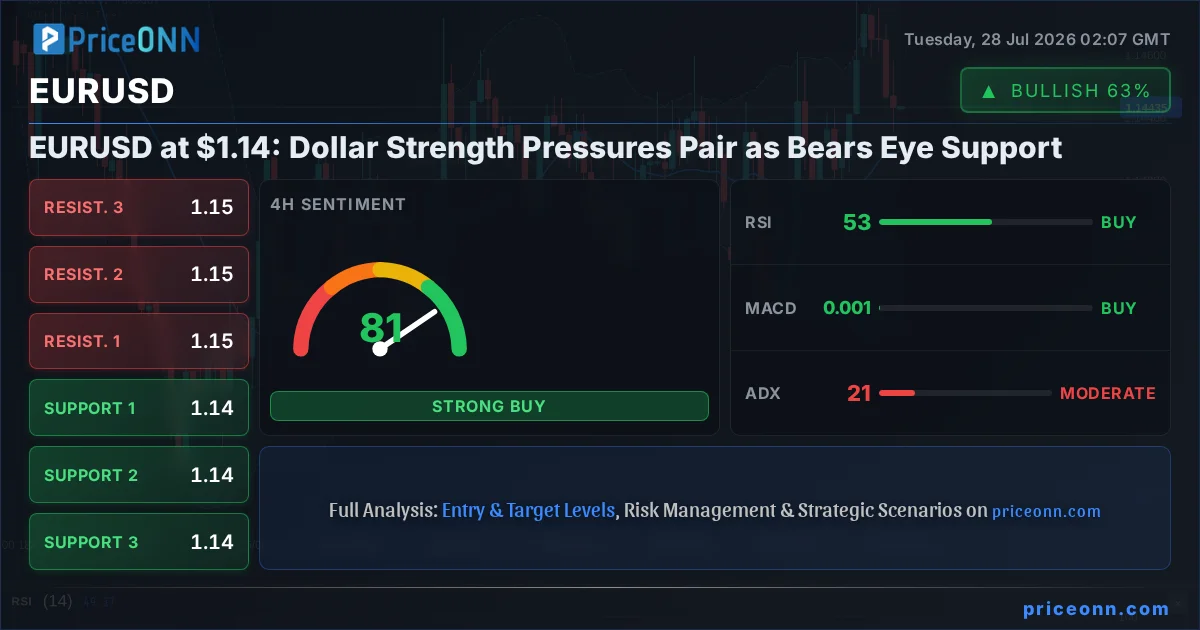
The interplay between rising yields and geopolitical instability is creating a challenging macroeconomic landscape. For currency markets, this translates into increased volatility and a re-evaluation of safe-haven versus risk-on assets. Historically, a widening interest rate differential in favor of the U.S. dollar would typically pressure the Euro. However, the current environment is far from typical, with inflation fears potentially forcing central banks into more aggressive policy stances than previously anticipated.
Analysis & Drivers
The primary driver impacting the EUR/USD pair currently is the delicate balance between interest rate expectations and inflation concerns. As global bond yields climb, the cost of capital rises, putting pressure on asset valuations. For the Eurozone, this presents a dual challenge: navigating its own inflationary pressures while also responding to global monetary policy shifts. Analysts note that if inflation proves more stubborn than anticipated, it could compel the European Central Bank (ECB) to maintain a more hawkish stance than markets currently price in, providing a potential tailwind for the Euro.
Furthermore, the escalating geopolitical situation, particularly in the Middle East, introduces an element of uncertainty that often benefits currencies perceived as relatively stable or those tied to commodity exporters. While the Eurozone is not a direct beneficiary of higher oil prices, a broad-based increase in global inflation driven by energy costs could paradoxically strengthen the Euro if it leads to a more aggressive monetary policy response from the ECB. Conversely, a significant escalation of conflict could trigger a flight to safety, potentially benefiting the U.S. dollar at the expense of the Euro.
Market data shows that the correlation between U.S. Treasury yields and the U.S. dollar has strengthened recently. However, persistent inflation risks globally might begin to decouple this relationship, as central banks everywhere face similar dilemmas. The narrative around the Fed's future rate path remains a key determinant, but global inflationary pressures are increasingly dictating the broader market sentiment.
Trader Implications
Traders should closely monitor key economic data releases from both the Eurozone and the United States. Inflation figures, central bank commentary, and manufacturing PMIs will be crucial in shaping expectations for monetary policy. Key support levels for EUR/USD are currently being tested around the 1.0650 mark, with significant resistance overhead at 1.0750. A decisive break above this resistance could signal a broader upward trend, while a fall below 1.0600 might indicate a continuation of bearish sentiment.
The escalating geopolitical situation adds a layer of risk that cannot be ignored. Traders should consider implementing robust risk management strategies, including appropriate stop-loss orders. The potential for oil prices to remain elevated due to regional instability could keep inflationary pressures on the agenda, which might force central banks to act more decisively. This could create opportunities for currency pairs that benefit from higher rate differentials or a general increase in global inflation expectations.
What should a trader do with this information? Watch for confirmation of a shift in inflation expectations or a more hawkish tone from the ECB. If these materialize, coupled with a stabilization or de-escalation of geopolitical tensions, the Euro could find significant buying interest. Conversely, a sharp increase in risk aversion driven by further conflict escalation would likely see the EUR/USD pair retreat.
Outlook
The near-term outlook for the Euro remains contingent on the evolving inflation narrative and geopolitical developments. While rising U.S. yields present a challenge, the potential for persistent global inflation could provide a floor for the Euro, especially if it prompts a more aggressive monetary policy response from the ECB. Traders will be looking for signs that the market is pricing in higher-for-longer interest rates globally, which could shift the sentiment in favor of currencies like the Euro, provided domestic economic conditions remain relatively stable. The upcoming economic calendar will be critical in providing clarity on these complex dynamics.
Frequently Asked Questions
What is the current key support level for EUR/USD?
The current key support level for the EUR/USD pair is being tested around 1.0650. A breach below this level could signal further downside pressure.
How do rising bond yields affect the Euro?
Rising global bond yields, particularly U.S. Treasury yields, typically increase the attractiveness of dollar-denominated assets, potentially pressuring the Euro. However, if these yields reflect persistent inflation, they could lead to expectations of higher interest rates globally, which might benefit the Euro if the ECB adopts a similarly hawkish stance.
What is the outlook for EUR/USD amid geopolitical tensions?
The outlook is mixed. Escalating geopolitical tensions could lead to a flight to safety, benefiting the U.S. dollar. However, if these tensions contribute to sustained global inflation, it might prompt more aggressive central bank actions, potentially supporting currencies like the Euro if the ECB's response is perceived as sufficiently hawkish.
Track markets in real-time
Empower your investment decisions with AI-powered analysis, technical indicators and real-time price data.
Join Our Telegram Channel
Get breaking market news, AI analysis and trading signals delivered instantly to your Telegram.
Join Channel PriceONN News
The ceasefire in the Middle East has disrupted the greenback’s plans. Strong PMI data and falling oil prices are helping the euro. The US dollar faced a downward gap at the start of the week as the Middle East de-escalation of the conflict came as an unwelcome surprise to speculators who had built up net […] The post De-Escalation Undermines the Greenback appeared first on ActionForex.
PriceONN News
EUR/USD enters the final week of July at 1.1369. Friday’s modest decline in energy prices reduced expectations that the Federal Reserve could raise rates as early as its upcoming meeting, scheduled for Tuesday and Wednesday. At the same time, the main currency pair remains very close to the monthly low recorded in late June. Markets […] The post EUR/USD Ahead of a Key Week: Holding Near Lows appeared first on ActionForex.
PriceONN News
The US stock market is not factoring in the existing risks. Investors are increasingly focusing on the cash flows of S&P 500 companies. US stock indices have closed in the red the last two weeks, something that hasn’t happened since March. The stock market has weathered both the armed conflict in the Middle East and […] The post It’s Time to Weigh Up the Risks for the S&P 500 appeared first on ActionForex.
PriceONN News
On 21 July, Stats NZ reported an acceleration in inflation: the Consumer Price Index rose 1.5% in the second quarter, while the annual inflation rate climbed to 4.1%, its highest level in more than two years and slightly above analysts’ consensus forecast of 4.0%. The increase was driven primarily by higher fuel prices amid tensions […] The post NZD/USD: Inflation Surge Meets Strong US Dollar Pressure appeared first on ActionForex.
PriceONN News
Gold fell to 4,047 USD per ounce on Tuesday, erasing gains from the previous session. Pressure on the metal is mounting amid fears that the Federal Reserve may raise rates as early as this week. Markets currently estimate the probability of such a move on Wednesday at over 33% – an unusually high level of […] The post Gold Declines, Focus on Fed and Falling Oil Prices appeared first on ActionForex.
PriceONN News
The de-escalation of the conflict in the Middle East has sent Brent prices tumbling. The oil market could return to a surplus as early as the end of 2026. The US dollar and oil have lost their correlation. Brent recorded its worst daily fall in three months after reports of a ceasefire in the Middle […] The post Oil: A Surplus on the Horizon appeared first on ActionForex.
PriceONN News
I am already riding two EURUSD sell entries. Another possible sell opportunity could be forming for traders that are not in yet. EURUSD Possible Bearish Scenario Watch for price to tap 4 Hour FVG (Purple) first. Watch for a bearish shift and bearish reversal signs in the FVG zone. Wait for all above to play […] The post Riding EURUSD Sellside appeared first on ActionForex.
PriceONN News
(RTTNews) - Gold prices traded higher on Monday as oil prices tumbled amid eased Middle East tensions, helping ease inflation and interest-rate concerns ahead of crucial Fed, BoE and BoJ central bank meetings due this week.
PriceONN News
The dollar heads into a pivotal week trading near 101.80, just off a 15-month high, with the Fed’s July 29 meeting standing as the clear focal point. Markets currently price roughly a 65% chance of a hold, though renewed Middle East escalation has kept a hike back on the table for later this year. Energy […] The post US Dollar Index: a Defining Week for the King of the Markets appeared first on ActionForex.
PriceONN News
European Central Bank Governing Council member Peter Kazimir from Slovak reinforced the hawkish bias on Monday, arguing that policymakers will likely need to raise interest rates at least once more and warning that a worsening energy shock could ultimately require even more tightening than markets currently anticipate. His remarks come just days after the ECB […] The post ECB’s Kazimir Sees At Least One More Rate Hike, Warns Oil Shock Could Require More appeared first on ActionForex.
PriceONN News
US business activity accelerated at the start of the third quarter, with S&P Global’s Flash Composite PMI Output Index rising from 51.9 to 53.6 in July, its highest level in eight months. The improvement was driven by the services sector, where the Business Activity Index climbed from 51.2 to 53.6, also an eight-month high. Manufacturing, […] The post US PMI Hits Eight-Month High,Yet Rising Costs and Supply Delays Raise Caution appeared first on ActionForex.
PriceONN News
Market Overview The crypto market trended lower at the end of Monday, mirroring the US equity market, as it fell from a peak of $2.23T to $2.16T before returning to recent local lows of $2.18T by Tuesday morning. This marks yet another test of the 50-day moving average (MA) as support, which sellers have been […] The post Bitcoin Has Failed to Break Away from Its Long-Term Trend appeared first on ActionForex.