
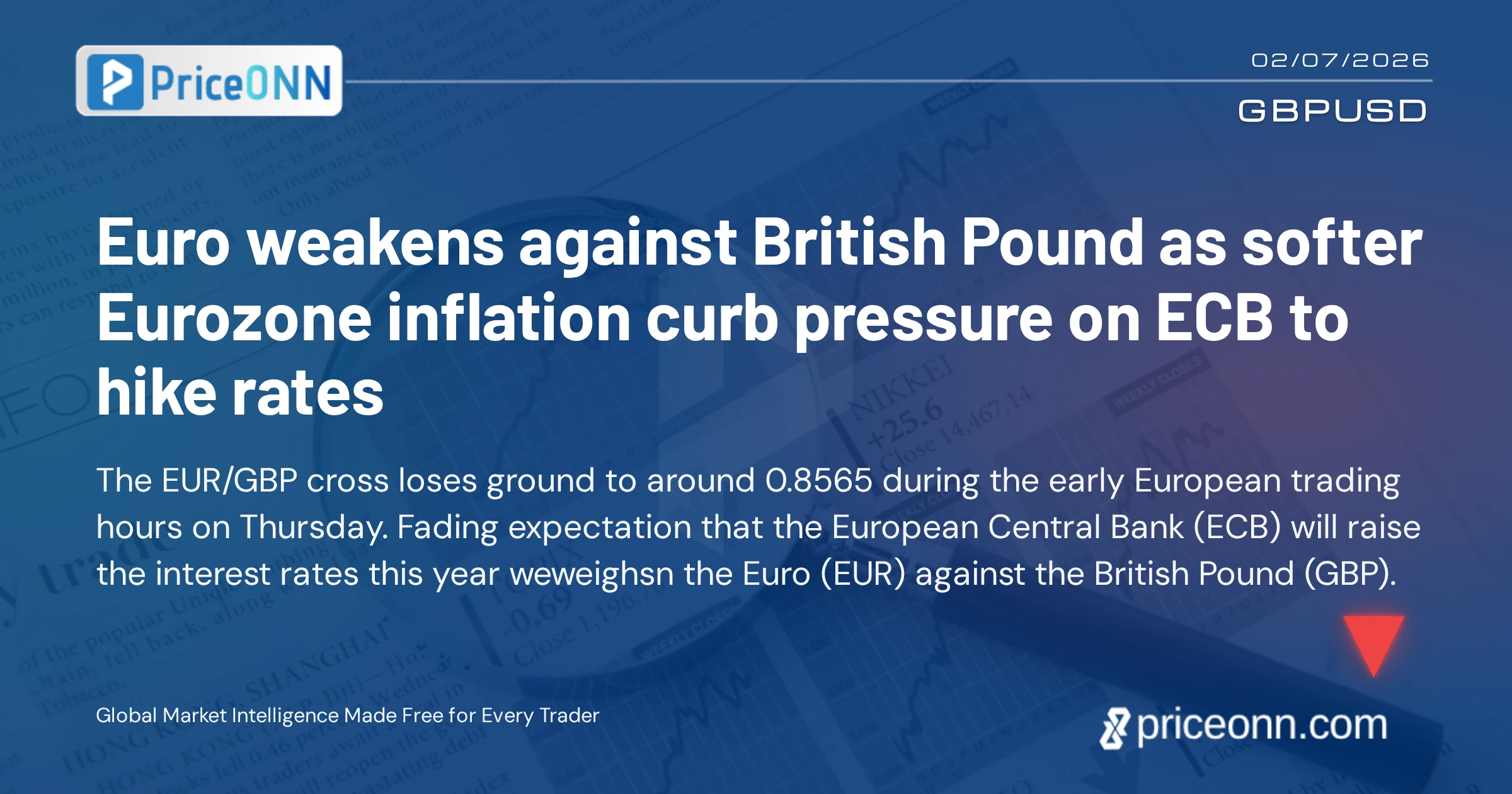
Euro weakens against British Pound as softer Eurozone inflation curb pressure on ECB to hike rates
 PriceONN Editorial Desk
Multi-source verification
PriceONN Editorial Desk
Multi-source verification
Sterling's Ancient Roots and Modern Might
Few currencies boast the historical lineage of the British Pound, tracing its origins back to 886 AD. Today, it stands as the planet's fourth most actively traded currency, commanding an impressive 12% share of global foreign exchange transactions. Daily turnover averages a staggering $630 billion, according to 2022 market data.
The Pound's primary trading partners are well-defined: the GBP/USD pair, colloquially known as 'Cable', represents 11% of all FX trades. Following closely is the GBP/JPY, or 'Dragon' among traders, at 3%, and the EUR/GBP cross, which captures 2% of the market's attention. The Bank of England (BoE) is the sole issuer of this venerable currency, and its monetary policy decisions are the single most critical determinant of Sterling's value.
The BoE's Inflation Mandate and Sterling's Pulse
At the heart of the BoE's strategy is the pursuit of "price stability," defined as an inflation rate hovering around the 2% mark. To achieve this delicate balance, the central bank wields its primary instrument: interest rates.
When inflation accelerates beyond the target, the BoE tightens monetary conditions by increasing interest rates. This action elevates the cost of borrowing, acting as a brake on consumer spending and business investment. While this can temper economic overheating, it generally signals a strengthening outlook for the GBP. Higher yields attract global capital, making the UK a more appealing destination for investors seeking returns.
Conversely, a dip in inflation below the desired level often signals a slowdown in economic momentum. In such scenarios, the BoE may consider lowering rates to stimulate borrowing and encourage investment in growth initiatives. The health of the UK economy, therefore, directly influences Sterling's trajectory.
Economic Indicators and Sterling's Performance
Key economic releases serve as vital barometers for the UK's economic vitality, directly impacting the Pound Sterling. Indicators such as Gross Domestic Product (GDP) figures, Purchasing Managers' Indexes (PMIs) for both manufacturing and services sectors, and employment statistics provide crucial insights into the economy's direction.
A robust economy typically bolsters Sterling. It not only draws in foreign investment but also creates conditions where the BoE might feel confident enough to raise interest rates, providing a dual boost to the currency. Weak economic data, however, often leads to a depreciation of Sterling as investor confidence wanes and the likelihood of looser monetary policy increases.
Another significant data point for Sterling is the Trade Balance. This metric quantifies the difference between a nation's export earnings and its import expenditures over a specified period. A strong export performance, driven by high demand for UK goods from international buyers, can significantly elevate the Pound. A consistently positive net Trade Balance is a tailwind for the currency, whereas a persistent deficit exerts downward pressure.
Market Ripple Effects
The recent shift in market sentiment regarding the European Central Bank's (ECB) monetary policy is creating discernible ripples across financial markets. With inflation in the Eurozone showing signs of cooling, the anticipation of further aggressive rate hikes by the ECB has waned considerably. This recalibration of expectations directly impacts the value of the Euro (EUR) relative to other major currencies, notably the British Pound (GBP).
The divergence in monetary policy outlooks between the BoE and the ECB is a critical factor for traders monitoring the EUR/GBP cross. As the probability of BoE rate hikes diminishes less significantly than that of the ECB, Sterling finds a competitive edge. This dynamic can influence not only currency pairs but also related equity markets and bond yields. For instance, a stronger Sterling could make UK assets slightly more expensive for foreign investors, while a weaker Euro might offer opportunities in Eurozone equities or bonds if inflation continues to moderate without triggering a severe economic downturn.
Traders are closely watching upcoming inflation data from both the UK and the Eurozone, as well as central bank commentary, to gauge the evolving policy paths. The interplay between these two major economic blocs will continue to shape currency movements and investment strategies in the near term. Key levels to watch on the EUR/GBP include the recent low around 0.8565 and potential resistance points that could signal a trend reversal if breached.
Track markets in real-time
Empower your investment decisions with AI-powered analysis, technical indicators and real-time price data.
Join Our Telegram Channel
Get breaking market news, AI analysis and trading signals delivered instantly to your Telegram.
Join Channel PriceONN News
EUR/GBP may have passed a turning point that extends well beyond this week’s inflation data. The sharp break below key technical support reflects more than a softer Eurozone CPI report-it signals that one of the market’s biggest policy trades of recent months is beginning to unwind, and intensifying. Investors are no longer betting that the […] The post EUR/GBP Accelerates Through Key Support as ECB/BoE Yield Convergence Trade Reverses appeared first on ActionForex.
PriceONN News
The EUR/JPY cross trades on a negative note around 184.95 during the early European session on Thursday. Eurozone inflation fell more than expected in June, easing pressure on the European Central Bank (ECB) to raise rates at its next meeting on July 23.
PriceONN News
The EUR/USD pair trades on a negative note near 1.1410 during the early European trading hours on Wednesday. Cooling inflation in Germany has lowered expectations for the European Central Bank (ECB) rate hikes, weighing on the Euro (EUR) against the US Dollar (USD).
PriceONN News
According to the latest European Central Bank (ECB) survey, one-year forward Eurozone inflation expectations are expected to cool down, but longer-term projections remain steady, Reuters reports.
PriceONN News
USD/CAD has lost its recent gains from the previous day, trading around 1.4190 during the European hours on Thursday. Traders adopt a cautious stance ahead of the highly anticipated June Nonfarm Payrolls (NFP) report.
PriceONN News
USDJPY needs interventions and rate hikes. Monetary policy divergence is pushing EURUSD lower. The US dollar found no clues in Kevin Warsh’s comments, and attention shifted to the US labour market report for June. The Fed Chair noted a reduction in inflationary risks and reaffirmed the central bank’s commitment to bringing inflation back to the […] The post Will USDJPY Reach 200 Without Intervention? appeared first on ActionForex.
PriceONN News
Japan may not have spent a dollar today, but it may have achieved one of the key goals of intervention anyway. USD/JPY plunged from 162.59 to below 161.30, a move large enough to trigger immediate speculation that Tokyo had stepped into the market. There is no confirmation of actual intervention yet, but that may be […] The post USD/JPY’s 150 Pips Fall: A Tactical “Intervention” Masterclass by Japan Ahead of NFP appeared first on ActionForex.
PriceONN News
The Australian Dollar (AUD) remains practically flat against the US Dollar (USD) on Thursday, consolidating losses after having depreciated nearly 4% in June. The AUD/USD pair is trading within a broadly 65-pip range, with downside attempts contained at 0.6865 and bulls limited below 0.6930 so far.
PriceONN News
The British Pound (GBP) trades higher against its major currency peers, rising 0.1% to near 1.3290 against the US Dollar (USD) during the European trading session on Thursday.
PriceONN News
The Indian Rupee (INR) opens higher against the US Dollar (USD) on Thursday after a sharp decline the previous day. The USD/INR pair declines to near 95.00 as lower oil prices due to progress in talks between the United States (US) and Iran have improved the appeal of the Indian Rupee.
PriceONN News
USD/IDR inches lower after opening at a bullish gap, remaining in the positive territory for the fourth consecutive day, trading around 18,030 during the Asian hours on Thursday.
PriceONN News
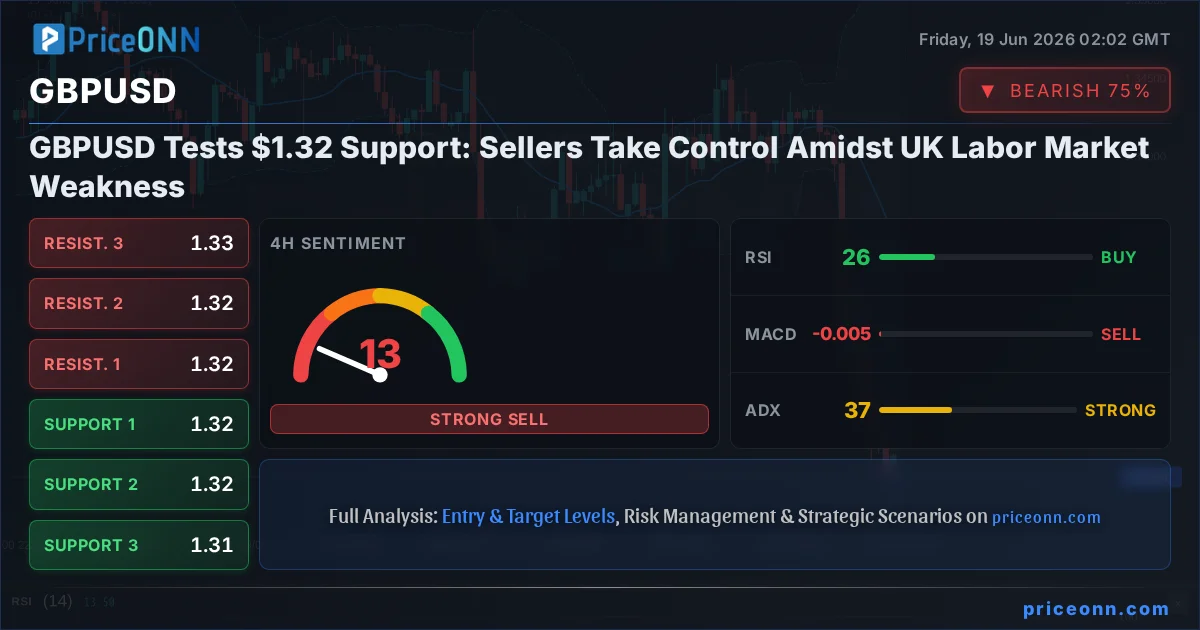
GBPUSD continues to show an incomplete bearish sequence from the January 27, 2026 high, keeping the bias tilted lower. The potential target can be measured using the 100% to 161.8% Fibonacci extension from that peak. This calculation defines a zone between 1.252 and 1.295, which remains the key area of interest for traders. The near‑term […] The post GBPUSD Elliott Wave Bearish Structure Calls for Further Weakness appeared first on ActionForex.