Europe’s Gas Price Set for Largest Weekly Gain in Three Years

European Gas Market Under Pressure
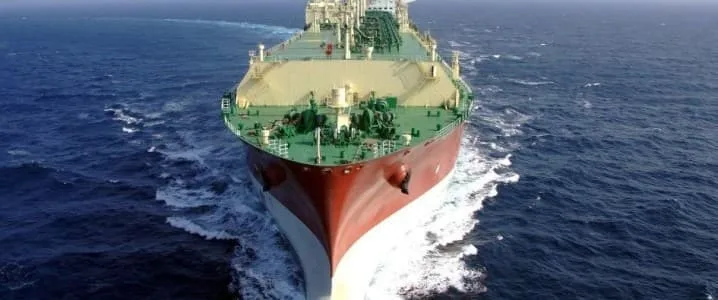
Benchmark natural gas prices in Europe are on track to record a staggering 50% increase this week, marking the most significant weekly climb since the energy crisis that gripped the continent in the summer of 2023. This surge is primarily attributed to the ongoing conflict in the Middle East, which has effectively curtailed approximately 20% of the global liquefied natural gas (LNG) supply. The disruption has sent shockwaves through the European energy market, raising concerns about energy security and price stability.
Volatility in the market has also spiked dramatically. According to data compiled by Bloomberg, the implied volatility of Dutch TTF Natural Gas Futures, the key benchmark for European gas trading, has quadrupled since the start of the year, reaching levels not seen in almost three years. This heightened volatility reflects the uncertainty and anxiety surrounding the supply outlook.
Price Dynamics and Supply Disruptions
As of early Friday in Amsterdam, the April 2026 TTF futures contract experienced a slight dip of 0.6%, settling at $58.42 (50.425 euros) per megawatt-hour (MWh). However, this marginal decline does little to offset the overall upward trend, with prices poised for a 50% weekly surge compared to $37 (32 euros) per MWh the previous Friday. The catalyst for this dramatic price escalation was the disruption in the Strait of Hormuz, a critical transit route for approximately 20% of global LNG flows.
The situation was further exacerbated by Qatar's announcement of a halt in LNG production at Ras Laffan, the world's largest liquefaction complex. Qatar, a major player in the global LNG market, issued force majeure notices to its customers, compounding fears of a supply crunch.
Implications for Europe and Asia
With Qatar, the world’s second-largest LNG exporter, experiencing production issues, concerns have mounted in both Europe and Asia regarding gas supply and procurement for the remainder of the winter season. While the official heating season concludes on March 31, Europe requires substantial LNG deliveries throughout the spring and summer to replenish gas storage facilities, which have been depleted to multi-year lows.
While approximately 85% of Qatar's LNG exports are directed to Asia, the repercussions of a supply squeeze in Asia are significant for Europe as well. Europe is facing increased competition from Asian markets for alternative spot supplies, as Asian premiums over European prices surge. This dynamic incentivizes traders to divert LNG cargoes to Asia, creating the strongest arbitrage signal since the end of 2022.
Track markets in real-time
Empower your investment decisions with AI-powered analysis, technical indicators and real-time price data.
Join Our Telegram Channel
Get breaking market news, AI analysis and trading signals delivered instantly to your Telegram.
Join Channel