
Is the Fed Stuck Between Inflation and Geopolitics as Oil Prices Spike?

The US Dollar finds itself navigating a complex landscape as geopolitical events and fluctuating commodity prices challenge the Federal Reserve's established monetary policy framework. Recent remarks from San Francisco Fed President Mary Daly highlighted this uncertainty, suggesting that the path forward for interest rates is far from clear, particularly if global conflicts, such as the one involving Iran, do not de-escalate quickly.
Market Context: Inflationary Pressures and Geopolitical Spillovers
Central banks, including the Federal Reserve, are primarily tasked with maintaining price stability and fostering maximum employment. Their main tool for achieving these goals is the adjustment of benchmark interest rates. When inflation rises above the target rate, typically around 2%, the Fed often raises interest rates to cool economic demand. This tightening cycle usually bolsters the US Dollar by making dollar-denominated assets more attractive to global investors seeking higher yields. Conversely, if economic growth falters or inflation undershoots the target, the Fed may lower rates to stimulate economic activity, which can weaken the dollar.
The current environment, however, presents a multifaceted challenge. Rising oil prices, often exacerbated by geopolitical instability, can directly fuel inflation. If this price increase is perceived as temporary, central bankers might be inclined to "look through" it, maintaining their existing policy stance. But if the conflict persists and oil prices remain elevated, it could lead to broader inflationary pressures that the Fed cannot ignore. Such a scenario forces policymakers into a difficult position: raise rates to combat inflation, risking a slowdown in economic growth and potentially hurting employment, or hold steady, allowing inflation to potentially become entrenched.
Market data shows that crude oil prices have seen significant volatility in recent weeks, with benchmarks like Brent and WTI experiencing upward pressure. This has direct implications for transportation costs, manufacturing inputs, and consumer spending, all of which feed into the inflation calculus. The Federal Open Market Committee (FOMC), the Fed's primary policymaking body, convenes eight times a year to assess these economic crosscurrents and decide on the appropriate course for monetary policy.
Analysis & Drivers: The Fed's Dilemma
President Daly's comments underscore a growing dilemma for the Fed. The central bank has been vigilant about inflation, having undertaken a significant rate-hiking cycle in recent years to bring price pressures under control. While inflation has shown signs of moderation from its peaks, it remains a key concern. The potential for renewed inflationary impulses from energy markets, driven by geopolitical tensions, complicates the Fed's forward guidance and rate-setting strategy.
Beyond interest rate adjustments, the Fed has other tools at its disposal. Quantitative Easing (QE), used extensively following the 2008 financial crisis, involves expanding the central bank's balance sheet by purchasing assets, injecting liquidity into the financial system and historically weakening the dollar. Its inverse, Quantitative Tightening (QT), involves shrinking the balance sheet by allowing assets to mature without reinvestment, thereby withdrawing liquidity and generally supporting the dollar. The Fed's current balance sheet policy is a factor that analysts monitor closely for its potential impact on market liquidity and the dollar's trajectory.
The challenge for the Fed is to differentiate between transient price shocks and a sustained shift in the inflation outlook. If the current rise in oil prices is a short-term reaction to geopolitical events, the Fed might maintain its current stance or a data-dependent approach. However, if the conflict escalates or persists, leading to sustained higher energy costs, it could force the Fed's hand, potentially necessitating a more hawkish stance than previously anticipated. This uncertainty creates significant volatility for currency markets, as traders attempt to price in the Fed's potential reactions.
Trader Implications: Watching Key Levels and Data
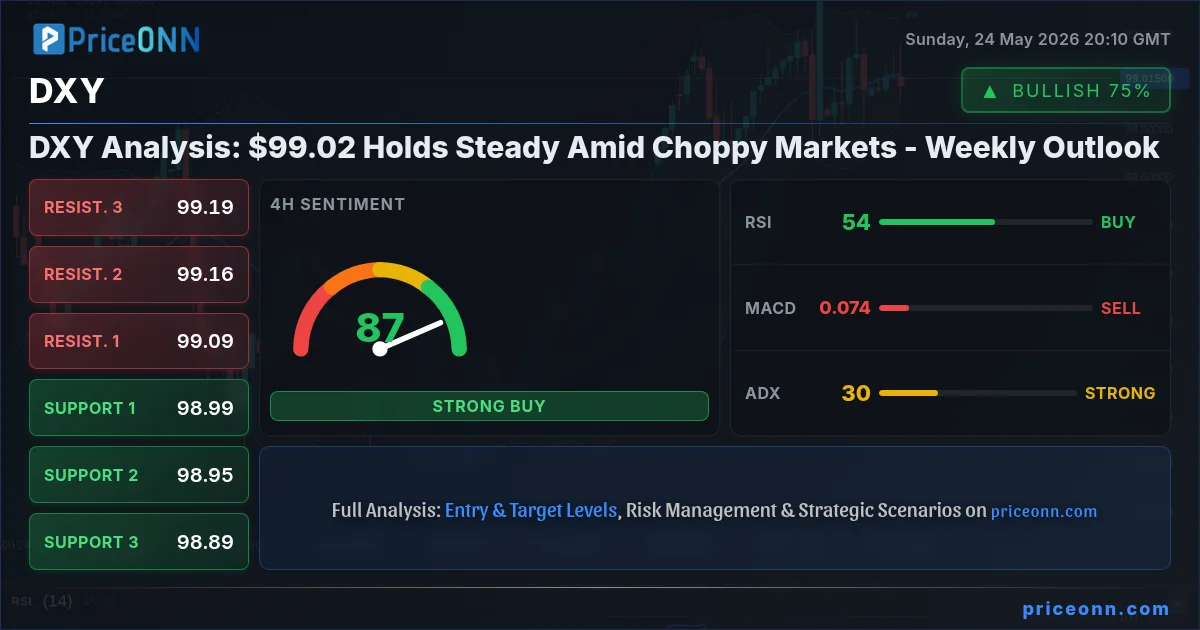
For forex traders, the current environment calls for heightened vigilance. The US Dollar Index (DXY), which measures the dollar's strength against a basket of major currencies, remains sensitive to shifts in Fed policy expectations and global risk sentiment. Key technical levels on the DXY should be closely monitored, with 103.50 acting as a potential near-term support and 105.00 as a resistance level to watch for a sustained move.
Traders should pay close attention to upcoming economic data releases, particularly inflation reports (CPI and PPI) and employment figures. These will provide crucial insights into the underlying health of the US economy and inform the Fed's decisions. Geopolitical developments in the Middle East will also be a significant driver, with any escalation likely to boost safe-haven demand for the dollar, while de-escalation could lead to a retracement.
The implied probability of a Fed rate cut in the coming months, as derived from futures markets, is a critical indicator. If this probability shifts significantly due to inflation surprises or geopolitical events, it could trigger substantial currency movements. For instance, a sudden increase in the likelihood of a rate hike, however improbable currently, would likely send the dollar sharply higher. Conversely, if market expectations shift towards earlier or deeper cuts, the dollar could face renewed downward pressure. Traders should be prepared for increased volatility, especially around FOMC meeting minutes and speeches from Fed officials.
Outlook
The Federal Reserve is navigating a period of significant uncertainty, balancing domestic economic considerations with external geopolitical risks. The trajectory of oil prices and the duration of the current geopolitical conflict will be paramount in determining the Fed's next policy move. Until a clearer picture emerges, the US Dollar may experience choppy trading, with its direction heavily influenced by incoming data and global events. Traders should remain cautious, focusing on risk management and closely monitoring key inflation indicators and geopolitical headlines that could sway monetary policy expectations.
Frequently Asked Questions
What is the Fed's primary concern regarding rising oil prices?
The Fed's primary concern is that sustained high oil prices could translate into broader inflation across the economy, making it harder to achieve their 2% target. If the price increase is seen as temporary, they may "look through" it, but persistent rises could necessitate a more hawkish monetary policy stance.
How does geopolitical instability affect the US Dollar?
Geopolitical instability often increases demand for safe-haven assets, including the US Dollar. However, if the instability directly impacts global energy supply and drives up oil prices, it creates a complex scenario where the dollar could strengthen due to safe-haven flows but face headwinds from potential Fed policy shifts aimed at combating resulting inflation.
What key economic data should traders watch for Fed policy clues?
Traders should closely monitor US inflation data, such as the Consumer Price Index (CPI) and Producer Price Index (PPI), as well as employment figures like Non-Farm Payrolls. These indicators directly influence the Federal Reserve's decisions on interest rates and quantitative tightening policies.
Track markets in real-time
Empower your investment decisions with AI-powered analysis, technical indicators and real-time price data.
Join Our Telegram Channel
Get breaking market news, AI analysis and trading signals delivered instantly to your Telegram.
Join Channel PriceONN News
The US Dollar experienced a notable decline last week as markets priced in a potential diplomatic resolution to the US-Iran conflict, leading to a drop in oil prices and Treasury yields. This shift in sentiment suggests a move away from stagflation fears towards a more stable economic outlook.
PriceONN News
Markets are pricing in a potential de-escalation in the US-Iran conflict, leading to a significant drop in crude oil prices and a weakening US Dollar as diplomatic efforts appear to be gaining traction.
PriceONN News
EUR/USD stalled below 1.1660 as the US Dollar defied expectations, refusing to weaken despite reports of a US-Iran ceasefire extension. Market participants remain cautious, awaiting concrete confirmation and assessing lingering inflationary pressures.
PriceONN News
EUR/USD closed at 1.1640, showing resilience amid mixed signals. Easing US-Iran tensions initially pressured the dollar, but persistent inflation concerns and political ratification hurdles are keeping the greenback surprisingly steady.
PriceONN News
EUR/USD stabilized around 1.1640 as reports of a US-Iran ceasefire extension and potential Strait of Hormuz reopening eased inflation fears. However, the US Dollar's resilience suggests lingering caution among forex traders.
PriceONN News
USDJPY has returned to the area of previous interventions. The ECB is moving towards a rate hike in June. The US dollar retreated on Friday amid new record highs for stock indices and rumours of amendments to the US-Iran agreement. However, tit-for-tat exchanges between the adversaries pushed the dollar index back into the support zone […] The post Yen Braces for a New Storm appeared first on ActionForex.
PriceONN News
Canada's economy showed signs of a slowdown in early 2026, but upcoming May jobs data is expected to reveal a modest uplift. Analysts anticipate the unemployment rate to fall to 6.8%.
PriceONN News
Canada's economy showed signs of life in early 2026, with analysts expecting a moderate job growth of around 25,000 positions and a potential dip in the unemployment rate to 6.8% for May.
PriceONN News
USD/JPY is testing the critical 160 level as stalled US-Iran negotiations and hawkish Federal Reserve rhetoric fuel inflation concerns and a potential for further rate hikes. Traders are closely watching upcoming US Non-Farm Payrolls and Eurozone CPI data for direction.
PriceONN News
The USD/JPY pair is flirting with the 160 level as stalled US-Iran negotiations and hawkish Federal Reserve rhetoric fuel inflation concerns. Traders are closely watching upcoming US Non-Farm Payrolls and Eurozone CPI data.
PriceONN News
The New Zealand Dollar surged on Friday, with investors interpreting Reserve Bank of New Zealand (RBNZ) comments as a sign that interest rate hikes could resume sooner and be larger than previously anticipated. This hawkish pivot has created significant trading opportunities.
PriceONN News
The US Dollar experienced a notable dip as a renewed ceasefire between the US and Iran spurred a rally in global equities, particularly in tech stocks. However, persistent core PCE inflation at 3.3% YoY continues to fuel 'higher for longer' rate expectations.