Forex Today: US Dollar and Oil fall as Trump signals Iran de-escalation
Market Mood Shifts Dramatically
A wave of optimism swept across financial markets today, leading to a notable retreat in the US Dollar Index (DXY). The benchmark index shed its footing, dipping below the psychologically significant 100 mark and currently trading around 99.10. This shift occurred despite underlying support from stable bond yields and a generally measured outlook on future Federal Reserve policy. The improved risk appetite appears to be the dominant force, driving capital away from safe-haven assets like the dollar.
The catalyst for this change in market sentiment seems to stem from signals suggesting a potential de-escalation of tensions involving Iran. Reports indicate a softening in rhetoric from key political figures, hinting at a possible diplomatic pathway rather than further military confrontation. Such developments tend to reduce geopolitical uncertainty, a factor that has been weighing on global growth prospects and bolstering demand for the dollar as a secure store of value.
Understanding West Texas Intermediate Crude
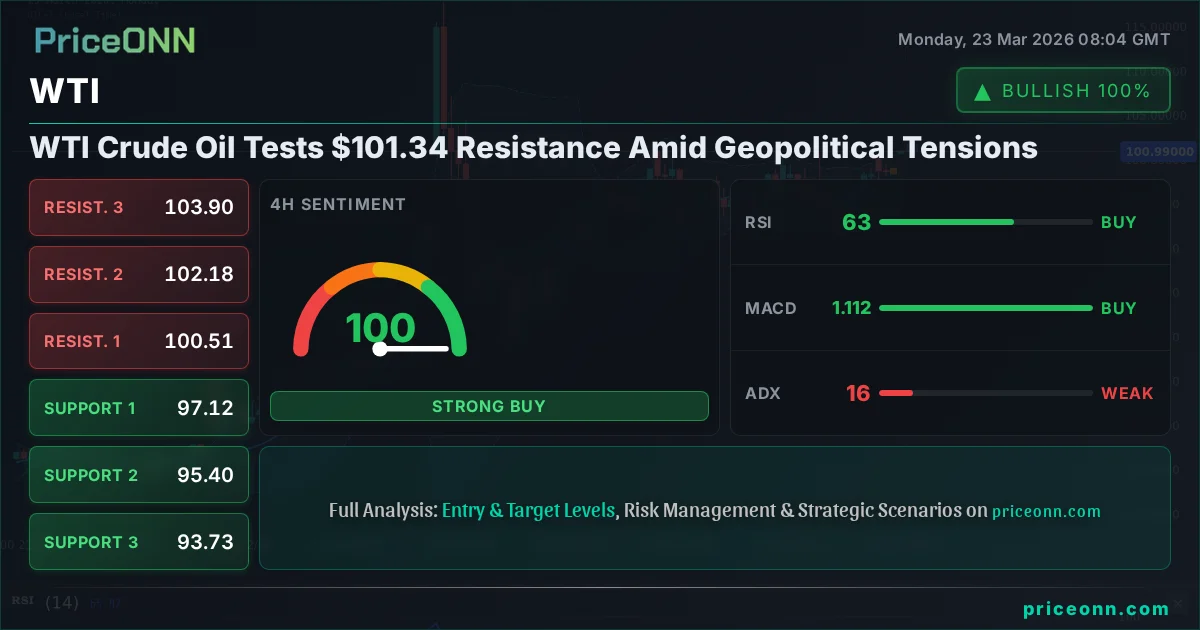
Concurrently, WTI Crude Oil prices also faced downward pressure. West Texas Intermediate, a globally recognized benchmark for crude oil, experienced a price slide. This grade of oil, often termed "light" and "sweet" due to its low specific gravity and minimal sulfur content, is highly valued for its ease of refining.
Sourced primarily within the United States and distributed through the critical Cushing, Oklahoma hub, often called "The Pipeline Crossroads of the World," WTI's pricing is a frequent headline in energy markets. Like any commodity, its value is fundamentally dictated by the interplay of supply and demand.
Factors influencing demand include the health of the global economy; robust economic expansion typically fuels higher energy consumption. Conversely, economic slowdowns tend to dampen demand. Supply dynamics are equally critical. Disruptions stemming from political instability, armed conflicts, or international sanctions can significantly impact availability and drive prices upward. Furthermore, the production decisions made by the Organization of the Petroleum Exporting Countries (OPEC), a cartel of major oil-producing nations, play a pivotal role. Their agreements on production quotas directly influence global supply levels.
The relationship between the US Dollar and WTI Crude Oil prices is particularly noteworthy. Given that oil is predominantly traded in dollars, a weaker dollar generally makes oil more affordable for purchasers using other currencies. This can stimulate demand and, consequently, push oil prices higher. Conversely, a strengthening dollar tends to make oil more expensive, potentially dampening demand and exerting downward pressure on prices.
Market participants also closely monitor weekly inventory reports from the American Petroleum Institute (API) and the Energy Information Administration (EIA). These reports offer insights into the balance between oil supply and demand. A reported decrease in stockpiles can signal robust demand, potentially boosting prices. Conversely, an increase in inventories might indicate oversupply, leading to price declines. The API releases its data every Tuesday, with the EIA following the next day. While their figures are generally closely aligned, the EIA's data, being from a government agency, is often considered the more authoritative.
The Bigger Picture
The apparent easing of geopolitical tensions, particularly concerning Iran, has injected a dose of positive sentiment into the global economic outlook. This shift away from potential conflict reduces a significant risk premium that had been embedded in various asset prices, including oil. For currency traders, the diminished safe-haven appeal of the US Dollar, coupled with steady, albeit not aggressive, economic signals, creates a complex trading environment.
The interplay between the dollar's performance and oil prices remains a critical barometer for global economic health. A weaker dollar can offer a temporary boost to oil-producing nations and energy companies, while a stronger dollar may signal underlying economic concerns or a flight to safety. Traders will be closely watching the persistence of this risk-on sentiment and how it influences central bank policies moving forward.
Track markets in real-time
Empower your investment decisions with AI-powered analysis, technical indicators and real-time price data.
Join Our Telegram Channel
Get breaking market news, AI analysis and trading signals delivered instantly to your Telegram.
Join Channel