Global forecasting group sees U.S. inflation at 4.2% this year, much higher than Fed estimate
Inflationary Pressures Surge Unexpectedly
The specter of escalating inflation in the United States looms larger than anticipated, according to a leading global economic forecasting body. This organization has dramatically revised its outlook, projecting headline consumer price increases to hit 4.2% for the current year. This figure represents a steep climb from its previous assessment of 2.8% and significantly surpasses the 2.7% benchmark set by U.S. Federal Reserve officials just last week.
Several potent factors are contributing to this upward revision. The ongoing conflict in the Middle East is a primary driver, injecting considerable uncertainty into global energy markets. Geopolitical tensions in that region have demonstrably impacted oil and gas prices, feeding directly into broader inflationary trends. Furthermore, persistent U.S. tariffs, even at reduced levels compared to previous periods, continue to exert upward pressure on the cost of goods across various sectors worldwide. These tariffs, while perhaps not as acutely felt as before, create a sustained drag on price stability.
The implications of sustained higher energy costs are multifaceted. The organization highlighted that a protracted period of elevated energy prices will inevitably increase operational expenses for businesses. This, in turn, is expected to translate into higher consumer prices, posing a direct challenge to economic growth prospects. The true extent and duration of the regional conflict remain highly uncertain, adding another layer of complexity to the economic landscape.
Future Outlook and Policy Considerations
Despite the immediate inflationary surge, the forecast offers a contrasting picture for the subsequent year. The same international group anticipates a sharp deceleration in U.S. inflation during 2027, bringing it down to an estimated 1.6%. This projected figure falls below even the Federal Reserve's own 2027 estimate of 2.2% and is considerably lower than the central bank's long-standing 2% target.
Core inflation, which strips out the volatile components of energy and food, is projected at 2.8% for the current year. Looking ahead, core inflation is expected to moderate to 2.4% by 2027. This suggests that while energy prices are a significant near-term concern, underlying price pressures may be more contained over the medium term.
In its baseline scenario, the organization foresees the Federal Reserve maintaining its current policy interest rate unchanged through 2027. This stance is attributed to the confluence of rising near-term inflation, core inflation projected to remain above the target for an extended period, and expectations of solid Gross Domestic Product (GDP) expansion. However, a strong cautionary note was sounded regarding the need for vigilance against persistent inflationary threats.
The report emphasizes that while supply-driven increases in global energy prices can potentially be absorbed if inflation expectations remain stable, policy adjustments might become necessary. Such adjustments would be triggered by signs of broader price pressures permeating the economy or a weakening labor market. The organization projects U.S. GDP growth to accelerate to a 2% pace this year, before moderating to 1.7% in 2027. This follows a significant slowdown in the final quarter of 2025, where GDP expanded at a modest 0.7% rate.
Market Ripple Effects
This significant upward revision to U.S. inflation forecasts carries substantial weight for financial markets and central bank policy. The divergence between the OECD's 4.2% projection and the Federal Reserve's 2.7% estimate signals a potential disconnect in how key economic risks are being weighed.
For traders, this news injects a dose of uncertainty into the interest rate outlook. While the OECD expects the Fed to hold rates steady through 2027, the higher inflation numbers could pressure policymakers to consider restrictive actions sooner than expected, or at least maintain a hawkish stance for longer. This could translate into higher bond yields across the curve, particularly if market participants begin to price in a greater probability of delayed rate cuts.
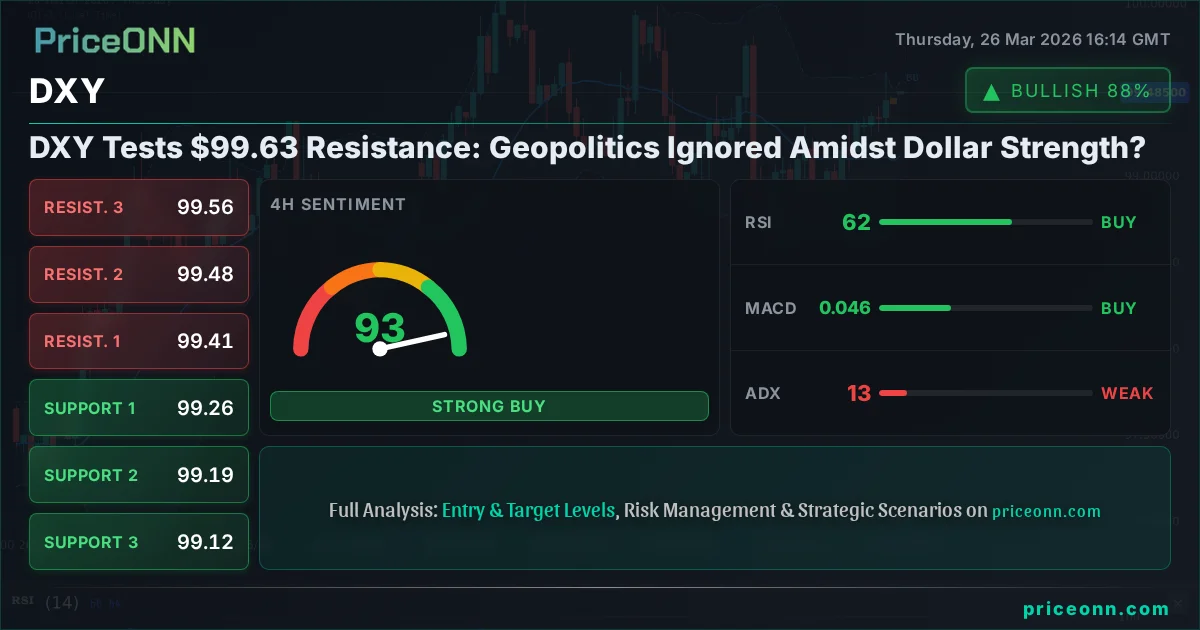
The USD Index (DXY) may find support from expectations of higher-for-longer interest rates, as it makes dollar-denominated assets more attractive relative to other currencies. Conversely, riskier assets, such as technology stocks and emerging market equities, could face headwinds. A prolonged period of elevated inflation and potentially tighter monetary policy can dampen corporate earnings and reduce investor appetite for riskier investments.
Furthermore, the impact on commodities, particularly energy, is a critical factor. The OECD's analysis directly links the conflict in the Middle East to higher energy prices, which then fuel broader inflation. This creates a feedback loop where geopolitical events directly influence economic policy decisions. Traders will be closely monitoring oil and gas prices for any signs of further escalation or de-escalation, as these will be key determinants of headline inflation. The potential for inflation to remain sticky could also indirectly benefit precious metals like gold, which are often seen as a hedge against rising prices and currency debasement.
Track markets in real-time
Empower your investment decisions with AI-powered analysis, technical indicators and real-time price data.
Join Our Telegram Channel
Get breaking market news, AI analysis and trading signals delivered instantly to your Telegram.
Join Channel