
Middle East Tensions Spark Inflation Fears for Australia, AUD Under Watch
Geopolitical instability in the Middle East is casting a long shadow over Australia's economic outlook, with Reserve Bank of Australia (RBA) Assistant Governor Christopher Kent highlighting the significant risks posed to inflation and overall economic stability. A prolonged conflict in the region could exacerbate supply chain disruptions, particularly impacting energy prices, and necessitate a tougher stance from policymakers.
Market Context
The RBA, like many central banks globally, is navigating a complex economic landscape. Assistant Governor Kent recently voiced concerns that a protracted Middle East conflict would amplify economic disruption. This situation, he warned, could compel policymakers to confront mounting inflationary pressures, especially those stemming from volatile energy markets. The RBA's mandate includes maintaining price stability within a target inflation range of 2-3%, alongside fostering employment and economic prosperity. Its primary tool for achieving these objectives is the adjustment of interest rates. Elevated rates typically support a stronger Australian Dollar (AUD) by attracting foreign capital seeking higher returns, while lower rates can weaken the currency.
Analysis & Drivers
The primary driver of concern is the potential for sustained higher energy prices stemming from the Middle East. Such an increase directly feeds into headline inflation figures and can have secondary effects on transportation costs, manufacturing inputs, and consumer spending power. If the conflict continues to disrupt oil and gas supplies, it could push inflation beyond the RBA's target band, creating a dilemma for monetary policy. The RBA would face the difficult choice between tightening policy further to combat inflation, potentially stifling economic growth and weakening the AUD, or tolerating higher inflation to support a fragile recovery. Beyond energy, broader supply chain fragilities exposed by geopolitical events can also contribute to price pressures across various sectors. The RBA also employs tools such as quantitative easing (QE) and quantitative tightening (QT). QE, used during downturns, injects liquidity and generally weakens the AUD, while QT, employed during recovery and rising inflation, withdraws stimulus and typically supports the currency. The current environment suggests a lean towards tightening, but the nature of the external shock could complicate this approach.
Trader Implications
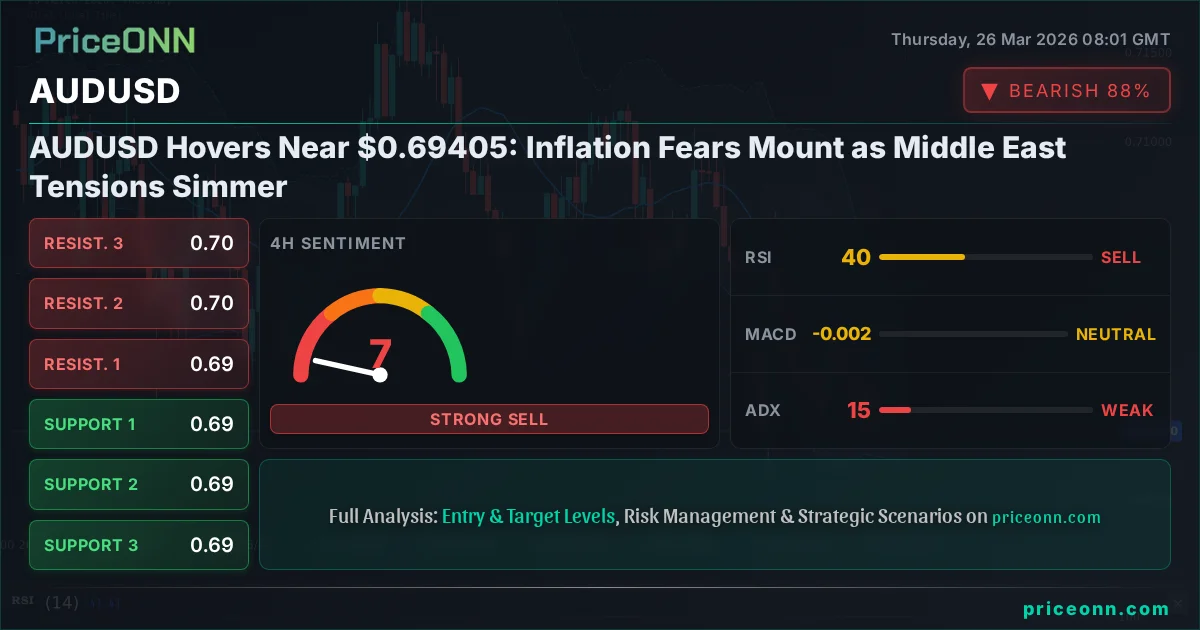
Traders monitoring the AUD should pay close attention to developments in the Middle East and their subsequent impact on global energy markets and Australian inflation data. Key levels to watch for AUD/USD include potential support around 0.6500, a level that has historically offered some stability. A sustained breach below this could signal increased risk aversion and further downside. Conversely, a de-escalation of tensions and stable energy prices could see the AUD test resistance levels near 0.6650. The RBA's forward guidance will also be critical; any hints of a more hawkish stance due to inflation concerns could provide a floor for the currency, while indications of growth concerns might weigh on it. Investors are closely assessing how robust macroeconomic data, such as GDP, PMI, and employment figures, will hold up against these external pressures. A significant deterioration in these indicators, coupled with persistent inflation, would likely lead to increased volatility and a bearish outlook for the AUD.
Outlook
The path forward for the Australian Dollar remains heavily contingent on the geopolitical situation in the Middle East and its inflationary consequences. Should tensions ease, the AUD may find some reprieve. However, if the conflict persists and energy prices remain elevated, the RBA may be forced into a more aggressive inflation-fighting stance, potentially creating headwinds for economic growth and the currency. Traders should maintain a cautious approach, closely monitoring energy market movements, inflation reports, and RBA communications for directional cues. The 2-3% RBA inflation target remains a crucial benchmark against which policy decisions and market reactions will be measured.
Frequently Asked Questions
What is the primary risk to Australia's economy from the Middle East conflict?
The primary risk is a surge in energy prices, which can drive up inflation beyond the Reserve Bank of Australia's 2-3% target and potentially necessitate tighter monetary policy that could slow economic growth.
How might the RBA respond to sustained high inflation?
The RBA could raise interest rates further or maintain them at higher levels for longer to combat inflation. This would typically strengthen the Australian Dollar but could also dampen economic activity and potentially push AUD/USD below the 0.6500 support level.
What key levels should traders watch for the Australian Dollar?
Traders should monitor the 0.6500 support level for potential downside breaches and the 0.6650 resistance level for potential upside tests. Developments in energy prices and RBA commentary are key catalysts.
Track markets in real-time
Empower your investment decisions with AI-powered analysis, technical indicators and real-time price data.
Join Our Telegram Channel
Get breaking market news, AI analysis and trading signals delivered instantly to your Telegram.
Join Channel



PriceONN