
Gold Analysis: Is the Correction Over, or Just Catching Its Breath?
 PriceONN Editorial Desk
Multi-source verification
PriceONN Editorial Desk
Multi-source verification
Gold's Steep Slide and a Glimmer of Hope
The precious metal has endured a punishing year. Having touched an unprecedented peak around $5,602 in January, gold has since surrendered approximately 27% of its value. This dramatic slide has been fueled by a confluence of factors: Treasury yields have climbed, the U.S. dollar has strengthened, and the typical demand for safe-haven assets has waned.
However, a notable shift occurred this week. On Monday, gold prices surged back above the $4,050 mark. This rebound was catalyzed by a diplomatic signal from President Trump, suggesting a potential resumption of peace talks with Iran. This development, reportedly influenced by regional players like Saudi Arabia urging restraint on military action, sent crude oil prices lower and tempered immediate inflation anxieties. Yet, the easing of geopolitical tensions simultaneously reduced the very safe-haven appeal that had been underpinning gold's previous strength.
Despite this sharp correction, a prevailing sentiment among many market watchers is that gold's fundamental long-term upward trajectory remains intact. The immediate future, however, hinges critically on a key economic release scheduled for Friday: the U.S. employment figures. A weaker than expected jobs report could reignite expectations for interest rate cuts, offering fresh support to gold. Conversely, a robust report might embolden the current pullback, potentially extending gold's downward pressure.
Charting Gold's Technical Battleground
Examining the XAU/USD chart reveals a market grappling with a broader downtrend established since January's zenith. Currently, gold is testing a descending trendline from below, while simultaneously finding tentative footing just above the critical 3,900-4,000 support area. This technical tug-of-war sets the stage for a potentially volatile breakout.
The Bullish Case
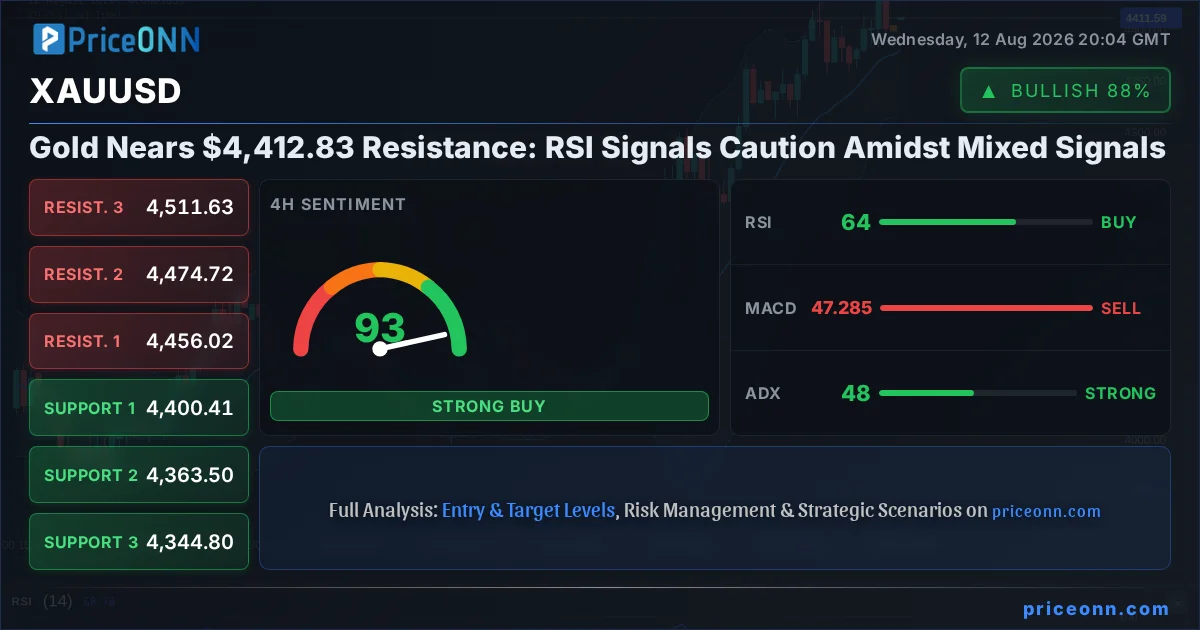
Signs of resilience are emerging from the 3,900-4,000 zone, with price showing a distinct bounce. Furthermore, a divergence in the Relative Strength Index (RSI) lends some credence to the idea that this recent upward reaction might hold. If gold manages to break decisively above the descending trendline, the next significant hurdle will be the 4,400 resistance level. This area is further reinforced by the convergence of the 200-period Exponential Moving Average (EMA), a point that has repeatedly proven significant in recent months. A confirmed breach of this technical confluence would signal a substantial alteration in gold's prevailing market structure.
The Bearish Case
Alternatively, if gold falters at the trendline once more, it risks becoming ensnared in a range-bound scenario, caught between overhead resistance and underlying support. In such a situation, Friday's Non-Farm Payrolls (NFP) report emerges as a crucial potential catalyst. A strong jobs number could decisively tip the scales, shattering the 3,900-4,000 support floor and paving the way for a decline towards the 3,400-3,500 zone-a former resistance level that may now act as support. With prices confined between a stubborn trendline and a well-tested support zone, and a major economic data release on the horizon, gold's imminent trajectory could finally provide clarity on whether its corrective phase has concluded or is merely pausing for breath.
Market Ripple Effects
The fluctuating fortunes of gold have broader implications across financial markets. The recent geopolitical easing, which initially pressured gold, also saw a decline in Crude Oil prices, as fears of supply disruptions diminished. This sentiment shift can also influence inflation expectations, potentially impacting the trajectory of global interest rates.
For currency traders, a stronger U.S. dollar, which has been a headwind for gold, often correlates with a weaker Euro (EUR/USD) and potentially lower commodity prices. Conversely, a renewed safe-haven bid for gold could signal a broader risk-off sentiment, potentially benefiting the Japanese Yen (JPY) and the Swiss Franc (CHF) as investors seek perceived stability. The upcoming U.S. jobs report, influencing Federal Reserve rate cut expectations, will be critical not only for gold but also for U.S. Treasury yields, which have a direct inverse relationship with gold prices.
Track markets in real-time
Empower your investment decisions with AI-powered analysis, technical indicators and real-time price data.
Join Our Telegram Channel
Get breaking market news, AI analysis and trading signals delivered instantly to your Telegram.
Join Channel PriceONN News
Gold rose to 4,400 USD per ounce on Tuesday, reaching a two-month high. Demand for the precious metal is growing rapidly, even amid heightened inflation risks and expectations of higher interest rates driven by elevated oil prices. Chinese institutional investors continue to build positions in gold as a defensive asset amid heightened volatility in other […] The post Gold Rallies: Long-Awaited Rise and Growing Safe-Haven Demand appeared first on ActionForex.
PriceONN News
Whatever the inflation figures may be, the precious metal will come out on top. Japan and the US don’t want to give the yen’s fate to speculators. The US dollar continues to recover from the blow dealt by the labour market statistics. A rally in Treasury bond yields is driving the rise in the USD […] The post Gold as a Sure-Fire Bet appeared first on ActionForex.
PriceONN News
Hello fellow traders. In this technical article we’re going to take a look at the Elliott Wave charts charts of Copper (HG_F) commodity published in members’ area of the website. As our members know, Copper Futures recently completed a pullback that provided a high-probability trading setup. The decline unfolded as a clear Elliott Wave Zig […] The post Copper (Hg_F) Elliott Wave: Targeting a Buy at the Blue Box appeared first on ActionForex.
PriceONN News
The long-term advances in the Dow Jones and Copper cannot be correctly labeled as regular Elliott Wave impulses. The reason is based on one of the most important rules within Elliott Wave Theory: Wave 4 of a regular impulse cannot overlap the price territory of Wave 1 at the same degree. This overlap is visible […] The post Dow Jones and Copper: Why the Overlap Reveals a Nest and Signals a Major Risk-On Acceleration appeared first on ActionForex.
PriceONN News
The USD index plummeted amid a decline in US employment. Gold is benefiting from the Fed’s reluctance to raise interest rates. The US dollar touched a seven-week low after an unexpected labour market report. Employment in July unexpectedly fell by 23K. The figures for May were revised down from 129K to 63K, and those for […] The post The Dollar Let the Labour Market Down appeared first on ActionForex.
PriceONN News
The Consumer Price Index (CPI) rose by 0.1% month-on-month (m/m) in July – in line with expectations. On a twelve-month basis, CPI edged down to 3.4% (from 3.5% in June). Energy costs fell by 1.5% m/m, led by a 2.9% m/m decline in prices at the pump. Food prices rose 0.1% m/m – its softest […] The post US: Inflationary Pressures Remain Subdued in July appeared first on ActionForex.
PriceONN News
US inflation eased as expected in July, reinforcing case for Fed to stay on hold while it waits for clearer evidence on both prices and labor market. Headline CPI rose from -0.4% to 0.1% m/m, while annual rate slowed from 3.5% y/y to 3.4%. Core CPI increased from 0.0% to 0.2% m/m, with annual core […] The post US CPI Slows to 3.4% as Core Inflation Eases to 2.5% appeared first on ActionForex.
PriceONN News
Germany’s benchmark index just made history, breaking above 26,500 for the first time ever, extending a rally that has already delivered close to 10% over the past twelve months. The move came on fresh optimism around a potential resolution to the Iran conflict, though that optimism proved short-lived: President Trump’s latest demands, that Tehran compensate […] The post DAX 40: Record Highs, Real Fundamentals, One Channel Left to Test appeared first on ActionForex.
PriceONN News
Brent oil price rose to the highest in over one week on Tuesday, in extension of Monday’s nearly 5% advance, following the latest verbal escalation by President Trump that quickly changed the sentiment and countered efforts of Iran and Oman to find solution for reopening of strategic Hormuz strait. The latest demands from President Trump […] The post Brent Oil Price Falls After Recovery Failed to Clear Important $90 Barrier appeared first on ActionForex.
PriceONN News
The NFIB’s Small Business Optimism Index rose 2.4 points to 99.8 in July, soundly beating expectations for a roughly flat reading of 97.5. Eight out of the ten index subcomponents improved during the month and two deteriorated. The largest improvement came from the net share of firms planning to increase employment (up 9 points to […] The post US: Small Business Optimism Spiked in July appeared first on ActionForex.
PriceONN News
Overnight, the RBA held its cash rate steady at 4.35%, as widely expected after June’s inflation data came in softer than forecast at 3.8% headline. Yet the accompanying statement struck a notably cautious tone, warning that trimmed mean inflation remains elevated and largely unchanged from the March quarter, with oil and related commodities still trading […] The post EUR/AUD: Two Central Banks on Hold, One Triangle About to Break appeared first on ActionForex.
PriceONN News
A deal to reopen the Strait of Hormuz is not inevitable. Oil prices are rising amid growing risks of an escalation of the conflict in the Middle East. The US dollar continued to recover from losses caused by the jobs report, against a backdrop of rising geopolitical tensions in the Middle East with traders squaring […] The post Brent Is Following a Path of Demands Rather Than Commitments appeared first on ActionForex.