
Gold Finds Footing Near $4,500 After Liquidity-Fueled Plunge, But What's Next?

Gold has found a tentative footing near the $4,500 level following a brutal and disorderly decline yesterday. This sharp downturn appears to have been triggered by a significant liquidity crunch, suggesting that market plumbing issues, rather than solely economic fundamentals, dictated the price action.
Market Context
This week's hawkish pronouncements from major central banks, including the Federal Reserve, the European Central Bank, the Bank of England, and even the Bank of Japan, initially pressured the precious metal. However, the sheer velocity and scale of the subsequent drop, which saw gold decisively fall below the psychologically significant $5,000 mark, indicate a market dislocation. The breach of this key level unleashed a torrent of margin calls across highly leveraged positions, leading to a cascading effect of forced selling and further liquidation.
This pattern is characteristic of liquidity stress, where trading mechanics overwhelm underlying value. Adding to the selling pressure, substantial outflows were recorded from major gold-backed exchange-traded funds (ETFs), with prominent funds like GLD seeing aggressive unwinding of institutional positions. Intriguingly, this sharp selloff occurred concurrently with a softening U.S. Dollar, further reinforcing the narrative that liquidity constraints, not currency headwinds, were the primary driver of the dramatic price action.
Analysis & Drivers
The recent price action in gold highlights the potent influence of liquidity conditions on asset markets, often superseding traditional drivers. While central bank rhetoric has leaned hawkish, contributing to a risk-off sentiment, the speed of gold's decline suggests a technical cascade fueled by leveraged trades meeting their margin limits. The break below $5,000 acted as a catalyst, initiating a deleveraging process that amplified the downward move.
The substantial outflows from gold ETFs underscore a broader trend of institutions rebalancing portfolios or meeting redemption requests, which can exacerbate price declines during periods of market stress. The fact that this occurred despite a weaker dollar is a crucial observation. Typically, a depreciating USD provides a tailwind for gold, but the overwhelming force of the liquidity squeeze evidently dwarfed this conventional relationship. This suggests that participants were prioritizing cash or deleveraging over safe-haven assets, even when the currency component was favorable.
Trader Implications
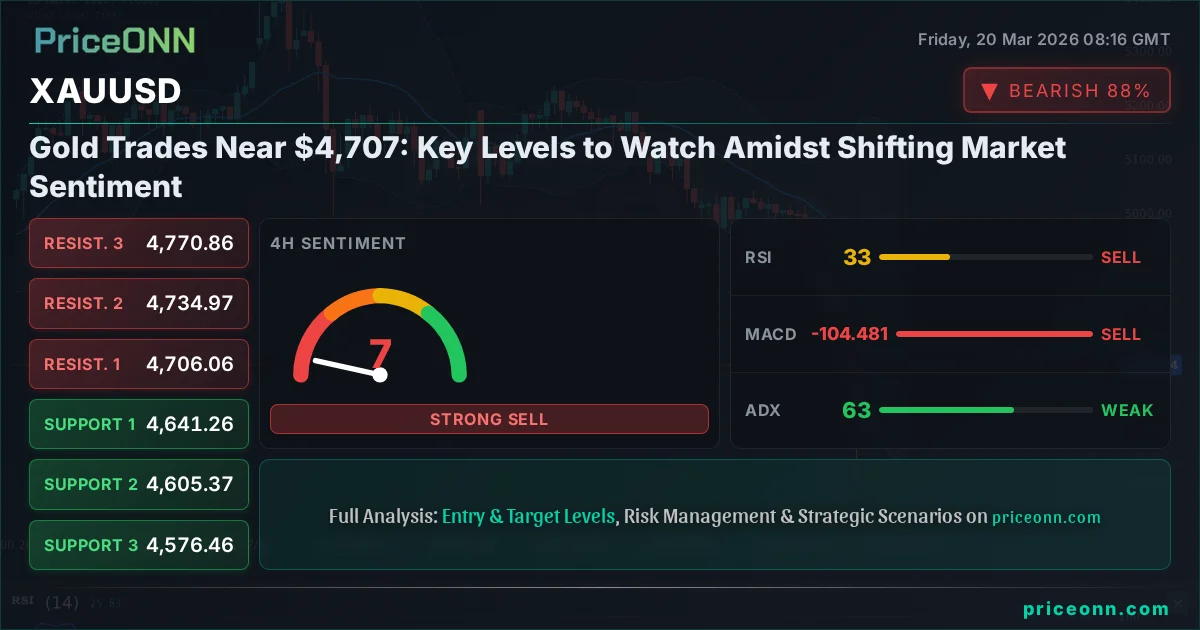
With the most intense phase of forced selling likely behind us, gold is beginning to establish support in the vicinity of $4,500. This stabilization suggests that extreme selling pressure may have abated, potentially paving the way for a period of consolidation. However, traders should remain cautious. The underlying cause of the liquidity crunch needs to be understood, as lingering systemic issues could prolong volatility.
Key technical levels to watch include the recently formed support around $4,500. A decisive break below this could signal a further descent towards the $4,000 target, as indicated by some market observers. Conversely, a sustained recovery above $4,750 might suggest a temporary reprieve and a potential retest of higher levels. The broader market sentiment, influenced by ongoing central bank policy shifts and any further signs of liquidity stress, will be critical. Traders should monitor ETF flows and interbank lending rates for clues on the health of the financial plumbing.
Outlook
The immediate outlook for gold hinges on whether the liquidity issues have been fully resolved or if they represent a deeper systemic concern. While stabilization near $4,500 offers a glimmer of hope for a less volatile period, the potential for a retest of the $4,000 level remains. Upcoming economic data and any further communications from central banks will be closely scrutinized. For now, the market appears to be digesting the rapid deleveraging event, with a focus on technical levels and the potential for a more fundamental recovery, provided systemic liquidity concerns subside.
Frequently Asked Questions
What caused the recent sharp drop in gold prices?
The primary driver was a significant liquidity crunch that triggered a cascade of forced selling, particularly after gold broke below the $5,000 level. This overwhelmed market mechanics, leading to a disorderly decline.
Is gold expected to fall further, and what are the key support levels?
Market data suggests stabilization near $4,500, which is acting as initial support. However, a break below this level could see gold target the $4,000 mark. Traders are watching $4,500 closely.
What should traders watch for in the coming days regarding gold?
Traders should monitor ETF flows for signs of institutional selling or buying, as well as broader liquidity indicators. Any sustained move above $4,750 could signal a short-term reversal, while a failure to hold $4,500 points to further downside risk.
Track markets in real-time
Empower your investment decisions with AI-powered analysis, technical indicators and real-time price data.
Join Our Telegram Channel
Get breaking market news, AI analysis and trading signals delivered instantly to your Telegram.
Join Channel



PriceONN