
Gold Holds Near Two-week High
 PriceONN Editorial Desk
Multi-source verification
PriceONN Editorial Desk
Multi-source verification
Shifting Sands: Gold's Ascent on Global Unease
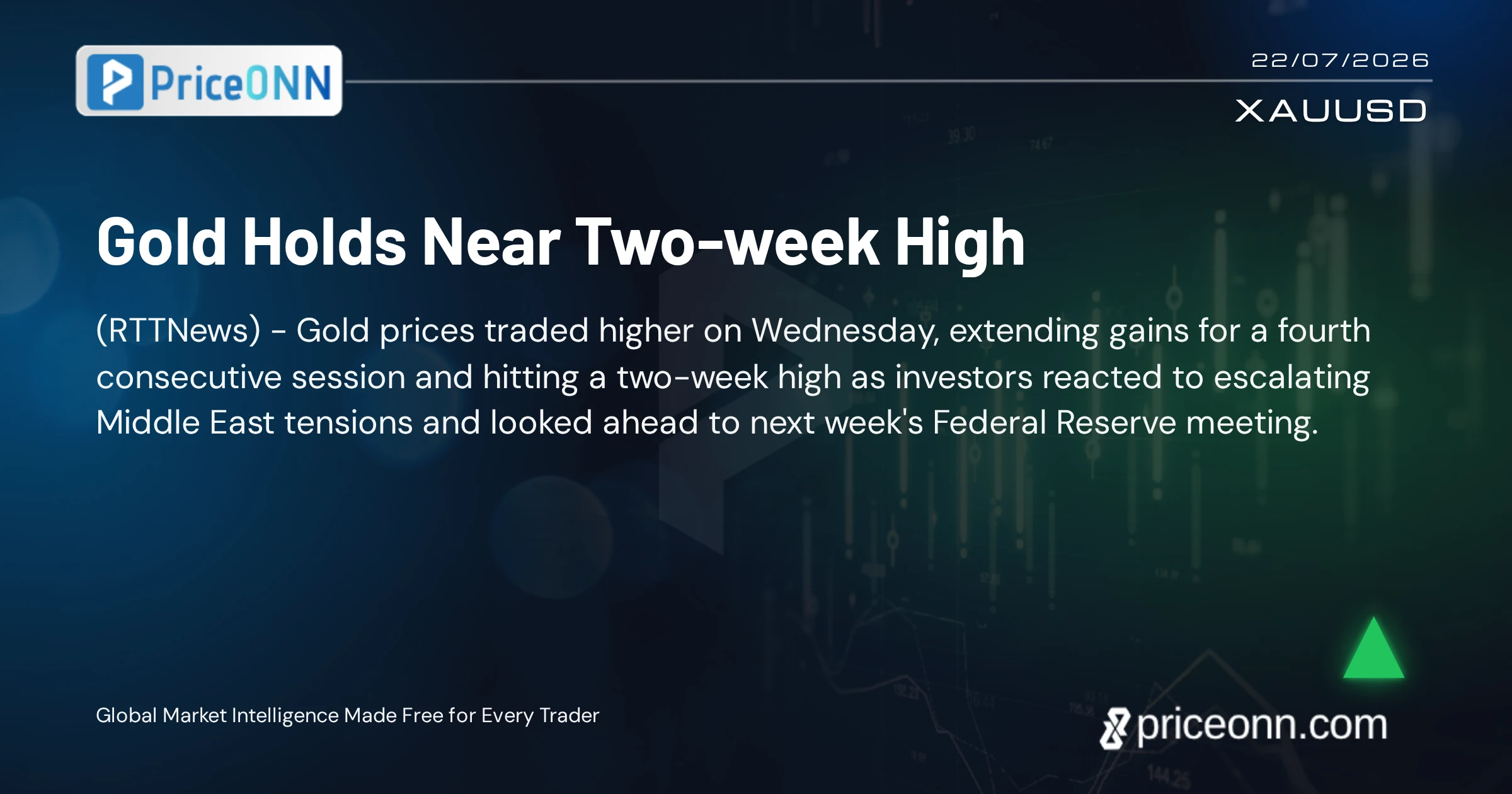
The price of gold experienced a notable upswing on Wednesday, marking its fourth consecutive day of gains and reaching its highest point in two weeks. This upward trajectory is largely a response to heightened geopolitical tensions in the Middle East and a keen eye on the forthcoming Federal Reserve meeting next week. Adding to the complex market sentiment, discussions around U.S. trade tariffs have resurfaced, particularly following President Donald Trump's announcement of a staged tariff plan for imported generic medicines, a move that follows earlier imposition of substantial tariffs on Canadian goods.
As the global spotlight intensifies on these unfolding events, the precious metal has found a strong footing. Spot gold surged by 0.9 percent, reaching $4,114.81 per ounce. This surge occurs at a time when central banks are reportedly amassing gold reserves at historically significant levels, driven by a dual concern for escalating geopolitical risks and persistent inflation worries. Even with the backdrop of a hawkish Federal Reserve signaling potential interest rate hikes, U.S. gold futures also saw gains, climbing over 1 percent to trade at $4,118.60.
Geopolitical Fault Lines Drive Safe Haven Demand
The U.S. dollar index has maintained its strength, hovering near a one-week peak, buoyed by the rising tensions between the U.S. and Iran, alongside new U.S. trade tariff pronouncements. President Trump has signaled no immediate path to peace talks with Iran, stating that the U.S. is prepared to take decisive action, potentially targeting Iran's nuclear facilities. This rhetoric comes as U.S. military operations against Iran have entered their eleventh consecutive night, with Tehran responding across the Persian Gulf region.
U.S. military objectives have reportedly included strikes on critical infrastructure such as operational centers, naval assets, aircraft hangars, drone storage, and logistical networks. Reports from Iranian media indicate explosions near Bushehr, the site of Iran's sole nuclear power plant, suggesting a significant escalation in hostilities. This volatile situation is creating a palpable sense of uncertainty, pushing investors towards traditional safe-haven assets like gold.
Trade Policy Twists and Future Implications
On the trade policy front, Canadian Prime Minister Mark Caney has indicated that "all options are being considered" following the U.S. administration's imposition of a 50 percent tariff on a broad spectrum of goods originating from Canada. Separately, President Trump's proposed tariff plan for imported generic medicines outlines a phased approach. While tariffs will remain at zero until August 2028, they are slated to climb to 100 percent and subsequently 200 percent thereafter, a strategy aimed at stimulating domestic pharmaceutical manufacturing in the United States.
The confluence of these geopolitical flashpoints and trade policy shifts creates a complex environment for global markets. The renewed focus on tariffs and international disputes, coupled with the ongoing pursuit of gold by central banks seeking to diversify reserves amidst rising global risks, paints a picture of cautious anticipation. Investors are carefully weighing these factors as they position themselves for potential market volatility in the weeks ahead.
Market Ripple Effects
The current market environment, characterized by escalating geopolitical tensions and trade disputes, presents a compelling case for gold's continued strength. The combination of safe-haven demand driven by conflict and potential inflation hedging is a potent mix for the precious metal.
For traders and investors, this situation highlights several key areas to monitor. The ongoing conflict in the Middle East and the U.S. response will remain a primary driver for gold prices in the short term. Any further escalation or de-escalation will have a direct impact on safe-haven flows. Additionally, the evolving trade relationship between the U.S. and Canada, particularly concerning the newly imposed tariffs, could introduce broader economic uncertainty, potentially benefiting gold as a hedge against global trade friction.
Beyond gold itself, several related assets warrant attention. The U.S. dollar index (DXY), which has shown resilience near a one-week high, could see further volatility depending on the trajectory of U.S. foreign policy and its impact on global risk sentiment. Currencies of nations heavily reliant on trade with the U.S. such as the Canadian dollar (CAD), may face downward pressure if trade disputes intensify, making gold a more attractive alternative. Furthermore, equity markets, particularly those sensitive to global trade and geopolitical stability, could experience increased choppiness, with sectors heavily reliant on international supply chains facing potential headwinds. Investors should closely watch central bank commentary, especially from the Federal Reserve, as their policy decisions will influence the broader economic outlook and the attractiveness of non-yielding assets like gold.
Track markets in real-time
Empower your investment decisions with AI-powered analysis, technical indicators and real-time price data.
Join Our Telegram Channel
Get breaking market news, AI analysis and trading signals delivered instantly to your Telegram.
Join Channel PriceONN News
(RTTNews) - Gold was subdued on Tuesday after two consecutive sessions of gains on receding Fed hike bets and reports suggesting that China's central bank stepped up gold purchases in July.
PriceONN News
(RTTNews) - Gold prices held steady on Monday after U.S. employers unexpectedly cut jobs in July and hiring figures for the prior two months were also revised downward, helping ease the risk of an immediate U.S. interest-rate hike.
PriceONN News
(RTTNews) - Gold climbed above $4,300 an ounce on Friday and was set for its biggest weekly gain since January on hopes of peace in the Middle East, eased inflation concerns and reduced expectations for a Federal Reserve rate hike in September.
PriceONN News
(RTTNews) - Gold prices were up more than 1 percent on Wednesday amid rising bets that the U.S. Federal Reserve will not hike interest rates anytime soon.
PriceONN News
(RTTNews) - Gold prices traded higher for a fourth straight session to hit a seven-week high on Thursday, driven by softer U.S. labor market data released overnight, a weaker dollar and lower Treasury yields.
PriceONN News
(RTTNews) - Extending the losses from Friday's session, gold prices have edged lower on Monday as traders assess the plunge in crude oil prices due to the cancellation of planned U.S. strikes on Iran against Iran's refusal to acknowledge any ongoing peace talks with the U.S. and
PriceONN News
(RTTNews) - After two consecutive days of gains, gold prices have tumbled on Friday as crude oil prices soared with no end in sight to the U.S.-Iran conflict, leading to expectations of a high interest rate regime in the U.S. in the upcoming months. In addition, traders opted to
PriceONN News
Saxo Bank says bullion has to hold $4,360 to keep the rally alive, with headwinds building from oil, yields and the dollar into Wednesday’s inflation print.
PriceONN News
An $18 billion July gain hides stock swings of 40% in a month, a $50 billion gap at the top no ranking has seen before, and a spinning revolving door at the bottom.
PriceONN News
Bullion’s two-month high sent producers sharply higher, while junior miners and the TSX Venture posted outsized gains.
PriceONN News
The logistics behind critical minerals is the determining factor on who gets to win in this market.
PriceONN News
Negative payrolls reduce September rate-hike odds to 44%, metals reverse after summer's hawkish Fed.