
Gold, silver prices surge as US economy sheds 23,000 jobs
 PriceONN Editorial Desk
Multi-source verification
PriceONN Editorial Desk
Multi-source verification
Precious Metals Catch Tailwind as Jobs Data Stuns Markets
Precious metals experienced a powerful upward thrust on Friday, with gold reaching a seven-week zenith and silver outperforming. This sharp rally was directly triggered by an unexpected downturn in the US labor market, a development that significantly cooled the prospect of further interest rate tightening by the Federal Reserve.
By mid-morning in New York, December gold futures on the Comex exchange had climbed a substantial 2.3 percent, settling at $4,401 per ounce. This marked the highest valuation for the precious metal since mid-June. Silver futures for September delivery saw an even more aggressive ascent, jumping 3.6 percent to trade at $63.85 per ounce, also achieving a seven-week high.
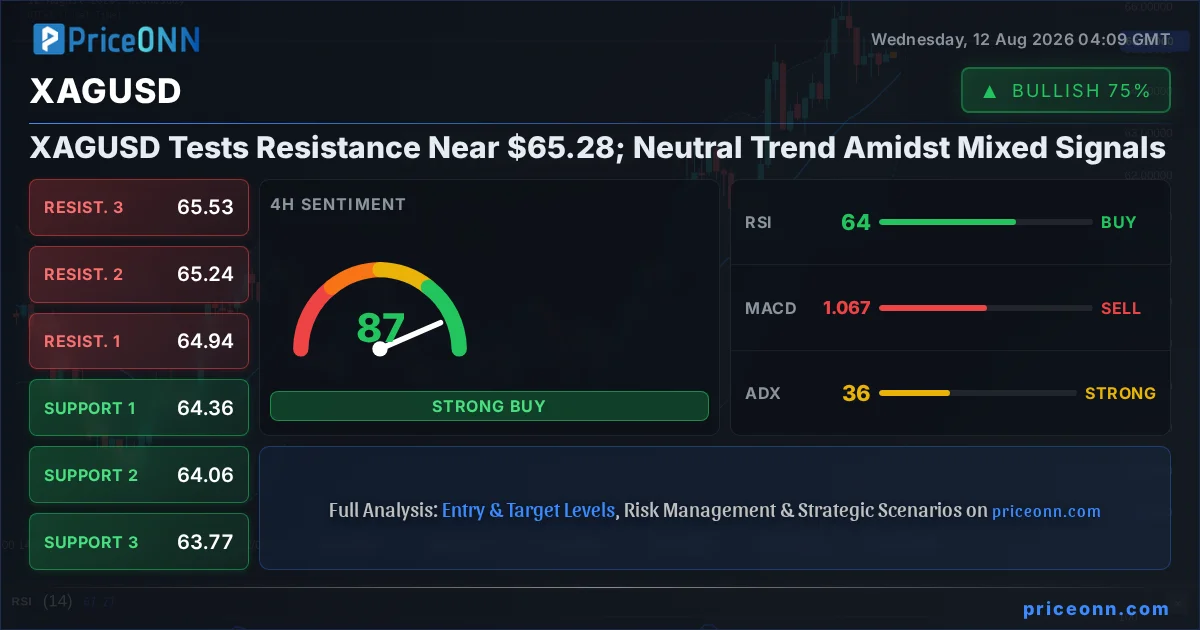
Despite this impressive advance, gold is still trading approximately 21 percent below its all-time peak near $5,600 recorded in late January. Silver, while also experiencing a strong day, remains nearly half its record high of $121.67.
Labor Market Weakness Fuels Rate Cut Speculation
The catalyst for this market movement was the latest US employment report. Nonfarm payrolls unexpectedly declined by 23,000 in July. This figure starkly contrasted with economists' consensus forecast, which had predicted an increase of around 80,000 jobs. Adding to the surprise, the figures for prior months were also subject to downward revisions; June's employment gain was adjusted to a mere 20,000, and May's was revised to 63,000. These adjustments collectively pulled the 12-month average job creation down to just 34,000.
The unemployment rate saw a slight decrease, ticking down to 4.1 percent. However, this was accompanied by a slip in labor force participation to 61.4 percent, its lowest level in over five years. This marks the first monthly contraction in payrolls since February, providing concrete evidence that the US labor market's momentum is faltering precisely as the Federal Reserve grapples with persistent inflationary pressures and the delicate balance of monetary policy.
Interest Rates and Investor Sentiment Shift
The immediate aftermath of the jobs data release saw a swift repricing in interest rate markets. Expectations for a Federal Reserve rate hike in September plummeted. Treasury yields moved lower in response to the report, while US equity markets experienced a notable uplift.
This market reaction served to reverse some of the recent downward pressure on precious metals. Earlier in the summer, investors had been pricing in the possibility that persistent inflation would compel the Fed to maintain a restrictive monetary stance. Such a scenario typically dampens demand for non-yielding assets like gold and silver.
Precious metals historically perform well in an environment of falling interest rates. Bullion's appeal is amplified when returns on interest-bearing investments diminish, as gold and silver offer no such yield. Furthermore, declining yields can often exert downward pressure on the US dollar, thereby making dollar-denominated commodities cheaper for international buyers.
Mining Stocks Reflect Bullion's Strength
The positive sentiment extended to gold mining equities, which had already begun to show strength prior to the dramatic employment report. Agnico Eagle Mines (TSX: AEM; NYSE: AEM) concluded Thursday's trading session with a 1.5 percent gain, closing at $167.92 in New York, capping a nearly 14 percent advance for the week. Newmont (NYSE: NEM) saw a 1.1 percent increase, reaching $105.43, while Barrick Mining (NYSE: B; TSX: ABX) added 0.8 percent to end the day at $41.37.
The sharp rise in bullion prices provides an additional tailwind for mining companies. Their profit margins can expand significantly when the price of the metals they extract climbs at a faster pace than their operational expenditures.
Reading Between the Lines
This sudden shift in the US labor market narrative presents a complex dilemma for the Federal Reserve. The central bank must now recalibrate its policy outlook, balancing ongoing concerns about inflation against clear signals of labor market cooling. The outright decline in payrolls, coupled with downward revisions to previous months' hiring, suggests that the economic expansion may be slowing more rapidly than anticipated. This data significantly complicates the Fed's decision-making process, potentially tilting the scales away from further rate hikes and towards a more accommodative stance sooner than previously expected.
For investors, the implications are broad. The prospect of lower interest rates generally benefits assets that have struggled in a high-yield environment, such as precious metals and growth stocks. The US Dollar Index (DXY) could face renewed downward pressure if the Fed pivots towards a less hawkish policy, which would likely provide further support for gold and silver. Additionally, the renewed strength in gold mining stocks highlights their sensitivity to metal prices, presenting opportunities for those looking to capitalize on the sector's leverage to commodity trends.
Traders will be closely watching upcoming inflation data and Fed commentary for confirmation of this potential policy shift. Key risks include a sudden resurgence in inflation that forces the Fed back to hawkishness, or geopolitical events that disrupt supply chains and reignite inflationary pressures. Smart money is likely focusing on the implied probability of a September rate cut versus a hike, and observing how market participants are repositioning their portfolios in light of this surprising economic data.
Track markets in real-time
Empower your investment decisions with AI-powered analysis, technical indicators and real-time price data.
Join Our Telegram Channel
Get breaking market news, AI analysis and trading signals delivered instantly to your Telegram.
Join Channel PriceONN News
(RTTNews) - Gold prices were up more than 1 percent on Wednesday amid rising bets that the U.S. Federal Reserve will not hike interest rates anytime soon.
PriceONN News
(RTTNews) - Gold was subdued on Tuesday after two consecutive sessions of gains on receding Fed hike bets and reports suggesting that China's central bank stepped up gold purchases in July.
PriceONN News
(RTTNews) - Gold prices held steady on Monday after U.S. employers unexpectedly cut jobs in July and hiring figures for the prior two months were also revised downward, helping ease the risk of an immediate U.S. interest-rate hike.
PriceONN News
(RTTNews) - Gold climbed above $4,300 an ounce on Friday and was set for its biggest weekly gain since January on hopes of peace in the Middle East, eased inflation concerns and reduced expectations for a Federal Reserve rate hike in September.
PriceONN News
(RTTNews) - Gold prices surged 2 percent to hit a one-month high on Wednesday as a sharp fall in oil prices helped ease concerns around inflation and interest rates.
PriceONN News
(RTTNews) - Gold prices were sharply lower on Tuesday as traders waited for the Federal Reserve policy decision.
PriceONN News
Saxo Bank says bullion has to hold $4,360 to keep the rally alive, with headwinds building from oil, yields and the dollar into Wednesday’s inflation print.
PriceONN News
Barrick sank as much as 9.7% after analysts judged its $1.95 billion Fourmile deal too cheap, while hedge funds turned their most bullish on gold in six months.
PriceONN News
An $18 billion July gain hides stock swings of 40% in a month, a $50 billion gap at the top no ranking has seen before, and a spinning revolving door at the bottom.
PriceONN News
Bullion’s two-month high sent producers sharply higher, while junior miners and the TSX Venture posted outsized gains.
PriceONN News
Peru has paid most of arbitration award, clearing the way for the first contingent value rights distribution.
PriceONN News
(RTTNews) - Gold prices traded higher for a fourth straight session to hit a seven-week high on Thursday, driven by softer U.S. labor market data released overnight, a weaker dollar and lower Treasury yields.