
Gold holds in tight range as Iran tensions and mixed Fed signals curb upside
 PriceONN Editorial Desk
Multi-source verification
PriceONN Editorial Desk
Multi-source verification

Precious Metal Pauses Amid Conflicting Currents
Gold prices are caught in a narrow trading range on Friday, struggling to extend recent gains as traders digest a complex mix of global events. Despite holding a firm position above the $4,600 level, the yellow metal is on track for its second consecutive weekly retreat, signaling a pause in its upward momentum. The market's indecision stems from geopolitical flare-ups that are simultaneously bolstering the US Dollar and from evolving expectations surrounding Federal Reserve policy.
The US Dollar has found a footing after a significant dip, buoyed by heightened geopolitical risks. Stalled diplomatic efforts between the US and Iran are fueling concerns about escalating tensions in the Middle East. This perceived instability typically strengthens the dollar's safe-haven appeal, creating a headwind for non-yielding assets like gold.
Adding to the pressure on gold, recent commentary from the Federal Reserve has reinforced a more hawkish stance. While the central bank maintained its benchmark interest rate at 3.50%-3.75% this past week, the meeting was notable for a significant number of policymakers dissenting from the prevailing accommodative outlook. This divergence suggests a cautious approach to rate cuts.
Compounding this, fresh economic data from the United States painted a picture of continued resilience and accelerating inflation. The Personal Consumption Expenditures (PCE) Price Index saw a notable uptick in March, rising 0.7% month-over-month and accelerating to a 3.5% annual pace. The core PCE, which strips out volatile food and energy components, also climbed, indicating persistent price pressures. This inflationary trend, coupled with robust economic growth figures – the economy expanded at a 2.0% annual rate in the first quarter, a significant jump from the prior period – reinforces the view that the Fed may hold interest rates higher for longer.
Yet, a glimmer of hope for gold bulls emerges from the futures market. The probability of at least one Federal Reserve rate cut in 2026 has seen a considerable increase, jumping from a mere 1.3% to over 15%. This shift, however slight, is preventing aggressive bets against the dollar and offering some limited support to gold prices.
Reading Between the Lines
The current market environment presents a classic tug-of-war for gold. On one side, escalating geopolitical tensions, particularly concerning Iran, naturally boost demand for safe-haven assets. The prospect of further conflict in a critical global energy region tends to drive capital towards perceived havens, which historically includes gold. The US Dollar often benefits from such global uncertainty due to its reserve currency status, creating a direct inverse pressure on gold.
On the other side, the persistent inflation data and the US economy's surprising strength are complicating the Federal Reserve's path forward. While markets anticipate eventual rate cuts, the Fed's emphasis on data dependency and recent hawkish dissents suggest that the timeline for easing monetary policy might be longer than initially hoped. Higher-for-longer interest rates typically increase the opportunity cost of holding non-yielding assets like gold, thus acting as a drag on its price.
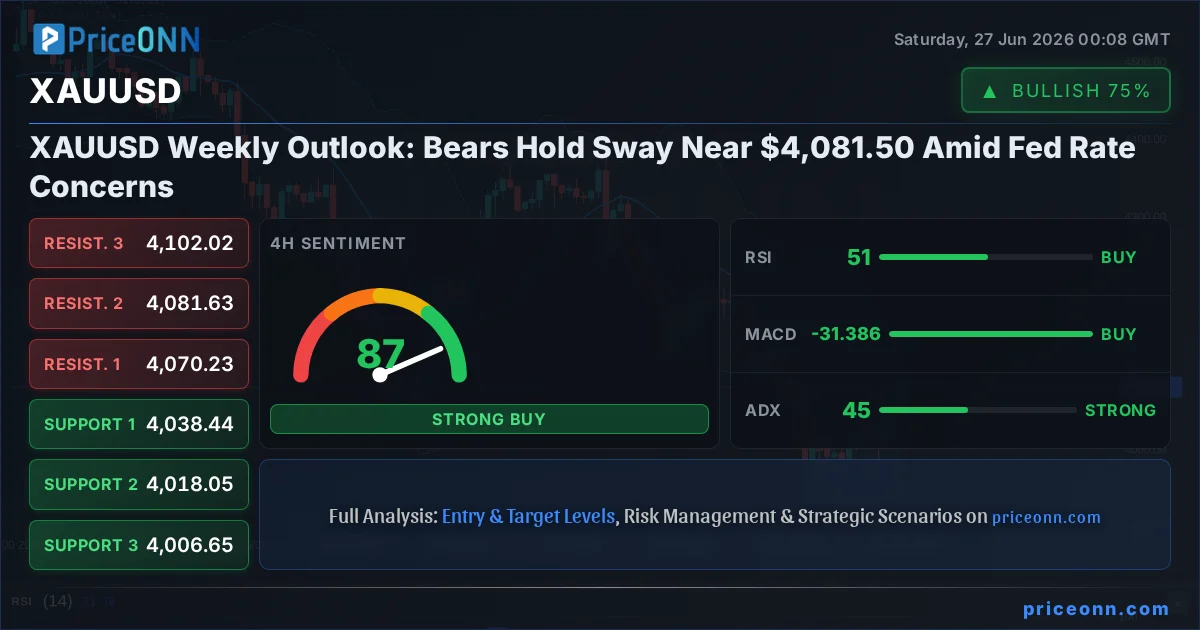
The technical picture adds another layer of caution. Gold's inability to decisively break through key resistance levels, such as the 38.2% Fibonacci retracement near $4,650, indicates underlying selling pressure. Momentum indicators, while not signaling an immediate collapse, suggest that bullish conviction is waning. A sustained move above this Fibonacci level is critical to reignite upside potential, potentially targeting the 50% retracement around $4,696. Conversely, failure to hold the 100-hour Simple Moving Average at $4,623 could open the door to a retest of the lows near $4,505.
Market Ripple Effects
The interplay of geopolitical risk, inflation, and central bank policy has broader implications across several markets. The US Dollar Index (DXY) remains a key barometer; its strength, driven by geopolitical fears and Fed hawkishness, directly correlates with pressure on gold. Traders will be closely watching for any shifts in the DXY's trajectory.
Emerging market currencies could also experience volatility. A stronger dollar can strain economies with significant dollar-denominated debt. Conversely, if geopolitical fears subside and the Fed pivots towards easier policy sooner than expected, these currencies might find relief, potentially impacting gold inversely.
Finally, the market's anticipation of Fed rate cuts, however tentative, influences Treasury yields. If inflation fears escalate and keep yields elevated, it could continue to suppress gold's appeal. However, any sign of economic deceleration that forces the Fed's hand towards earlier cuts would likely see yields fall, providing a tailwind for the precious metal.
Track markets in real-time
Empower your investment decisions with AI-powered analysis, technical indicators and real-time price data.
Join Our Telegram Channel
Get breaking market news, AI analysis and trading signals delivered instantly to your Telegram.
Join Channel PriceONN News
(RTTNews) - Gold extended losses to touch its lowest level in almost two weeks on Wednesday as investors assessed conflicting signals on U.S.-Iran peace talks and increased bets on Federal Reserve rate hikes this year.
PriceONN News
(RTTNews) - Gold prices rebounded on Thursday after falling to a six-month low earlier amid heightened U.S.-Iran tensions and Fed rate hike concerns.
PriceONN News
Gold futures broke above $4,500 per ounce on Friday, driven by increasing optimism for a de-escalation in the U.S.-Iran conflict and the potential reopening of the Strait of Hormuz. Silver also saw significant gains, reflecting a broader shift towards precious metals as geopolitical tensions ease.
PriceONN News
(RTTNews) - Gold traded higher on Friday but headed for a fourth consecutive weekly loss, weighed down by a resurgent U.S. dollar on hawkish Fed bets.
PriceONN News
(RTTNews) - Gold prices were subdued on Thursday, with a stronger dollar and rising expectations of a Federal Reserve rate hike this year weighing on the precious metal.
PriceONN News
Gold (XAU/USD) meets with a fresh supply during the Asian session on Thursday and slides back to the lowest level since November 2025, set the previous day.
PriceONN News
(RTTNews) - Gold prices were little changed on Wednesday after four straight days of gains and ahead of the Federal Reserve's rate decision later in the day.
PriceONN News
(RTTNews) - Extending Friday's surge, gold prices have soared on Monday following a slump in crude oil prices after the U.S. and Iran announced a deal to end the gulf war and reopen the Strait of Hormuz. The official signing is set to take place on Friday in Switzerland.
PriceONN News
(RTTNews) - Gold prices have soared on Friday amid rising optimism about an end to the Middle East war with the chances of reopening of the Strait of Hormuz and resumption of oil and energy trade growing stronger.
PriceONN News
(RTTNews) - After moving sharply lower earlier in the day, the price of gold has shown a significant turnaround over the course of the trading session on Thursday.
PriceONN News
XAG/USD depreciates for the third successive day, trading around $56.90 per troy ounce during the Asian hours on Thursday. Silver price is facing steady headwinds as market expectations shift toward tighter monetary policy from the Federal Reserve (Fed).
PriceONN News
(RTTNews) - Gold prices were a tad higher on Thursday as easing geopolitical tensions offset pressure from a stronger dollar and higher Treasury yields.