
Is Gold Poised for a Rebound After Recent Price Swings?

Gold and silver prices are exhibiting a period of consolidation, marking a temporary pause after significant price corrections that saw some precious metals experience swings of up to 10% in recent trading sessions. This stabilization follows a complex period where traders are attempting to interpret the ramifications of ongoing geopolitical tensions and a mixed bag of economic indicators, leading to the formation of apparent short-term price floors.
Market Context: Navigating Economic Ambiguity
The current market environment for precious metals is characterized by a notable degree of indecision, mirroring broader financial market sentiment. Following sharp sell-offs, both gold and silver have found a tentative footing. This consolidation phase is critical, as market participants work to price in the evolving global landscape, which includes the implications of central bank policy shifts and conflicting economic data. The aftermath of recent central bank communications has added to the general uncertainty, leaving many investors and analysts hesitant to commit to strong directional bets.
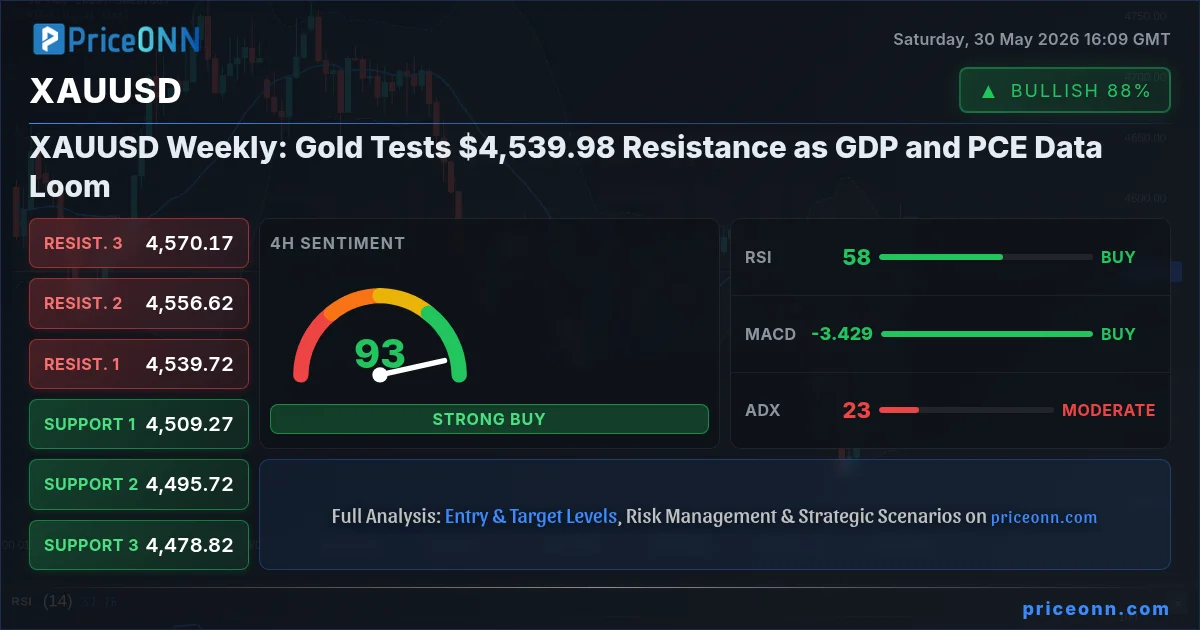
In the current trading session, silver has managed a modest gain of approximately 1%, while gold is facing downward pressure, retreating from the key psychological level of $4,400. Platinum prices are largely flat, reflecting the broader indecisive sentiment across the precious metals complex. This pattern of sideways movement often emerges after periods of heightened volatility and in the absence of fresh, decisive market-moving news. Such lulls are typical as markets digest recent events and await new catalysts to establish a clearer trend.
Analysis & Drivers: Conflicting Signals
The primary drivers behind the current market paralysis stem from a confluence of contradictory economic signals and geopolitical uncertainties. Inflationary pressures remain a concern in some major economies, yet growth indicators are showing signs of deceleration, creating a difficult environment for central bankers. This has led to a cautious approach from institutions like the Federal Reserve, with signals regarding future interest rate policy remaining ambiguous. Traders are struggling to reconcile the need for inflation control with the risk of triggering a significant economic downturn.
Geopolitical developments continue to cast a shadow, fostering demand for safe-haven assets. However, the scale of this safe-haven demand is being tempered by the economic outlook and the potential for higher interest rates to eventually curb inflation. The interplay between these forces-geopolitical risk, inflation, economic growth, and monetary policy-is creating a complex web of influences that is difficult to untangle, resulting in the choppy, range-bound price action observed in gold and silver.
Trader Implications: Watching Key Levels
For traders, this period of consolidation presents both challenges and opportunities. The immediate focus will be on key support and resistance levels. For gold, the area around $4,400 is now a critical resistance point, while previous lows around $4,350 could act as immediate support. For silver, the 1% gain today suggests a potential move towards recent highs, but sustained upside will likely require breaking through resistance levels observed earlier in the week.
Traders should closely monitor upcoming economic data releases, particularly inflation reports and employment figures, as these will provide crucial insights into the direction of monetary policy. Any unexpected shifts in geopolitical tensions could also rapidly alter market sentiment and drive safe-haven flows. The current range-bound trading suggests that breakout strategies might be most effective, but patience is key to avoid being caught in false moves. A decisive break above $4,450 for gold or a sustained push above $25.50 for silver could signal the start of a new upward trend.
Outlook: Await the Catalyst
The outlook for gold and silver remains uncertain in the short term, heavily dependent on the emergence of a clear catalyst. Until economic data or geopolitical events provide a more definitive direction, precious metals are likely to continue trading within their established ranges. However, the underlying demand for safe havens, coupled with persistent inflation concerns, suggests that any significant market shock could quickly propel prices higher. Traders will be looking for a clear signal from central banks or a resolution to geopolitical conflicts to determine the next major price trajectory.
Frequently Asked Questions
What is the current price action for gold and silver?
Gold is currently retreating from the $4,400 level, while silver has seen a modest 1% gain. Both metals are in a consolidation phase after recent sharp corrections, indicating indecision in the market.
What are the main factors influencing precious metal prices right now?
Prices are being influenced by conflicting economic signals, including inflation concerns and growth slowdowns, alongside ongoing geopolitical tensions. Ambiguous central bank policies also contribute to market uncertainty, creating a complex trading environment.
What key levels should traders watch for gold and silver?
Traders should monitor $4,400 as a resistance level for gold, with support potentially found around $4,350. For silver, breaking above recent highs near $25.50 would be a significant bullish signal, while immediate support is observed around $24.80.
Track markets in real-time
Empower your investment decisions with AI-powered analysis, technical indicators and real-time price data.
Join Our Telegram Channel
Get breaking market news, AI analysis and trading signals delivered instantly to your Telegram.
Join Channel PriceONN News
USDJPY has returned to the area of previous interventions. The ECB is moving towards a rate hike in June. The US dollar retreated on Friday amid new record highs for stock indices and rumours of amendments to the US-Iran agreement. However, tit-for-tat exchanges between the adversaries pushed the dollar index back into the support zone […] The post Yen Braces for a New Storm appeared first on ActionForex.
PriceONN News
The US Dollar experienced a notable decline last week as markets priced in a potential diplomatic resolution to the US-Iran conflict, leading to a drop in oil prices and Treasury yields. This shift in sentiment suggests a move away from stagflation fears towards a more stable economic outlook.
PriceONN News
Canada's labor market is showing signs of stabilization, with analysts predicting a dip in the unemployment rate to 6.8% in May, driven by an expected 25,000 new jobs. This follows a period of sluggish GDP growth and rising joblessness earlier in the year.
PriceONN News
Markets are pricing in a potential de-escalation in the US-Iran conflict, leading to a significant drop in crude oil prices and a weakening US Dollar as diplomatic efforts appear to be gaining traction.
PriceONN News
Canada's economy showed signs of a slowdown in early 2026, but upcoming May jobs data is expected to reveal a modest uplift. Analysts anticipate the unemployment rate to fall to 6.8%.
PriceONN News
USD/CAD faces pressure as Canada's economy shows signs of stalling, with Q1 GDP contracting 0.1% and domestic demand weakening. This comes as trade negotiations and geopolitical shifts add layers of uncertainty.
PriceONN News
Canada's economy showed signs of life in early 2026, with analysts expecting a moderate job growth of around 25,000 positions and a potential dip in the unemployment rate to 6.8% for May.
PriceONN News
AUD/USD’s late break of 0.7183 resistance suggests that pullback from 0.7277 has already completed at 0.7076, after defending 55 D EMA. Initial bias is back on the upside this week for retesting 0.7277 high first. Firm break there will resume larger up trend. For now, risk will stay on the upside as long as 0.7076 […] The post AUD/USD Weekly Report appeared first on ActionForex.
PriceONN News
USD/CAD is showing signs of potential upward movement as Canada's economy grapples with a significant slowdown, marked by weak domestic demand and stalled investment, while trade negotiations loom large.
PriceONN News
USD/JPY is testing the critical 160 level as stalled US-Iran negotiations and hawkish Federal Reserve rhetoric fuel inflation concerns and a potential for further rate hikes. Traders are closely watching upcoming US Non-Farm Payrolls and Eurozone CPI data for direction.
PriceONN News
Canada's economy showed signs of weakness in early 2026, but upcoming May jobs data is expected to reveal a moderate uplift. Analysts anticipate job growth of around 25,000 positions and a potential dip in the unemployment rate to 6.8%.
PriceONN News
The USD/JPY pair is flirting with the 160 level as stalled US-Iran negotiations and hawkish Federal Reserve rhetoric fuel inflation concerns. Traders are closely watching upcoming US Non-Farm Payrolls and Eurozone CPI data.