Gold rebounds from one-month low as geopolitical tensions and softer USD offer support
Gold's Resilience Amid Shifting Market Winds
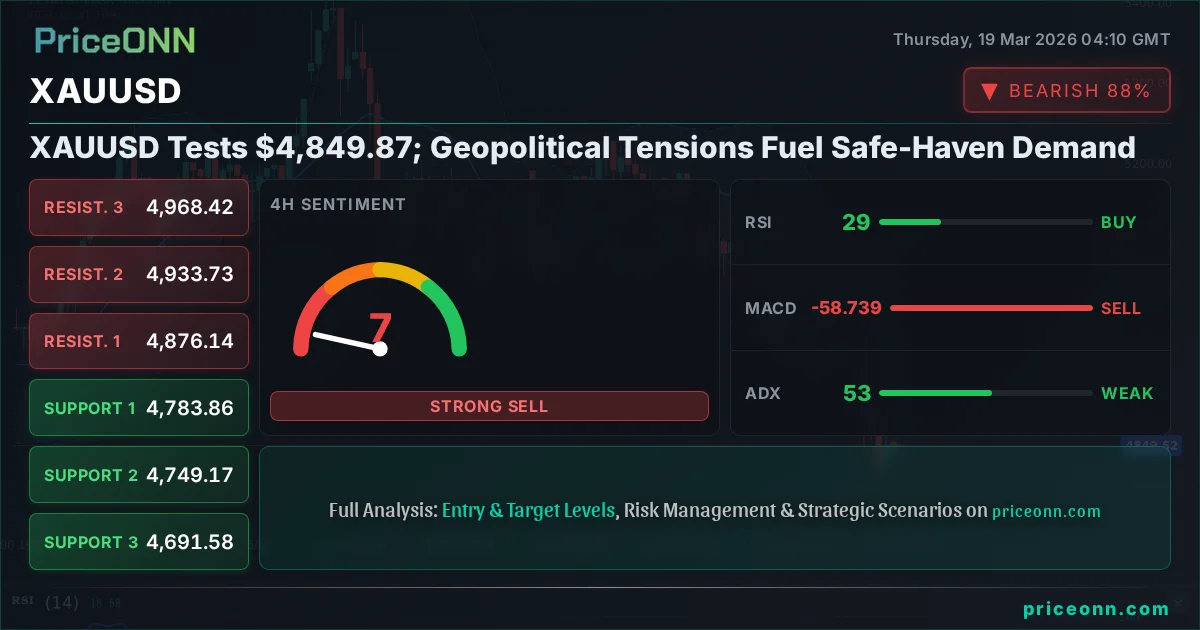
Gold (XAU/USD) demonstrated a flicker of recovery in early trading on Thursday, nudging upward from its lowest point in over a month. The metal had dipped to approximately $4,800 earlier in the session, but a modest retreat in the US Dollar index provided a much-needed tailwind.
Historically, gold has served as more than just a decorative element. Its enduring role as a store of value and a medium of exchange spans centuries. In today's financial landscape, gold is primarily recognized as a safe-haven asset, a refuge for capital during periods of economic turmoil or heightened uncertainty. Furthermore, it's often viewed as a bulwark against inflation and the erosion of purchasing power inherent in depreciating fiat currencies, a characteristic stemming from its independence from any single governmental or issuer backing.
Central banks, the world's largest holders of gold, frequently turn to the yellow metal to bolster their reserves. In times of global instability, these institutions often rebalance their portfolios, increasing gold holdings to enhance the perceived stability of their national economies and currencies. A substantial gold reserve can serve as a powerful signal of a nation's financial solvency and trustworthiness.
The World Gold Council's data paints a striking picture of this trend. In 2022, central banks collectively acquired an unprecedented 1,136 tonnes of gold, a purchase valued at roughly $70 billion. This marked the most significant annual accumulation since records began. Notably, emerging economies like China, India, and Turkey have been particularly aggressive in expanding their gold reserves, signaling a strategic shift in global monetary policy.
The interplay between gold, the US Dollar, and US Treasuries is a critical dynamic. Gold typically exhibits an inverse correlation with both the dollar and Treasury bonds, assets that also serve as major global reserves and safe havens. When the dollar weakens, gold prices often strengthen, offering investors and central banks a valuable avenue for asset diversification, especially when markets are volatile.
This relationship extends to risk assets as well. A robust stock market rally can sometimes dampen gold's appeal, while significant sell-offs in riskier markets tend to see investors flocking back to the perceived safety of gold. The precious metal's price is influenced by a complex web of factors, including geopolitical instability and fears of economic downturns, both of which can trigger sharp price escalations due to gold's safe-haven status.
As an asset that does not generate yield, gold's performance is sensitive to interest rate environments. Lower interest rates generally support gold prices, whereas rising borrowing costs typically exert downward pressure on the yellow metal. However, the most significant driver for gold often remains the behavior of the US Dollar, given that gold is priced in dollars (XAU/USD). A strong dollar generally acts as a cap on gold prices, while a weaker dollar tends to provide upward momentum.
Market Ripple Effects
The recent price action in gold, driven by a confluence of geopolitical concerns and currency movements, warrants a closer look at its broader market implications. While the immediate support came from a softer USD, the underlying geopolitical tensions are a key catalyst that could sustain upward pressure on gold should they escalate.
For traders and investors, this environment highlights the enduring appeal of gold as a hedge. The current dynamic suggests that any significant flare-up in global conflicts or further signs of economic fragmentation could see gold prices retest higher levels. Conversely, a swift resolution to geopolitical disputes or a strengthening of the US Dollar on the back of renewed hawkishness from the Federal Reserve could lead to renewed selling pressure.
We should also monitor related markets. The US Dollar Index (DXY) is a primary correlation to watch; a sustained decline in the DXY would likely provide further room for gold to advance. Additionally, movements in US Treasury yields are crucial; falling yields typically support gold, while rising yields can act as a headwind. Equity markets, particularly global indices sensitive to geopolitical risk like the Euro Stoxx 50, could also see volatility influenced by the same tensions driving gold. Finally, currencies of commodity-linked economies, such as the Australian Dollar (AUD), might find indirect support if gold's strength signals broader commodity market resilience.
The key takeaway is that gold remains a sensitive barometer of global stability and monetary policy expectations. Traders should remain vigilant to geopolitical headlines and shifts in central bank rhetoric, as these will likely dictate the precious metal's trajectory in the near term.
Track markets in real-time
Empower your investment decisions with AI-powered analysis, technical indicators and real-time price data.
Join Our Telegram Channel
Get breaking market news, AI analysis and trading signals delivered instantly to your Telegram.
Join Channel