Gold Rebounds Past $4,570 as Geopolitical Fears and Easing Yields Boost Safe-Haven Demand

Gold (XAU/USD) has staged a notable comeback, climbing back above the $4,570 mark on Monday. This recovery follows an earlier intraday dip to $4,419 during the Asian trading session, underscoring the precious metal's sensitivity to global risk sentiment and shifting interest rate expectations.
Market Context
The yellow metal reversed earlier losses, finding renewed strength as geopolitical tensions in the Middle East intensified. Simultaneously, a cooling in US Treasury yields provided further support, reinforcing gold's status as a preferred safe-haven asset. While the US Dollar has maintained a degree of strength, the decline in yields appears to be a more dominant factor influencing bullion demand at present. Market data shows that central banks have significantly increased their gold holdings, with the World Gold Council reporting record purchases of 1,136 tonnes in 2022, valued at approximately $70 billion. Emerging economies such as China, India, and Turkey are leading this accumulation trend.
Analysis & Drivers
The current market environment is characterized by a complex interplay of factors that are collectively pushing gold prices higher. Escalating geopolitical risks in the Middle East are a primary catalyst, increasing demand for assets perceived as secure havens. Historically, periods of heightened international conflict or instability have consistently seen gold prices rise as investors seek to preserve capital. Complementing this, a decrease in US Treasury yields reduces the opportunity cost of holding non-yielding assets like gold, making it more attractive relative to interest-bearing instruments. Analysts note that despite expectations for the Federal Reserve to maintain current interest rates, the easing yield environment is proving more influential in the short term. The inverse correlation between gold and the US Dollar, while present, is currently overshadowed by the impact of geopolitical fears and yield movements.
Trader Implications
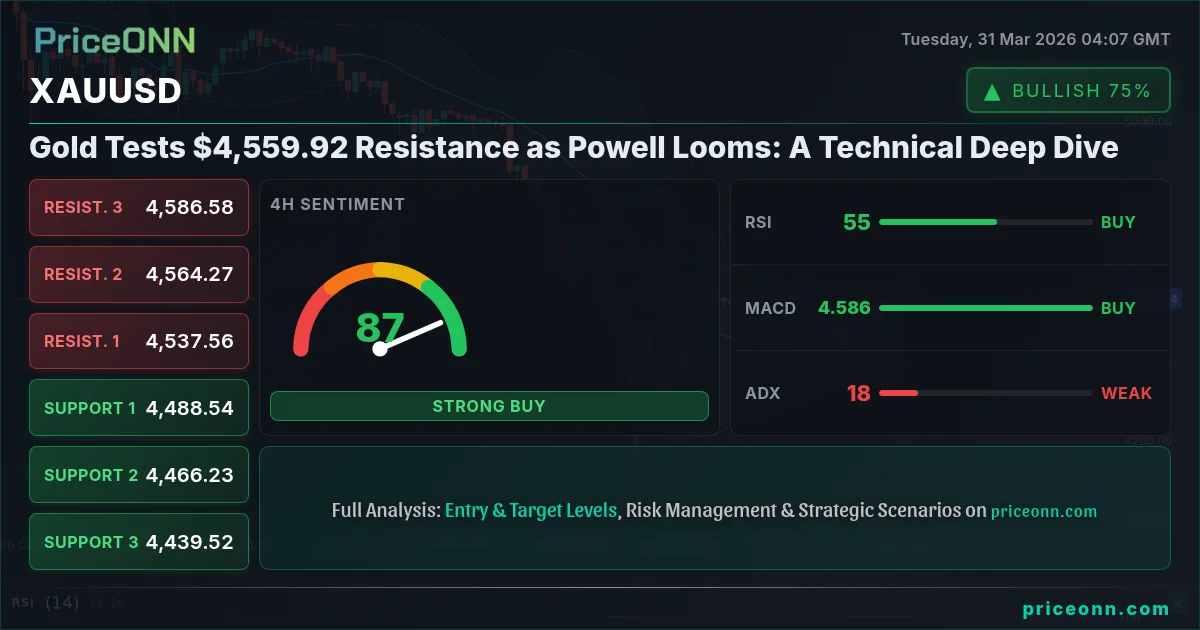
Traders should closely monitor the developing situation in the Middle East for any further escalation, which could provide additional upward momentum for gold. Key technical levels to watch include the recent high of $4,576 as immediate resistance, with a decisive break above this potentially signaling further gains. On the downside, the intraday low of $4,419 serves as a crucial support level; a fall below this could indicate a shift in sentiment. The actions of central banks, particularly their continued accumulation of gold reserves, should also be factored into longer-term strategies. Investors looking to hedge against potential currency devaluation or inflation might find current price levels attractive, though volatility remains a key risk factor.
Outlook
Looking ahead, gold is likely to remain sensitive to geopolitical developments and shifts in global monetary policy expectations. Should Middle East tensions persist or escalate, gold could continue its upward trajectory. Conversely, a significant de-escalation of conflict or unexpected hawkish signals from the Federal Reserve could lead to profit-taking and a potential pullback. The ongoing trend of central bank diversification into gold suggests a supportive undertone for the metal, even amidst potential short-term fluctuations.
Frequently Asked Questions
What is the current price of gold and what is driving its recent surge?
Gold (XAU/USD) is trading around $4,576, recovering from an earlier low of $4,419. The price surge is primarily driven by escalating geopolitical tensions in the Middle East and a decline in US Treasury yields, which are increasing demand for gold as a safe-haven asset.
What are the key technical levels for gold traders to watch?
Traders should watch the recent high of $4,576 as an immediate resistance level. A sustained break above this could signal further upside. The intraday low of $4,419 is a critical support level; a breach of this could lead to further declines.
What is the long-term outlook for gold given central bank buying trends?
The long-term outlook for gold remains cautiously optimistic, supported by the ongoing trend of central banks increasing their gold reserves. Record purchases in 2022 (1,136 tonnes) indicate a strategic diversification that could provide a floor for prices, even with short-term volatility influenced by geopolitical events and interest rate outlooks.
Track markets in real-time
Empower your investment decisions with AI-powered analysis, technical indicators and real-time price data.
Join Our Telegram Channel
Get breaking market news, AI analysis and trading signals delivered instantly to your Telegram.
Join Channel