Can the US Dollar Resist Inflationary Pressures as Oil Prices Surge Past $100?

The US Dollar is navigating a complex landscape as the second quarter of 2026 unfolds, facing significant headwinds from resurgent inflation and a hawkish Federal Reserve stance. The recent surge in crude oil prices past the $100 per barrel mark, driven by escalating geopolitical instability in the Middle East, is a primary catalyst threatening to derail earlier expectations of monetary easing. This development forces a re-evaluation of the dollar's strength against a backdrop of global economic uncertainty.
Market Context
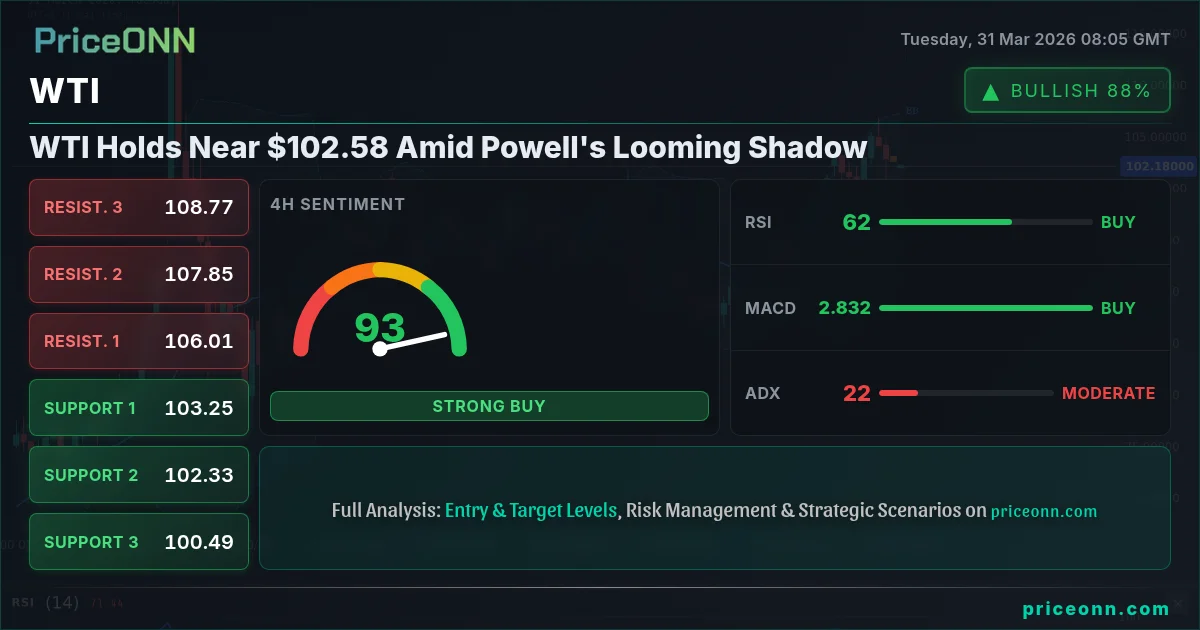
As the first quarter of 2026 concludes, the financial markets are grappling with a confluence of factors that are reshaping the outlook for major asset classes. The optimism that characterized much of the previous year has given way to a more cautious sentiment, largely influenced by persistent geopolitical conflicts and the lingering effects of trade policies enacted in 2025. The crude oil market, in particular, has become a focal point, with prices for benchmarks like Brent crude breaching the $100 per barrel threshold. This dramatic increase in energy costs is a direct contributor to renewed inflationary pressures, a concern that the Federal Reserve cannot afford to ignore. Consequently, market data indicates a growing consensus that the Fed will maintain its benchmark interest rate at elevated levels for an extended period, a shift from earlier forecasts anticipating multiple rate cuts. This scenario poses a direct challenge to the US Dollar, as higher interest rates globally could attract capital away from the greenback, while domestic inflation erodes its purchasing power.
Analysis and Drivers
The primary driver behind the current market turbulence is the volatile geopolitical situation, most notably the conflict in the Middle East. The resulting supply chain disruptions and heightened risk premiums have propelled oil prices to levels not seen in a considerable time. Analysts note that while the United States benefits from its status as a net energy exporter, the inflationary spillover effects from a global energy shock are unavoidable. This surge in inflation complicates the Federal Reserve's monetary policy decisions. With inflation reasserting itself, the central bank is compelled to prioritize price stability, leaning towards a “higher-for-longer” interest rate strategy. This is in stark contrast to the market's earlier hopes for a swift pivot to easing, which had supported risk assets and put downward pressure on the dollar.
Furthermore, the lingering impact of the 2025 tariff regime continues to cast a shadow over US equity valuations. While the technology sector is experiencing what some observers term “AI exhaustion,” the sector is being buoyed by substantial capital expenditure, with industry reports indicating approximately $700 billion in structural AI investments for 2026. However, this domestic strength may not fully offset the broader implications of higher global borrowing costs and potential trade friction for the dollar.
Trader Implications
For forex traders, the current environment presents a dual challenge and opportunity. The Federal Reserve’s commitment to keeping rates high, coupled with persistent inflation, could provide underlying support for the US Dollar against currencies whose central banks are more inclined to cut rates sooner. Traders should closely monitor US inflation data, particularly the Consumer Price Index (CPI) and Personal Consumption Expenditures (PCE) price index, for any signs of further acceleration. Key technical levels for USD/JPY should be watched, with a sustained move above 155.00 potentially signaling further dollar strength. Conversely, if geopolitical tensions ease or inflation moderates unexpectedly, the dollar could face significant retracement. The potential for a “risk-off” sentiment to emerge, driven by escalating global instability, could also see the dollar acting as a safe-haven asset, though its effectiveness may be tempered by domestic inflation concerns. Traders should be prepared for increased volatility across major currency pairs, with EUR/USD potentially testing support around 1.0700 if the dollar firms.
Outlook
Looking ahead, the US Dollar's trajectory in the second quarter of 2026 will likely hinge on the interplay between inflation data, Federal Reserve communication, and the evolution of geopolitical risks. While the “higher-for-longer” rate narrative provides a bullish underpinning for the dollar, persistent inflationary pressures could eventually erode its real yield and purchasing power. A continued climb in oil prices beyond $110 per barrel would amplify these concerns and could force a more hawkish tone from the Fed, potentially strengthening the dollar in the short term but raising recessionary fears. Conversely, any de-escalation in global conflicts or a surprising moderation in US inflation could pave the way for a dollar pullback.
Frequently Asked Questions
What is the main reason for the US Dollar's current weakness?
The primary concern for the US Dollar is the resurgence of inflation, driven by oil prices surging past $100 per barrel due to geopolitical tensions. This forces the Federal Reserve to consider maintaining higher interest rates for longer, which can impact currency valuations.
What are the key levels to watch for USD/JPY?
Traders should monitor the USD/JPY pair closely. A sustained break above the 155.00 level could indicate further dollar strength, driven by interest rate differentials and safe-haven flows.
What is the outlook for the US Dollar in Q2 2026?
The outlook remains uncertain, with the dollar potentially supported by higher-for-longer interest rates. However, sustained inflation above 3.5% or a significant escalation in geopolitical risks could lead to increased volatility and a potential dollar pullback.
Track markets in real-time
Empower your investment decisions with AI-powered analysis, technical indicators and real-time price data.
Join Our Telegram Channel
Get breaking market news, AI analysis and trading signals delivered instantly to your Telegram.
Join Channel