Gold tumbles below $4,650 as inflation fears and liquidity squeeze weigh
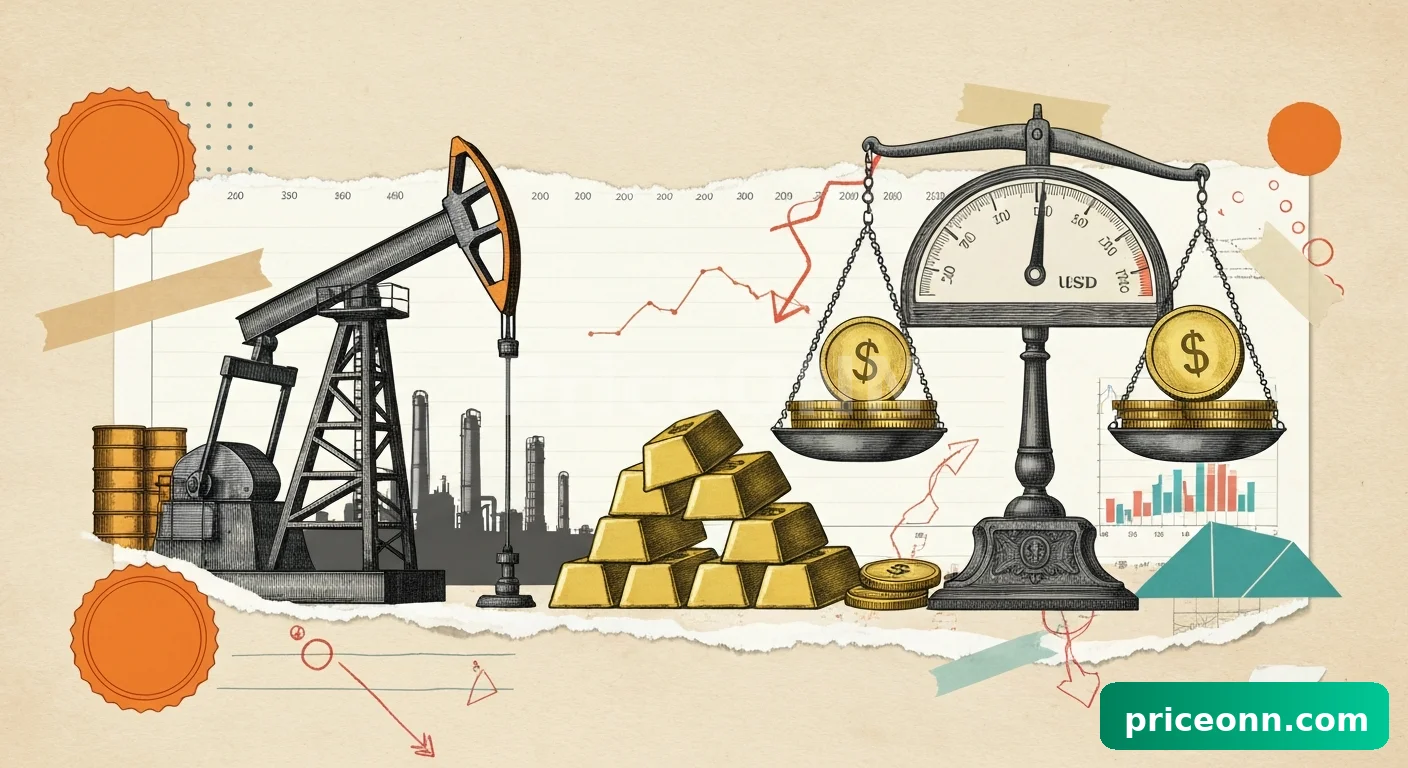
Market Selloff Accelerates as Energy Costs Surge
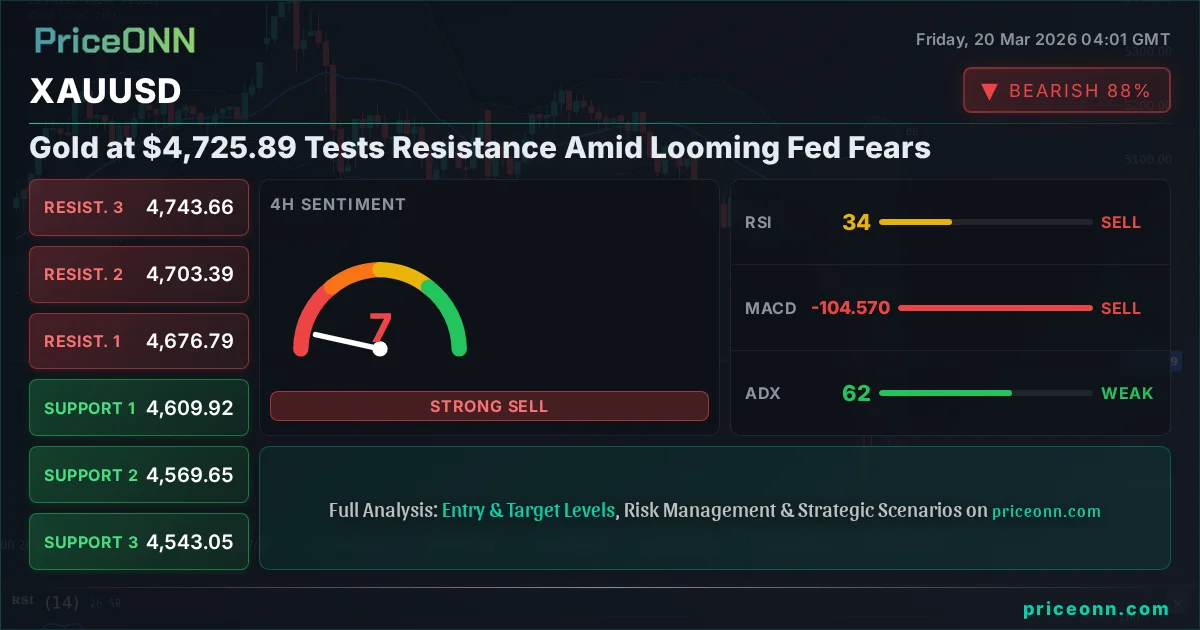
The price of gold has plunged sharply, breaking through the critical $4,650 mark and now hovering near $4,640 in early Asian trading. This significant downward movement extends recent losses, driven by a potent cocktail of resurgent inflation fears and a palpable liquidity squeeze in financial markets. Soaring crude oil and broader energy prices, exacerbated by the intensifying conflict between the United States and Iran, are directly fueling these inflation concerns, pushing investors toward immediate cash needs rather than longer-term asset preservation.
Historically, gold has served as a bedrock of value and a universal medium of exchange. Beyond its allure in jewelry, its modern role as a premier safe-haven asset offers solace during periods of heightened market volatility. It's also widely regarded as a crucial hedge against inflation and currency devaluation, its intrinsic value independent of any single government or issuer. This inherent stability makes it an attractive diversification tool for central banks seeking to bolster their reserves and project economic strength.
The scale of central bank accumulation in recent years has been unprecedented. In 2022 alone, official institutions added a staggering 1,136 tonnes of gold, valued at approximately $70 billion, according to World Gold Council data. This marked the largest annual increase on record, with emerging economies like China, India, and Turkey leading the charge in expanding their gold holdings. Such robust reserve growth underscores a global trend toward de-dollarization and a strategic pivot towards tangible assets amidst an uncertain economic landscape.
Understanding Gold's Complex Market Drivers
Gold's price dynamics are intricately linked to several key financial instruments and market forces. A well-established inverse correlation exists between gold and both the US Dollar (USD) and US Treasuries. When the dollar weakens, gold often strengthens, providing investors and central banks an avenue to diversify their portfolios during turbulent times. Conversely, a robust dollar typically exerts downward pressure on gold prices.
Furthermore, gold exhibits an inverse relationship with riskier assets. A buoyant stock market often coincides with a weaker gold price, while sharp sell-offs in equities can boost the appeal of the precious metal. Geopolitical instability or the specter of a severe recession can rapidly elevate gold prices due to its perceived safety. As an asset that does not generate yield, gold's performance is also sensitive to interest rate environments; it tends to perform better when interest rates are low, while rising borrowing costs generally weigh it down.
However, the most dominant factor influencing gold's price action remains the behavior of the US Dollar, given that gold is primarily priced in dollars (XAU/USD). A strong dollar tends to cap gold's upward potential, while a weaker dollar often provides the catalyst for price appreciation. The current environment, marked by rising energy costs and geopolitical uncertainty, presents a complex interplay of these factors.
Market Ripple Effects
The current downdraft in gold prices, driven by inflation fears and a potential liquidity crunch, carries significant implications across various asset classes. The immediate pressure on gold suggests a broader market repricing is underway, where liquidity and inflation expectations are taking precedence over traditional safe-haven narratives.
Traders and investors should closely monitor the US Dollar Index (DXY). A continued surge in the dollar could exacerbate gold's decline, while any signs of dollar weakness might offer a temporary reprieve. The performance of emerging market currencies, particularly those of countries actively increasing gold reserves like China and India, will also be crucial. A sustained weakening in these currencies could signal broader capital flight, potentially benefiting gold in the medium term if inflation fears intensify globally.
Furthermore, the escalating energy prices fueling this inflation narrative will likely impact energy stocks and broader equity indices. Sectors highly sensitive to energy costs, such as transportation and manufacturing, may face headwinds. Conversely, energy producers could see short-term gains, although the overall market sentiment appears risk-averse. The interplay between rising inflation, central bank responses (or lack thereof), and geopolitical events creates a volatile backdrop. Investors should remain vigilant for shifts in market sentiment that could rapidly alter the trajectory of gold and related assets.
Track markets in real-time
Empower your investment decisions with AI-powered analysis, technical indicators and real-time price data.
Join Our Telegram Channel
Get breaking market news, AI analysis and trading signals delivered instantly to your Telegram.
Join Channel