Global Supply Shock Exposes the Myth of Energy Independence
Global Energy Arteries Clogged
The world's energy arteries are suddenly constricting. A severe interruption at the Strait of Hormuz, a pivotal chokepoint for oil and liquefied natural gas (LNG) shipments, is now echoing across continents, laying bare the precarious energy security of Asia, Europe, and the United States. No major consuming nation appears immune to the most significant supply upheaval the oil market has ever witnessed. While the intensity of the supply crunch varies by region, a universal consequence is emerging: soaring fuel costs and a palpable threat of accelerating inflation, pushing any hopes of imminent interest rate cuts further into the distance.
Asia finds itself on the front lines of the most immediate and impactful disruption. Europe, meanwhile, is locked in a fierce competition for dwindling LNG supplies with the continent, its reliance on gas and oil imports underscored once again. Even the United States, theoretically insulated by robust domestic production, is grappling with unprecedented surges in diesel and gasoline prices, a stark reminder of how closely its refining sector is tied to global crude benchmarks.
Asia's Delicate Balancing Act
The supply shock hitting Asia is immense. This region, heavily reliant on Middle Eastern crude and LNG, typically transits a significant portion of its energy through the Strait of Hormuz. In response to the current crisis, Asian buyers are scrambling to secure alternative sources, turning to Russian oil made available on the market and seeking supplies from distant origins like the United States, West Africa, and Brazil. This frantic search highlights the region's deep dependence on consistent flows from the Persian Gulf.
Industry analysts point out that while strategic petroleum reserve releases by nations like Japan and South Korea might offer a temporary reprieve for refiners, likely lasting only a few weeks into April, these measures are merely a stopgap. The underlying supply deficit will persist far longer. To mitigate the immediate impact of a 20% reduction in global LNG flows due to the shutdown in Qatar and the closure of the Strait, Asian countries are increasing their reliance on coal for power generation wherever feasible.
A fierce competition for available LNG cargoes has emerged, with Asian markets actively drawing flexible-destination shipments away from Europe. However, the elevated price levels mean that many nations are only purchasing what is absolutely essential to avert critical shortages. Intriguingly, China, the globe's largest importer of oil and LNG, demonstrates a surprising resilience, at least initially. Its exposure to Qatari LNG is estimated at a manageable 6% of its gas mix, complemented by substantial crude oil stockpiles accumulated during a period of lower prices over the past year. Nevertheless, should this unprecedented disruption extend for several more weeks, China would inevitably feel the full force of the global energy squeeze.
Europe's Renewed Energy Vulnerability
While Asia is experiencing the most direct physical impact of the supply squeeze, Europe's situation may present even greater long-term fragility. The continent not only imports approximately half of its energy needs but is also a secondary casualty of the price shock. Asia's aggressive bidding for available spot LNG supplies is commanding a premium, diverting crucial resources. Europe, which pivoted from reliance on Russian gas to American LNG following the 2022 conflict, now finds a significant portion of that flexible U.S. supply heading to the highest bidder in Asia.
Wood Mackenzie, a leading energy consultancy, suggests that both Asian and European markets will need to heavily deplete existing inventories and subsequently intensify their restocking efforts throughout the summer. This scenario is expected to tighten market conditions considerably, extending the pressure well beyond any potential resumption of trade through the Strait of Hormuz. The interconnectedness of global energy flows means that disruptions in one region have amplified consequences for others.
America's Fuel Price Paradox
In terms of dependence on external supply, the United States appears to be the least affected. Domestic oil and gas production theoretically covers over 100% of its energy requirements. Yet, despite being a net petroleum exporter, the U.S. refining system requires imports of heavier crude grades, as shale fields primarily yield lighter crudes. Data from the Energy Information Administration (EIA) indicates that roughly three-quarters of U.S. gross petroleum imports are crude oil, with nearly 70% of refining capacity optimized for heavier crude types. The American Fuel & Petrochemical Manufacturers association notes that 90% of crude oil imported into the U.S. is heavier than domestic shale output.
Consequently, even as the world's largest crude producer, American refining markets and consumer fuel prices are not isolated from global crude price volatility. The conflict in Iran has sent global crude prices soaring, directly impacting gasoline and diesel costs. GasBuddy data reveals that Americans were projected to spend approximately $350 million more on gasoline on a single Wednesday compared to February 28, the day of the initial offensive. Since that date, an additional $3.7 billion has been spent on gasoline, according to GasBuddy's real-time price tracking. The surge in diesel prices is particularly alarming, with GasBuddy estimating the largest 2, 3, and 4-week price increases ever recorded this past week. As Patrick De Haan, head of petroleum analysis at GasBuddy, observed, while prices are not at absolute record highs, the speed of the current surge is unprecedented, driven by the massive supply shock emanating from the Middle East.
Market Ripple Effects
The current energy supply shock, originating from critical chokepoints like the Strait of Hormuz, presents a multifaceted challenge for global markets. For investors and traders, the immediate takeaway is the potent inflationary pressure this disruption injects into the global economy. Central banks, already battling sticky inflation, now face a renewed upward push on energy prices, which can quickly filter through to consumer goods and services, thereby delaying any anticipated monetary easing.
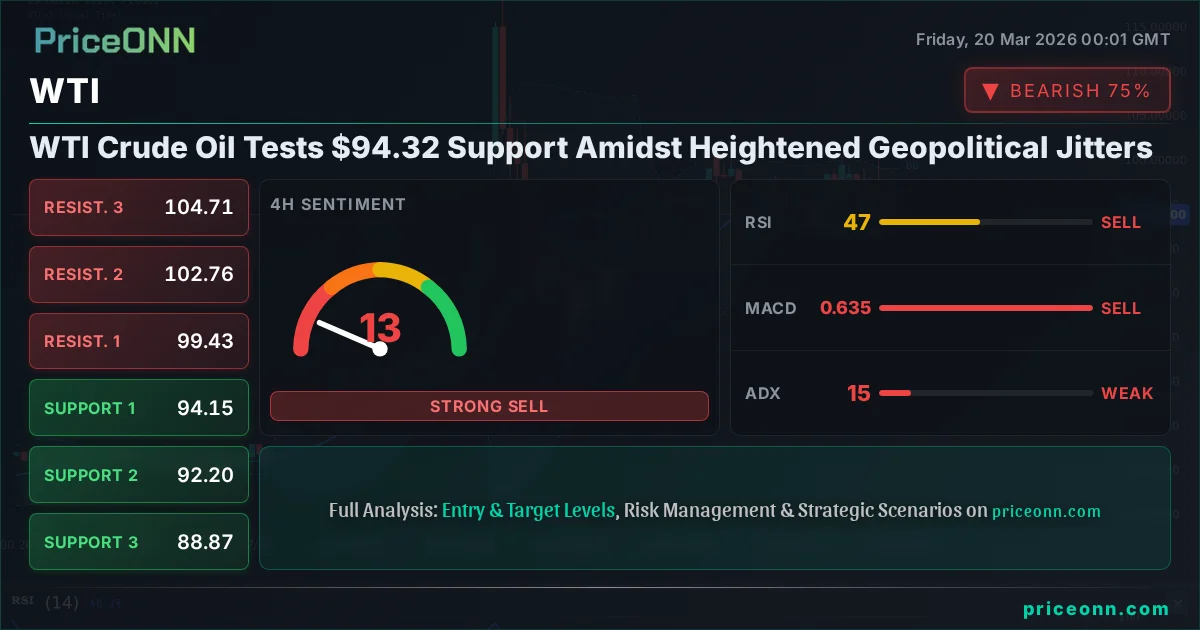
This situation directly impacts several key areas. Firstly, the US Dollar Index (DXY) could see renewed strength as a safe-haven asset amidst geopolitical tension and potential global economic slowdown fears. Secondly, benchmark crude oil prices, such as Brent and WTI, will remain highly sensitive to headlines from the Middle East, with potential for further sharp rallies if tensions escalate. Thirdly, equity markets, particularly sectors reliant on energy inputs like transportation and manufacturing, will face increased cost pressures, potentially leading to underperformance. Fourthly, inflation expectations themselves will likely rise, influencing bond yields and potentially prompting hawkish responses from central banks.
Traders should closely monitor key technical levels on oil futures, as well as the performance of energy stocks and inflation-linked bonds. The risk of further supply disruptions or escalations in the geopolitical situation remains a significant overhang. Conversely, sustained de-escalation could lead to a rapid unwinding of the current risk premium in energy markets. The primary opportunity lies in identifying companies with strong pricing power or those benefiting from higher energy costs, while the key risk is a sustained period of high inflation forcing aggressive central bank action that could tip economies into recession.
Track markets in real-time
Empower your investment decisions with AI-powered analysis, technical indicators and real-time price data.
Join Our Telegram Channel
Get breaking market news, AI analysis and trading signals delivered instantly to your Telegram.
Join Channel