
Why Did Oil Prices Surge Past $112 Amid Iran-Israel Energy Strikes?

Brent crude futures surged past the $112 per barrel mark, and West Texas Intermediate (WTI) followed suit, trading near $97.62 per barrel, as geopolitical tensions in the Middle East reached a critical juncture. The price jump was triggered by retaliatory strikes exchanged between Iran and Israel, specifically targeting vital energy processing facilities in the region.
Market Context: Escalation in the Middle East
Earlier this week, Israeli forces reportedly struck a processing facility at the South Pars gas field, the world's largest natural gas reserve, which Iran calls South Pars and Qatar shares as North Field. This action, described by U.S. President Trump as a "lash out," prompted Iran to retaliate. Tehran issued warnings to neighboring countries and subsequently launched strikes that impacted QatarEnergy's liquefied natural gas (LNG) export terminal at Ras Laffan, reportedly causing extensive damage.
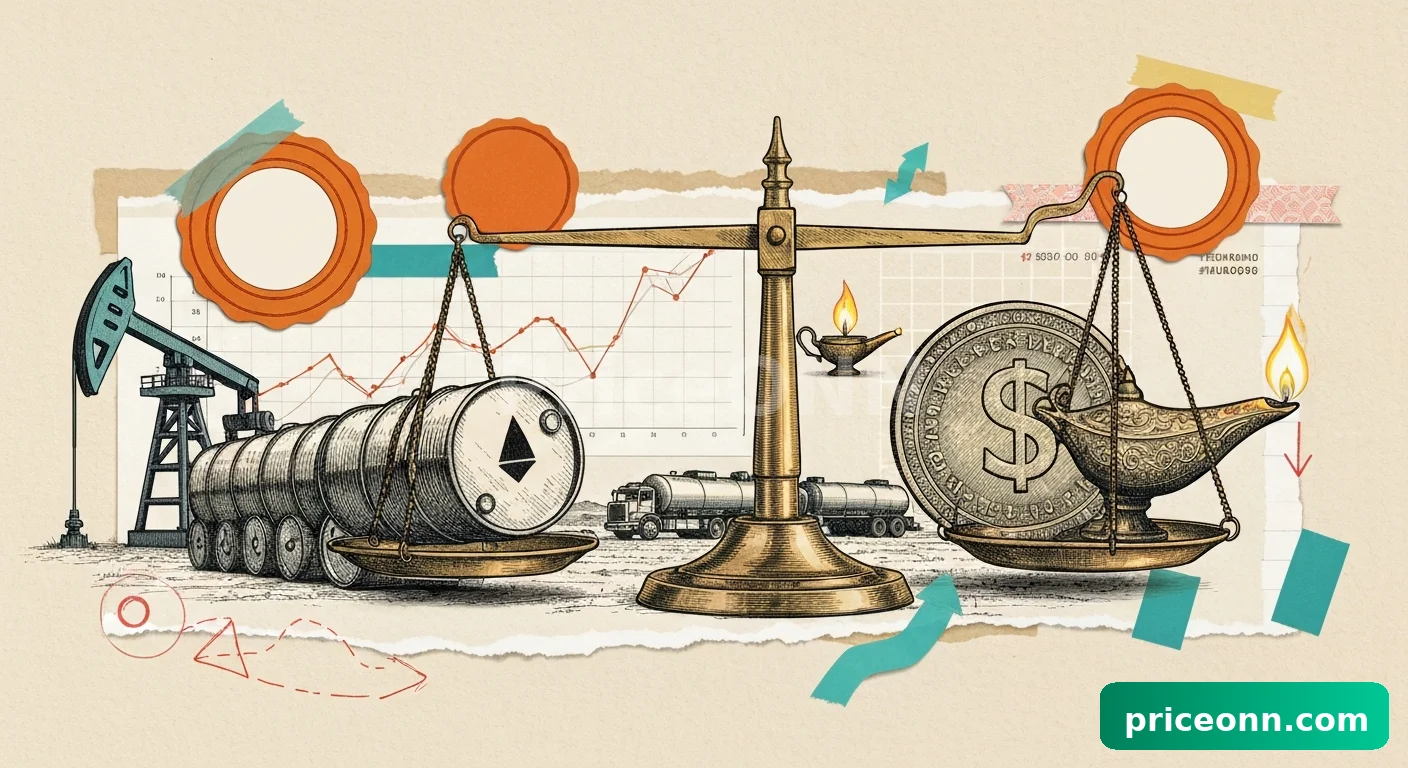
The escalating conflict did not stop there. Saudi Arabia announced the interception of four ballistic missiles aimed at its capital, Riyadh, while the United Arab Emirates reported a suspension of operations at a natural gas plant due to falling debris. These events highlight a rapidly deteriorating security environment in a region crucial for global energy supply.
Analysis & Drivers: Geopolitical Risk Premium
The surge in oil prices is a direct reflection of the heightened geopolitical risk premium being priced into the market. The targeting of energy infrastructure, particularly the South Pars/North Field and the LNG export terminal, carries significant implications for global supply chains. Disruptions to natural gas and crude oil processing facilities, even if temporary, can lead to immediate price volatility as traders and consumers brace for potential supply shortfalls.
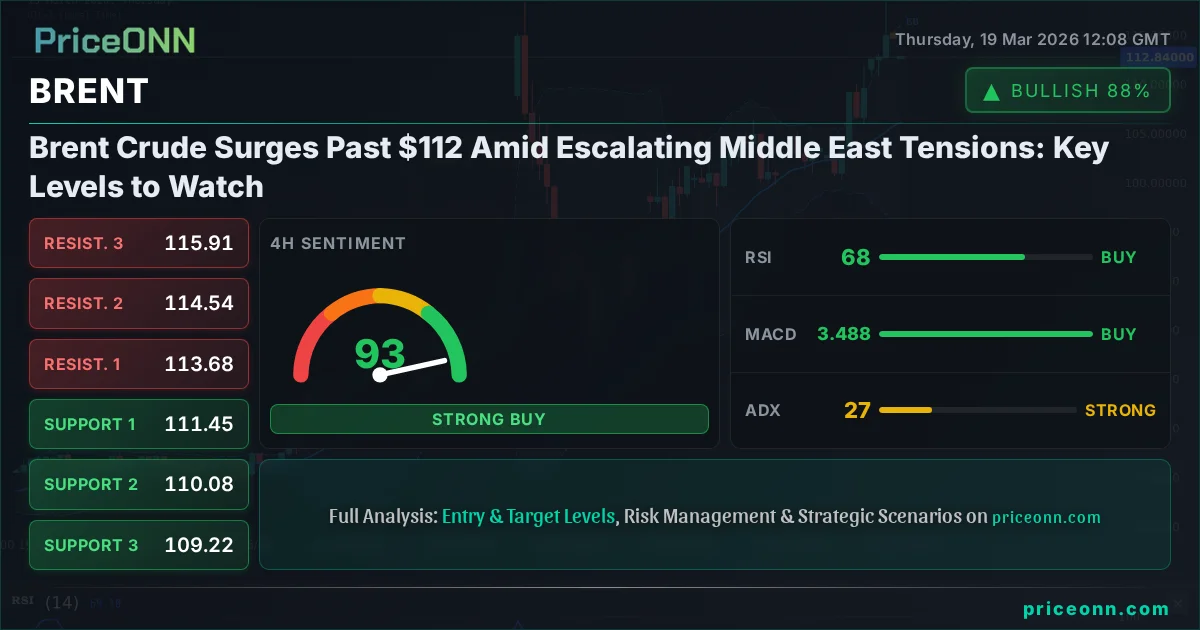
The involvement of major energy producers like Iran and Qatar, alongside transit countries such as Saudi Arabia and the UAE, amplifies the market's sensitivity. The interconnectedness of these energy assets means that an attack on one facility can trigger a cascade of reactions, impacting production, processing, and export capabilities across the region. Market data shows that Brent crude futures climbed to approximately $112.34 per barrel, while WTI reached $97.62 per barrel at the time of reporting, underscoring the market's immediate response to this heightened uncertainty.
Trader Implications: Watching Key Levels and Supply Dynamics
Traders should closely monitor the ongoing developments in the Middle East. The immediate price action suggests a strong upward bias, driven by fear and the potential for further supply disruptions. Key resistance levels for Brent crude are now likely to be tested, with $115 per barrel being a significant psychological and technical barrier. For WTI, the $100 per barrel level becomes a critical point to watch.
The market will be looking for clarity on the extent of the damage to the affected facilities and the duration of any operational suspensions. Any indication of prolonged disruption or further escalation could push prices significantly higher. Conversely, de-escalation efforts, such as President Trump's statement suggesting a halt to Israeli strikes on Iranian gas fields, could provide some relief, although the immediate threat of further retaliation remains.
Traders should also be aware of the broader economic implications. Sustained high oil prices can contribute to inflationary pressures globally, potentially influencing central bank policy and overall economic growth. Risk management strategies should account for the possibility of sharp price swings in either direction, dependent on geopolitical pronouncements and on-the-ground developments.
Outlook: Volatility Expected Amidst Fragile Stability
The energy markets are likely to remain highly sensitive to geopolitical news from the Middle East in the coming days and weeks. While President Trump has indicated a desire to prevent further strikes on Iranian gas infrastructure, the underlying tensions remain high. The immediate outlook suggests continued price volatility, with energy benchmarks poised to react sharply to any new developments. Investors and traders should remain vigilant, focusing on supply-side risks and geopolitical rhetoric as primary drivers of price action.
Frequently Asked Questions
What is the immediate impact of the Iran-Israel strikes on oil prices?
The strikes have caused a significant surge in oil prices. Brent crude futures climbed to approximately $112.34 per barrel, and WTI reached $97.62 per barrel due to fears of supply disruptions from targeted energy infrastructure.
Which energy facilities were targeted in the recent Middle East conflict?
The primary facilities targeted include a processing unit at the South Pars gas field (Iran/Qatar) and QatarEnergy's LNG export terminal at Ras Laffan. Saudi Arabia and the UAE also reported incidents involving missile debris impacting their energy operations.
What should traders watch for in the coming days regarding oil prices?
Traders should monitor official statements regarding de-escalation, the extent of damage to energy facilities, and any potential for further retaliatory actions. Key price levels to watch are $115 for Brent and $100 for WTI.
Track markets in real-time
Empower your investment decisions with AI-powered analysis, technical indicators and real-time price data.
Join Our Telegram Channel
Get breaking market news, AI analysis and trading signals delivered instantly to your Telegram.
Join Channel

PriceONN