
Why Did Oil Prices Surge Over $110 Amidst Escalating Middle East Tensions?
Brent crude prices have surged past $112 per barrel, marking a significant escalation in energy market volatility. This sharp upward movement is directly linked to retaliatory attacks launched by Iran against energy infrastructure across the Middle East, following alleged strikes on its vital South Pars gas field. The conflict's expansion into key energy hubs has ignited fears of widespread supply disruptions, driving prices to levels not seen in recent memory.
Market Context: Geopolitical Escalation Hits Energy Supply
The past 48 hours have witnessed a dramatic intensification of geopolitical tensions in the Middle East, with direct implications for global energy supplies. Following reports of strikes on Iran's South Pars gas field, Tehran issued stern warnings of retaliation against regional energy sites. This threat materialized as Iran reportedly launched missile attacks targeting critical infrastructure. Brent crude futures climbed as high as $112.00, a 4.27% jump in early Asian trading, while the U.S. benchmark, West Texas Intermediate (WTI), rose 2.73% to $98.95. Europe's natural gas benchmark also saw a significant increase of nearly 8%.
Qatar confirmed that Iranian missile strikes caused substantial damage near the Ras Laffan industrial complex, a pivotal hub for global liquefied natural gas (LNG) supply. Operations at the Habshan gas facility in the United Arab Emirates were also halted due to missile incidents, and debris from intercepted projectiles reportedly impacted other vital energy assets. Saudi Arabia reported neutralizing numerous drones and missiles aimed at its territory. The coordinated nature of these actions suggests a deliberate strategy by Iran to disrupt the Gulf's energy backbone, aiming to exert pressure and drive up prices.
Analysis & Drivers: Supply Fears Trump Inventory Builds
The primary driver behind the current oil price surge is the escalating geopolitical risk and the tangible threat to supply routes. Despite a recent build in U.S. crude oil inventories, which increased by 6.2 million barrels for the week ending March 13 according to the EIA, market sentiment has been overwhelmingly dominated by supply disruption fears. While these inventories, now at 449.3 million barrels, are still 1% below the five-year average, they have been overshadowed by the immediate concerns of conflict in a critical energy-producing region.
Whispers in the market suggest that upwards of 8 million barrels per day might have been taken offline globally due to various geopolitical and operational challenges, including production outages in Iraq, the UAE, and Saudi Arabia. The targeting of facilities like Ras Laffan, the world's largest LNG producer, has sent shockwaves through the natural gas market as well. The maritime security authority also reported a vessel catching fire east of the Strait of Hormuz after a projectile strike, further complicating tanker traffic through this vital chokepoint.
Trader Implications: Watch Key Resistance and Geopolitical Headlines
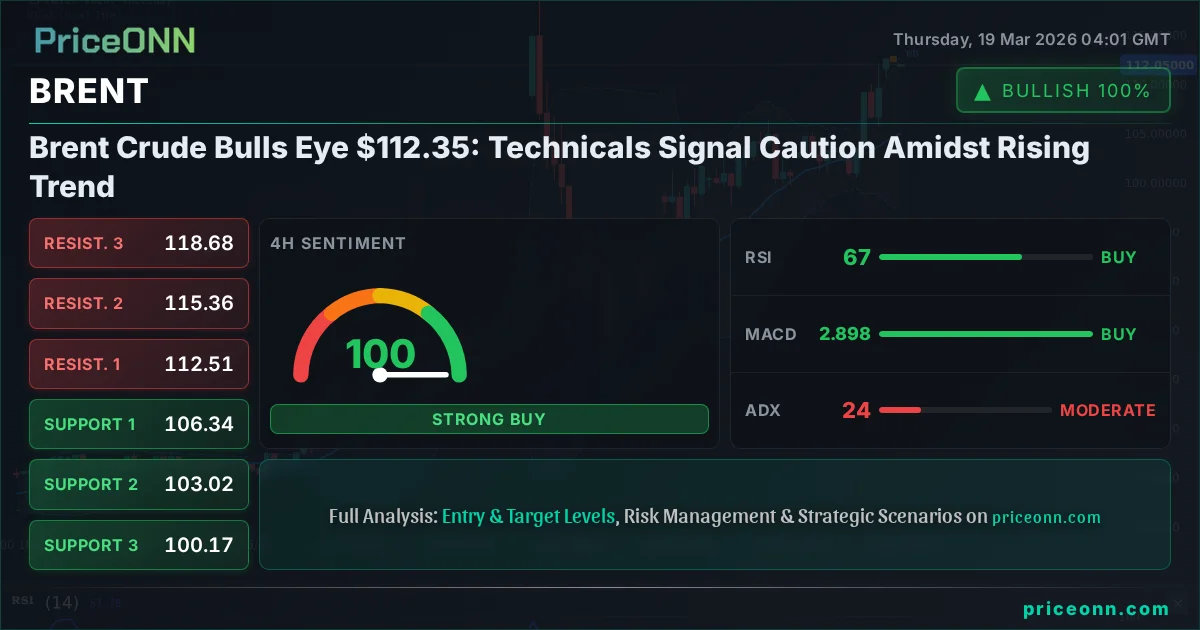
Traders should remain highly attuned to geopolitical developments in the Middle East, as these will likely dictate short-term price action for crude oil and natural gas. Key resistance levels for Brent crude are now firmly in focus, with the recent high of $112.00 serving as an immediate benchmark. A sustained breach above this level could signal further upside potential, targeting psychological levels around $115-$120. Conversely, any de-escalation in rhetoric or a swift resolution to the current hostilities could lead to a sharp correction.
Key factors to monitor include:
- Geopolitical Headlines: Any news regarding further attacks, diplomatic efforts, or statements from involved nations will be critical.
- Strait of Hormuz Traffic: Incidents affecting shipping through this vital chokepoint will directly impact supply concerns.
- Inventory Data: While currently secondary to geopolitical risk, upcoming inventory reports will provide insights into the supply/demand balance.
- Production Status: Updates on output from Iran, Saudi Arabia, UAE, and Iraq will be closely watched.
The risk of wider conflict disrupting significant portions of global energy supply remains elevated. Traders should consider implementing risk management strategies, such as stop-loss orders, and remain vigilant for sudden price swings.
Outlook: Volatility Expected to Persist
The energy markets are likely to remain highly volatile in the near term as the standoff between Iran and its adversaries continues. The deliberate targeting of energy infrastructure signals a new phase of conflict, underscoring the vulnerability of global supply chains. While U.S. inventories have shown an increase, the immediate threat to production and transit routes in the Middle East is a far more potent force driving prices higher. Traders should brace for continued price swings, with geopolitical developments serving as the primary catalyst. Upcoming economic data and central bank commentary may offer secondary influences, but the focus will remain squarely on the Persian Gulf.
Frequently Asked Questions
What is the current price of Brent crude and how has it reacted to recent events?
Brent crude has surged to $112.00 per barrel, an increase of 4.27%, following retaliatory strikes on energy infrastructure in the Middle East. This price jump reflects heightened fears of supply disruptions stemming from the escalating geopolitical tensions.
Which energy facilities have been targeted in the recent escalations?
Key energy facilities impacted include Qatar's Ras Laffan industrial complex, a major LNG producer, and the Habshan gas facility in the UAE. Iran's South Pars gas field was also reportedly targeted earlier, sparking the retaliatory actions.
How do current U.S. oil inventories compare to the market's reaction?
U.S. crude inventories increased by 6.2 million barrels, bringing them to 449.3 million barrels, which is still 1% below the five-year average. However, this build has been largely ignored by the market, which is prioritizing the immediate threat of Middle East supply disruptions over domestic inventory levels.
Track markets in real-time
Empower your investment decisions with AI-powered analysis, technical indicators and real-time price data.
Join Our Telegram Channel
Get breaking market news, AI analysis and trading signals delivered instantly to your Telegram.
Join Channel

PriceONN