
Why Did Brent Crude Surge Past $108 While WTI Lagged Amid Middle East Tensions?

Brent crude prices surged past $108 per barrel on Wednesday, reaching approximately $108.40, while U.S. West Texas Intermediate (WTI) traded closer to $98.50. This divergence saw the Brent-WTI spread widen to roughly $10 per barrel, its widest level in months, signaling increasing market stress due to geopolitical disruptions in the Persian Gulf.
Market Context
The significant widening of the Brent-WTI spread is directly attributable to escalating conflict in the Middle East, specifically impacting transit routes through the Strait of Hormuz. Market data shows that the global benchmark, Brent, is reacting to fears of supply disruptions affecting internationally traded crude, a significant portion of which transits through this vital waterway. Conversely, WTI, priced more on domestic U.S. supply and inventory dynamics, has remained relatively insulated, leading to its comparative discount.
This pricing divergence underscores a bifurcated market where barrels exposed to the Strait of Hormuz are being priced at a premium due to heightened military activity. Industry reports indicate that Middle Eastern crude grades are already trading at elevated premiums, as refiners scramble to secure prompt cargoes amidst uncertainty over future shipments. The situation highlights the market's sensitivity to seaborne supply routes, with any sustained interference immediately tightening availability for European and Asian refiners.
Analysis & Drivers
The primary driver behind the widening spread is the ongoing conflict involving the U.S., Israel, and Iran, which has begun to disrupt tanker movements and increase associated costs like insurance and freight. The Strait of Hormuz, through which over 20% of the world's crude oil and natural gas flows, has seen a drastic reduction in vessel traffic. Reports indicate a plunge from over 100 ships daily to just 21 tankers following the conflict's escalation, with hundreds of vessels reportedly stranded near the Gulf of Oman.
While initial fears of widespread supply stoppages led to a surge in oil prices, subsequent developments have introduced some nuance. Reports of Iraq resuming oil exports from its northern Kirkuk province to Turkey at a rate of up to 250,000 barrels per day through the Port of Ceyhan have provided a slight easing of supply concerns. This development, coupled with potential profit-taking by traders after yesterday's rally, contributed to crude oil paring some of its earlier gains later in the session, with WTI briefly trading lower before a rebound.
Traders are also keenly awaiting the U.S. Energy Information Administration (EIA) report for fresh cues on domestic supply trends. Historically, weekly inventory reports from the API and EIA significantly impact WTI prices; a drop in inventories typically signals increased demand and pushes prices up, while higher inventories suggest increased supply and can lead to price declines. The EIA data, considered more reliable, is closely watched for its impact on WTI pricing.
Trader Implications
Traders should closely monitor the Brent-WTI spread as a real-time indicator of geopolitical stress in the Middle East. A further widening of this spread beyond the current $10 per barrel would suggest that the conflict is increasingly constraining globally traded barrels, potentially leading to further price appreciation for Brent. Conversely, any signs of de-escalation or successful navigation of the Strait of Hormuz could see the spread narrow.
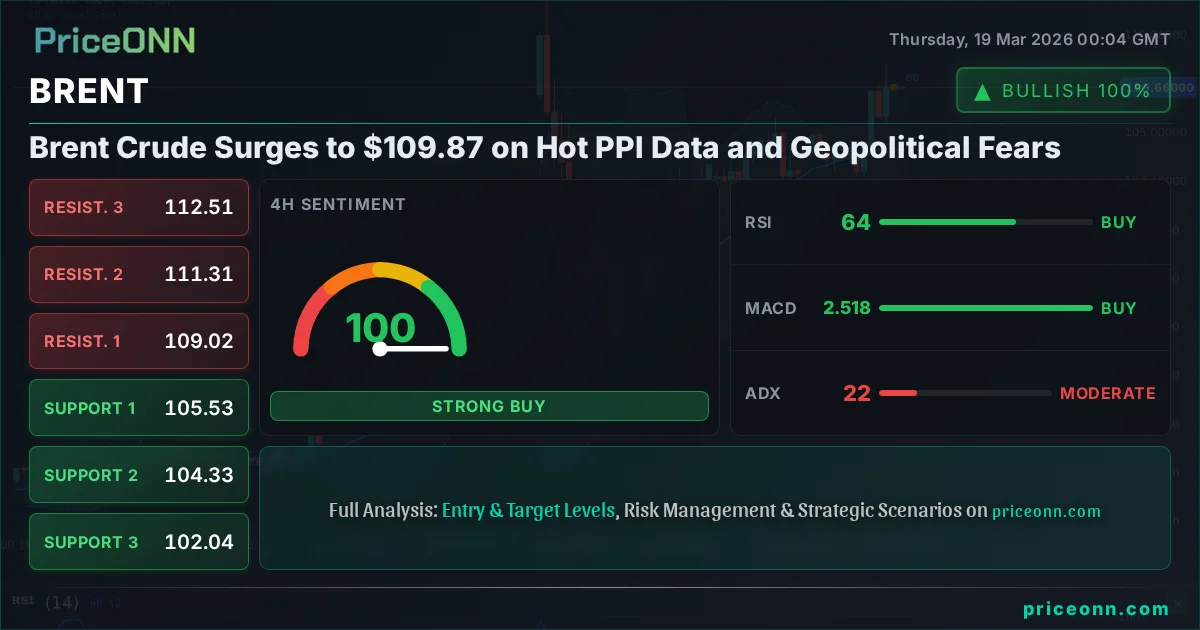
Key levels to watch include the $108.40 mark for Brent crude, which may act as immediate resistance if the bullish sentiment falters. For WTI, the $98.50 level is a crucial point; a sustained break above this could indicate a broader market recovery, while failure to hold this level might suggest continued weakness relative to Brent. The upcoming EIA report will be critical for WTI sentiment, with traders looking for inventory drawdowns to support prices.
The resumption of Iraqi exports, while positive for easing supply fears, needs to be sustained to have a significant impact on the broader market. Traders should remain vigilant for any news regarding the U.S.-led coalition efforts or retaliatory actions from Iran, as these geopolitical factors currently outweigh fundamental supply/demand data in driving price action.
Outlook
The outlook for oil prices remains heavily influenced by the geopolitical situation in the Middle East. While the resumption of Iraqi exports offers a sliver of relief, the ongoing conflict and the potential for further disruptions in the Strait of Hormuz suggest that upward pressure on Brent crude is likely to persist. Traders should anticipate continued volatility, with the Brent-WTI spread serving as a key barometer. Upcoming economic data, particularly the EIA inventory report, will provide further direction for WTI prices, but the overarching narrative will likely remain dominated by Middle Eastern tensions until a clear de-escalation occurs.
Frequently Asked Questions
What is the current price difference between Brent and WTI crude oil?
As of Wednesday, the price difference, or spread, between Brent crude and WTI has widened to approximately $10 per barrel, with Brent trading around $108.40 and WTI near $98.50.
What is causing the Brent-WTI spread to widen?
The widening spread is primarily driven by heightened geopolitical risks in the Middle East, impacting supply routes through the Strait of Hormuz. This affects internationally traded Brent crude more directly than WTI, which is priced more on domestic U.S. conditions.
What should traders watch for in the coming days?
Traders should monitor the Brent-WTI spread for further widening as an indicator of geopolitical stress. Key price levels to watch are $108.40 for Brent and $98.50 for WTI, alongside the upcoming EIA oil inventory report for WTI guidance.
Track markets in real-time
Empower your investment decisions with AI-powered analysis, technical indicators and real-time price data.
Join Our Telegram Channel
Get breaking market news, AI analysis and trading signals delivered instantly to your Telegram.
Join Channel



PriceONN