
Iran Strike Sparks Oil Rally as Regional Energy Fears Intensify

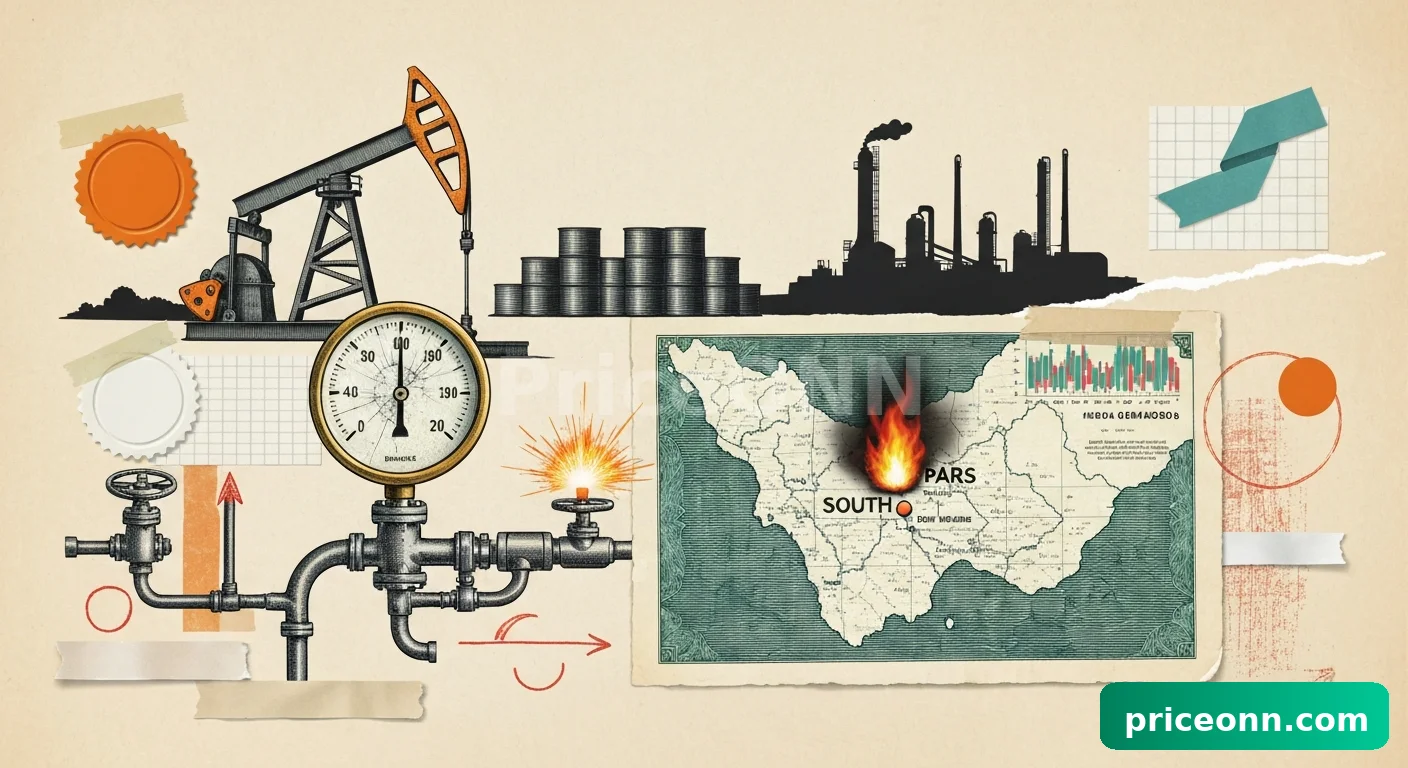
Brent crude futures climbed as much as 6% to $10.56 per barrel, and Europe’s natural gas benchmark jumped nearly 8%, as markets reacted to escalating threats in the Middle East. The surge reflects growing anxieties over potential supply disruptions after Iran alleged that U.S. and Israeli forces targeted its vital South Pars gas field.
Market Context
The incident marks a significant escalation in regional tensions, representing the first direct targeting of Iran's upstream energy production capabilities. The South Pars field, a critical component of Iran's energy output, is the world's largest natural gas accumulation, shared with Qatar. Its production has been substantial, reaching record levels. In response to the alleged strike, Iran’s Islamic Revolutionary Guard Corps (IRGC) issued a stern warning, declaring that major energy installations throughout the Persian Gulf region could now be considered “legitimate targets.” This threat has fueled market fears, with reports circulating of potential retaliatory targets including key refineries and petrochemical complexes in neighboring Gulf states.
Analysis & Drivers
The primary driver for the current price surge is the heightened geopolitical risk stemming from the alleged attack on the South Pars facility and Iran's retaliatory threats. This event injects a substantial risk premium into energy markets, overshadowing other fundamental data. For instance, recent U.S. Energy Information Administration (EIA) data indicated an unexpected build of 6.2 million barrels in crude oil inventories for the week ending March 13, bringing total commercial stockpiles to 449.3 million barrels. While this figure is still 1% below the five-year average, the build itself typically suggests softening demand or increasing supply, which would normally pressure prices downward. However, the market's reaction demonstrates that geopolitical concerns are currently the dominant force.
Furthermore, ongoing production outages in key producing nations like Iraq, the UAE, and Saudi Arabia, coupled with disruptions affecting tanker traffic through the Strait of Hormuz, continue to constrain global supply. Reports suggest that upwards of 8 million barrels per day might be offline globally due to these multifaceted challenges. This backdrop of tight supply makes any significant geopolitical event, such as the one involving Iran, particularly impactful on prices.
Adding another layer to the supply picture, the governments of Iraq and the Kurdistan region have reached an agreement to restart the Kirkuk-Ceyhan oil pipeline. This pipeline has a capacity of up to 250,000 barrels per day. While this restart offers a marginal increase in available barrels, analysts note it is unlikely to significantly alter the global supply balance given the scale of current disruptions and the pipeline's limited capacity relative to global demand and other geopolitical supply risks.
Trader Implications
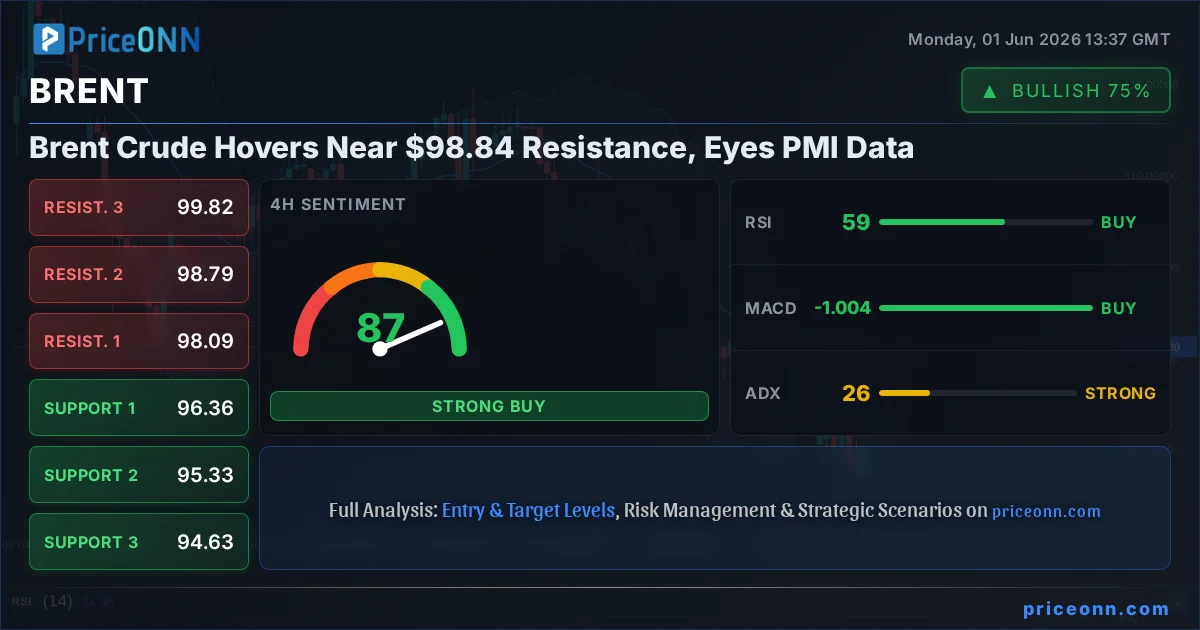
Traders should brace for continued volatility in oil and gas markets. The immediate focus remains on de-escalation or further escalation of the Iran-related tensions. Key levels to watch for Brent crude include the recent high of $10.56 as immediate resistance, with potential for further upside if supply fears intensify. Support for Brent could be found around the $101 mark, where it was trading prior to the latest news.
For natural gas, the nearly 8% jump indicates significant upward momentum. Traders should monitor news flow from the Middle East closely, as any further supply threats could push prices higher. The EIA inventory report, while showing a build, is unlikely to be a significant bearish factor in the short term given the geopolitical overlay. Traders looking to position themselves might consider that the risk premium is likely to remain elevated as long as the regional threat persists. Long positions may be favored on dips, with strict stop-losses due to the unpredictable nature of geopolitical events.
Outlook
The immediate outlook for energy prices remains heavily influenced by geopolitical developments in the Middle East. Should tensions escalate, leading to actual supply disruptions, both oil and natural gas prices could see further significant gains. Conversely, any signs of de-escalation or diplomatic resolution could lead to a rapid unwinding of the current risk premium, potentially causing prices to retreat. The upcoming EIA inventory data and any further updates on the Kirkuk-Ceyhan pipeline will be secondary to the geopolitical narrative in the coming days.
Frequently Asked Questions
What is the immediate impact of the Iran incident on oil prices?
The alleged strike on Iran's South Pars gas field and subsequent threats have caused Brent crude to surge by up to 6%, reaching $10.56 per barrel. This price action is driven by fears of regional supply disruptions.
How significant is the increase in US crude oil inventories?
U.S. crude oil inventories increased by 6.2 million barrels for the week ending March 13, bringing total commercial stockpiles to 449.3 million barrels. Despite this build, prices rose due to overriding geopolitical concerns.
What is the outlook for oil prices given the current geopolitical situation?
The outlook remains highly volatile, dependent on geopolitical developments. Further escalation could drive prices higher, while de-escalation might lead to a price correction. Analysts suggest the current risk premium will persist as long as regional threats are active.
Track markets in real-time
Empower your investment decisions with AI-powered analysis, technical indicators and real-time price data.
Join Our Telegram Channel
Get breaking market news, AI analysis and trading signals delivered instantly to your Telegram.
Join Channel PriceONN News
Brent crude prices surged towards the mid-$90s amid fears of supply disruptions from Middle East tensions, only to pare gains later as whispers of a potential US-Iran diplomatic understanding emerged.
PriceONN News
Crude oil prices experienced a significant drop, with WTI futures falling over 1.8% to $87.25, as optimism grew for a U.S.-Iran deal potentially reopening the Strait of Hormuz.
PriceONN News
(RTTNews) - Crude oil prices have tumbled on Friday as expectations of the U.S. and Iran signing a Memorandum of Understanding run high. The MoU would allow for immediate reopening of the Strait of Hormuz and pave the way for the resumption of oil and energy trade.
PriceONN News
Crude oil futures experienced a dramatic intraday reversal on Thursday, soaring overnight on geopolitical fears only to pull back significantly as reports of a potential diplomatic understanding between the U.S. and Iran emerged.
PriceONN News
Crude oil futures experienced a dramatic intraday reversal, soaring to $92.52 before pulling back significantly on Thursday. The volatile session was driven by shifting geopolitical narratives and U.S. inventory data.
PriceONN News
Crude oil futures experienced a dramatic reversal, soaring overnight to $92.52 before plummeting nearly 6% to $89 a barrel. This volatility was driven by escalating US-Iran tensions followed by reports of a potential preliminary diplomatic understanding.
PriceONN News
(RTTNews) - Crude oil futures skyrocketed overnight but have shown a significant pullback over the course of the trading day on Thursday.
PriceONN News
Crude oil benchmarks experienced a sharp decline of over 5% this week, driven by renewed optimism surrounding U.S.-Iran peace talks and a potential easing of Middle East tensions. Both Brent and WTI futures saw significant drops as market sentiment shifted towards de-escalation.
PriceONN News
Global oil prices are treading water after a significant 5% slump, as market sentiment grapples with cautious optimism over Middle East de-escalation efforts versus lingering geopolitical uncertainties. Brent crude hovers near $104.72 and WTI near $98.07.
PriceONN News
South Korea’s state-run utility Korea Electric Power Corp. (KEPCO) has won a $1.4-billion deal with Saudi oil giant Aramco to build and operate Phase 2 of Saudi Arabia’s Jafurah cogeneration power plant at the major gas project estimated to need $100 billion of total investments. KEPCO’s cogeneration project entails building a 331-MW cogeneration facility capable of producing about 465 tons of steam per hour by June 2029. The plant is expected to supply electricity and steam to Aramco for 17...
PriceONN News
The Iran war suddenly turned what had started as a year of oversupply in global oil and LNG markets into the worst oil and gas supply disruption in history. Three months after the U.S.-Israeli strikes on Iran began on February 28, the world has already lost 1 billion barrels of crude oil supply, oil and gas prices have found a new, much higher floor, and whipsaw with violent volatility nearly every day, trade routes have shifted, and tanker rates have spiked. Actual supply shortages are...
PriceONN News
The Iran war has handed the United States a rare opportunity: a new dawn of energy dominance in an increasingly fractured world. With coordinated US-Israeli strikes disrupting the Strait of Hormuz from late February, roughly 20% of global LNG supply has been stripped from the market since early March. Prices have surged across Asia and Europe. And into that vacuum, American gas has flowed. The numbers speak for themselves. US LNG exports to Asia jumped sharply in April, with nearly a quarter of...