
Why Did Brent Crude Surge Past $108 While WTI Lagged Amid Middle East Tensions?

Brent crude prices surged past the $108 mark on Wednesday, reaching approximately $108.40 per barrel, as escalating geopolitical tensions in the Persian Gulf continued to disrupt global oil flows. This sharp ascent saw the international benchmark pull away decisively from its U.S. counterpart, West Texas Intermediate (WTI), which traded closer to $98.50 per barrel. The widening divergence, with the Brent-WTI spread reaching roughly $10 per barrel, signals increasing stress and risk premiums being priced into seaborne crude markets.
Market Context
The dramatic widening of the Brent-WTI spread underscores a bifurcated market sentiment. Brent, which prices the majority of internationally traded crude, is directly reacting to fears of supply disruptions stemming from increased military activity tied to the U.S.-Israel conflict with Iran. This activity has begun to impede tanker movements through the Strait of Hormuz, a critical chokepoint for global energy transit, leading to higher insurance and freight costs. Consequently, refiners in Europe and Asia reliant on these seaborne grades are facing tighter availability, driving up prices for international benchmarks. In contrast, WTI pricing remains more closely tied to domestic U.S. supply conditions, including steady production levels and localized inventory dynamics that have not experienced the same immediate tightening. This has left U.S. barrels comparatively discounted even as global benchmarks rally.
Analysis & Drivers
The primary catalyst for the diverging price action is the persistent geopolitical risk in the Middle East. The Strait of Hormuz, through which more than 20% of the world's crude oil and natural gas transit, has seen a significant reduction in vessel traffic following the conflict. Reports indicate that the number of daily transits has plummeted, with hundreds of vessels reportedly stranded near the Gulf of Oman. While some select vessels linked to specific nations were permitted to sail, the overall disruption has created considerable uncertainty. Adding to the tension, recent reports confirmed the deaths of key Iranian security officials, with Iran vowing fierce retaliation, suggesting the conflict is unlikely to de-escalate in the immediate term.
However, some supply concerns were partially alleviated by an agreement allowing Iraq to resume oil exports from its northern Kirkuk province to the Port of Ceyhan in Turkey. This deal aims to facilitate exports of up to 250,000 barrels per day, with initial plans for around 100,000 barrels per day. This development provided a temporary counterbalance to the broader supply fears, preventing a more extreme price surge in WTI and contributing to profit-taking activity that saw crude oil prices briefly slide later in the session before rebounding.
Trader Implications
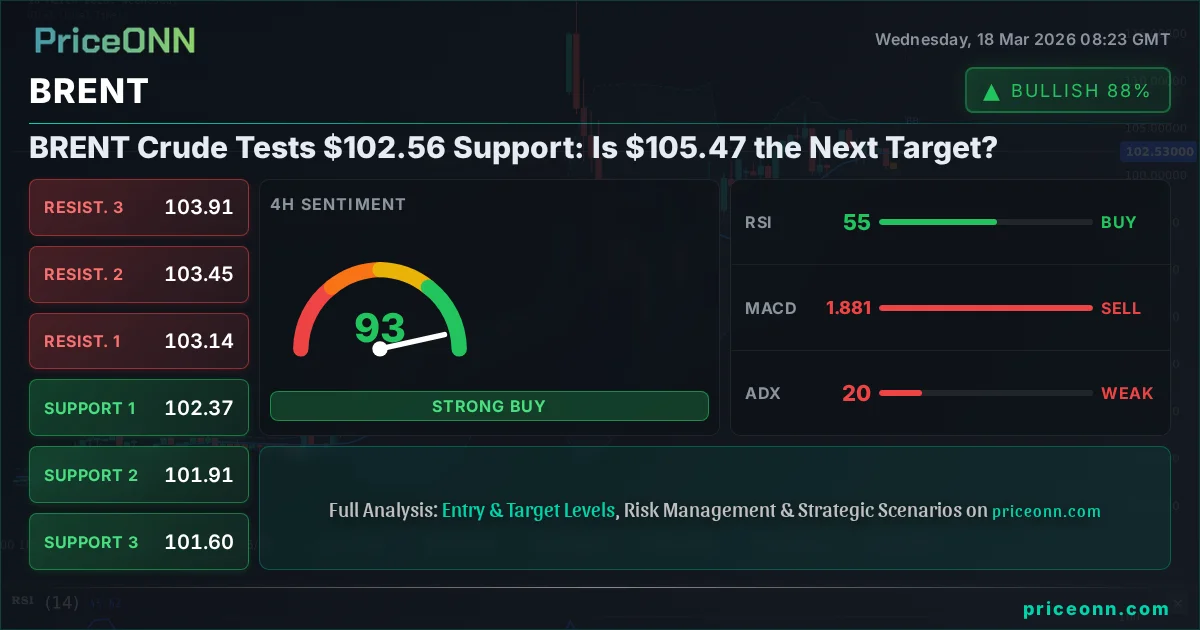
Traders are now closely monitoring the Brent-WTI spread as a real-time indicator of the severity of the Middle East supply disruption. A further widening of this spread would suggest that the conflict is increasingly constraining globally traded barrels. Key levels to watch include the $108-$110 range for Brent, which could see further upside if tensions persist. For WTI, the $98-$100 area is acting as a near-term resistance, with a break above potentially signaling broader market bullishness. The upcoming U.S. Energy Information Administration (EIA) inventory report will also be crucial for assessing domestic supply-demand dynamics and could provide further direction for WTI prices. Traders should also remain attuned to any further developments regarding Iraqi export resumption or statements from OPEC+ regarding production adjustments.
Outlook
The outlook for crude oil remains heavily influenced by the geopolitical situation in the Middle East. While the Iraq-Turkey export deal offers some relief, the underlying tensions and the potential for further escalation pose a significant upside risk to oil prices, particularly for Brent crude. The market will be watching for any signs of a ceasefire or de-escalation, which could lead to a rapid unwinding of the current risk premium. Conversely, any further disruption or retaliation could see Brent prices test higher levels and the Brent-WTI spread widen further. The market sentiment currently leans towards caution, with traders pricing in continued volatility.
Frequently Asked Questions
What is causing the price difference between Brent and WTI crude oil?
The widening spread, with Brent trading at a premium of approximately $10 per barrel over WTI, is primarily driven by geopolitical risks in the Persian Gulf. Disruptions to shipping through the Strait of Hormuz are impacting seaborne Brent crude more directly than U.S. domestic WTI.
How significant is the impact of the Iraq-Turkey oil export deal?
The agreement allows Iraq to resume exports from Kirkuk at a rate of up to 250,000 barrels per day through Turkey. This deal provides some easing of supply concerns, particularly for WTI, by offering an alternative route and slightly mitigating the impact of broader Middle Eastern supply disruptions.
What key levels should traders watch for Brent and WTI crude oil?
Traders should watch for Brent crude to test resistance around the $108-$110 per barrel range. For WTI, the $98-$100 per barrel area is a key resistance level. A decisive break above these levels could signal further price appreciation.
Track markets in real-time
Empower your investment decisions with AI-powered analysis, technical indicators and real-time price data.
Join Our Telegram Channel
Get breaking market news, AI analysis and trading signals delivered instantly to your Telegram.
Join Channel


PriceONN