
Why Did WTI Crude Slide to $96 Amid Dollar Strength and Middle East Jitters?
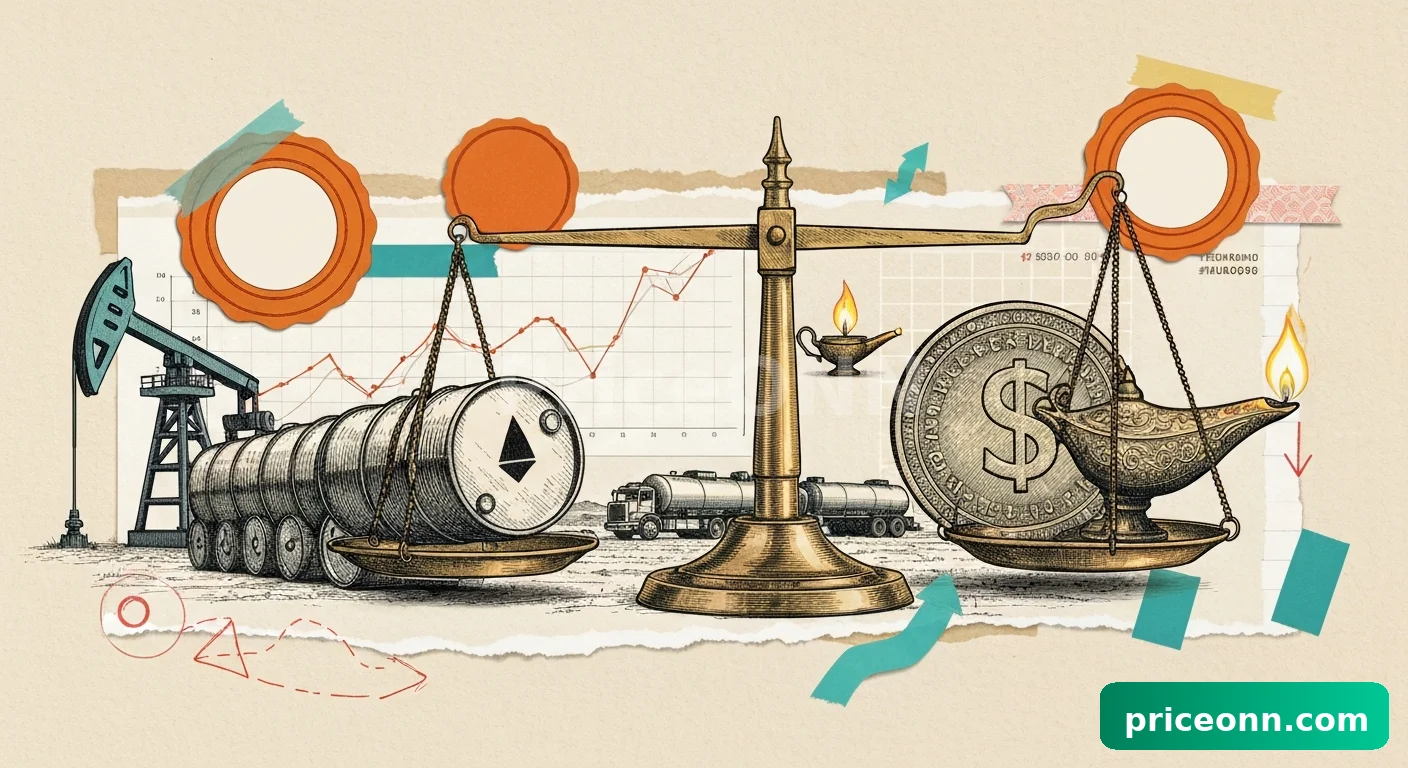
WTI crude oil has experienced a notable downturn, trading precariously close to the $96.00 per barrel mark during early European trading hours on Thursday. This decline is largely attributed to a resurgent US Dollar, which is exerting downward pressure on dollar-denominated commodities like oil. Market participants are closely watching how these cross-currents of currency strength and geopolitical tensions will shape the energy landscape.
Market Context
The benchmark US crude, West Texas Intermediate (WTI), often lauded for its ease of refinement due to its low viscosity and minimal sulfur content, is currently facing headwinds. Its primary distribution hub in Cushing, Oklahoma, a critical nexus for oil infrastructure, places it at the forefront of global price benchmarks. The recent price slide underscores the delicate balance of forces influencing oil markets. Typically, robust global economic activity fuels demand for energy, supporting higher prices. However, signs of economic deceleration or increased risk aversion can quickly shift sentiment, leading to price erosion. In this instance, the strengthening US Dollar is a significant factor, making oil more expensive for holders of other currencies and thus dampening demand.
Analysis and Drivers
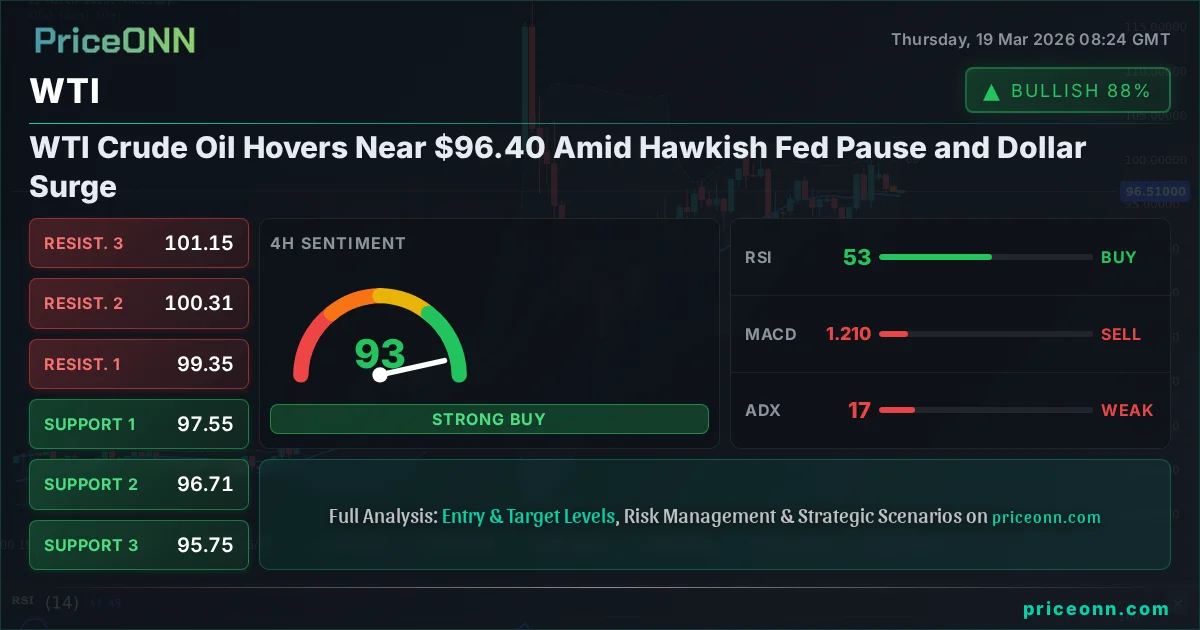
Several key drivers are at play, influencing WTI's trajectory. The renewed strength in the US Dollar is a primary catalyst, as a stronger dollar generally correlates with lower commodity prices. Market data indicates that currency traders are favoring the dollar, likely in response to shifting global economic outlooks or anticipated monetary policy adjustments. Geopolitical developments in the Middle East also remain a persistent undercurrent, capable of introducing supply disruption fears and volatility, though currently, the currency factor appears to be dominating price action. Investors are also keenly observing inventory data from the American Petroleum Institute (API) and the Energy Information Administration (EIA). A larger-than-expected build in crude stockpiles would typically suggest weaker demand, further pressuring prices, while a significant draw could offer some support.
Trader Implications
For traders, the current environment presents a complex risk-reward scenario. The immediate focus should be on the $96.00 support level for WTI. A decisive break below this level could trigger further selling, potentially targeting the $94-$95 range. Conversely, any signs of dollar weakness or escalating Middle East tensions that threaten supply could lead to a swift rebound, with immediate resistance seen around the $97.50-$98.00 area. The Bank of Canada's stance on interest rates and the general risk sentiment in broader financial markets will also be crucial for monitoring the related USD/CAD currency pair, which has seen some trimming of gains as oil prices fluctuate. Traders should remain vigilant for any shifts in market sentiment, as well as official statements regarding oil production or economic policy.
Outlook
The outlook for WTI remains uncertain, heavily dependent on the interplay between the US Dollar's performance, geopolitical stability in key oil-producing regions, and global demand indicators. While current market data points to downward pressure from currency strength, any escalation of Middle East conflicts could rapidly shift sentiment and send prices higher. Traders should prepare for continued volatility as these factors develop, with upcoming inventory reports and central bank commentary providing crucial short-term direction.
Frequently Asked Questions
What is the current price of WTI crude oil?
As of early European trading on Thursday, West Texas Intermediate (WTI) crude oil is trading near the $96.00 per barrel level.
What is driving the current price decline in WTI?
The primary driver for the recent decline in WTI prices is the strengthening US Dollar. Geopolitical tensions in the Middle East and upcoming inventory reports are also factors influencing market sentiment.
What are the key support and resistance levels for WTI in the near term?
Traders should watch the $96.00 level as immediate support. A break below this could lead to further declines towards $94-$95. Resistance is seen around $97.50-$98.00.
Track markets in real-time
Empower your investment decisions with AI-powered analysis, technical indicators and real-time price data.
Join Our Telegram Channel
Get breaking market news, AI analysis and trading signals delivered instantly to your Telegram.
Join Channel

PriceONN