
Will China Dominate Energy Markets as Iran Conflict Sparks Global Price Surge?

Market Context
The world is witnessing a significant upheaval in energy markets, triggered by escalating geopolitical tensions involving the United States, Israel, and Iran. This conflict has led to a sharp surge in oil prices and heightened market volatility, with particular concern surrounding the critical Strait of Hormuz. Iran has signaled its intent to restrict passage through this vital waterway, which handles a substantial portion of global oil and gas shipments. Despite these threats, market data indicates that approximately 11.7 million barrels of crude oil continue to flow to China daily, underscoring existing trade relationships and China's diplomatic stance.
The immediate impact on global markets is a growing concern for energy-dependent nations. However, China appears to be navigating this crisis with a calculated calm, largely due to its strategic foresight in accumulating massive energy reserves. Years of meticulous planning have resulted in an impressive stockpile of 851 million barrels of crude oil in onshore commercial storage. This substantial reserve acts as a critical shield, providing China with the breathing room to manage its energy needs and economic objectives without the immediate panic seen elsewhere.
Analysis & Drivers
The primary driver behind the current energy market volatility is the escalating conflict in the Middle East. Iran's strategic positioning regarding the Strait of Hormuz has created a significant geopolitical lever, directly impacting global supply routes. While official statements suggest the Strait remains open, the implied threat of closure to adversaries has sent shockwaves through the market, pushing prices upward. Analysts note that the market is pricing in a heightened risk of supply disruptions.
China's unique position stems from its long-term strategy of building substantial strategic petroleum reserves. This foresight has created a buffer of 851 million barrels, allowing Beijing to absorb the immediate price shocks and supply uncertainties. Unlike many nations that must scramble for available barrels at inflated costs, China's reserves provide it with considerable flexibility. This allows for measured decision-making, ensuring operational continuity and the pursuit of economic goals even as global energy markets face pressure. Furthermore, China's ongoing investment in its 'supergrid' initiative and efforts to reduce reliance on imported fossil fuels are long-term strategies that are now proving to be particularly advantageous.
Trader Implications
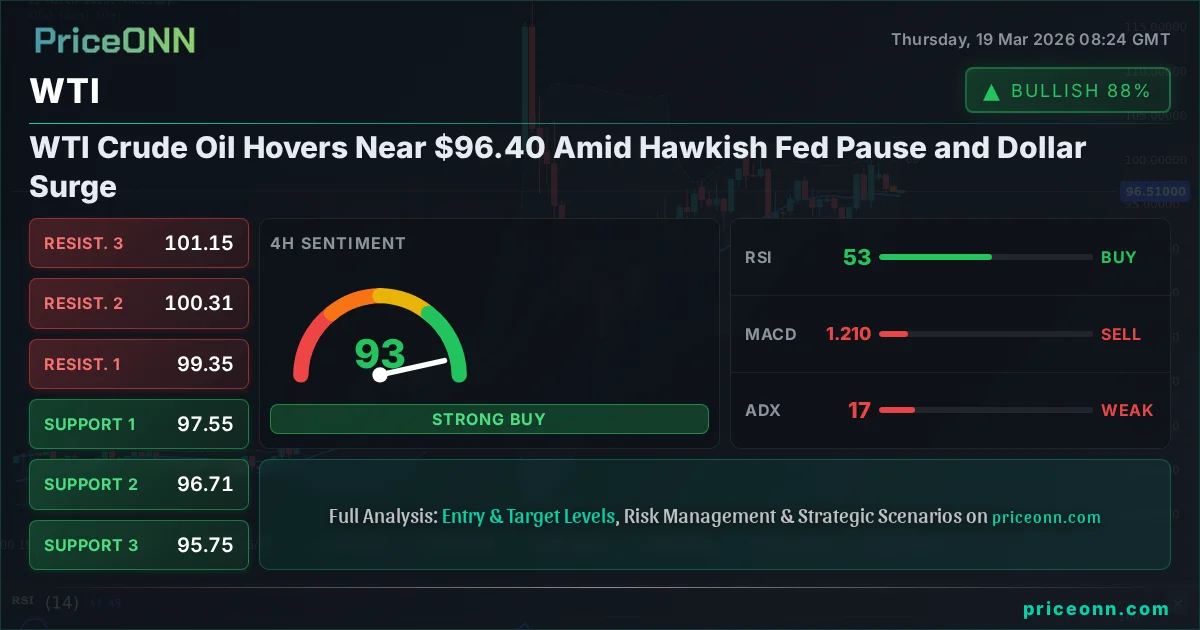
For traders, the current environment presents both opportunities and significant risks. The surge in oil prices, driven by geopolitical events, suggests potential for further upward momentum in crude oil futures, particularly if supply disruptions materialize. Key levels to watch include the recent highs reached by benchmarks like Brent and WTI. Traders should closely monitor news flow from the Middle East, paying attention to any official statements or actions that could further impact the Strait of Hormuz or Iranian oil exports.
The resilience shown by China, bolstered by its strategic reserves, may also influence global energy demand dynamics. While immediate supply concerns are paramount, the long-term implications of China's energy independence could shape future market trends. Traders should consider the potential for increased demand for alternative energy sources and infrastructure, such as China's 'supergrid,' as countries seek to diversify away from fossil fuel volatility. Monitoring China's inventory levels and its role in global energy trade will be crucial for anticipating market shifts.
Outlook
The geopolitical situation in the Middle East remains fluid, suggesting that oil price volatility is likely to persist in the near term. The effectiveness of Iran's strategy in influencing global energy trade will be a key factor to watch. For China, its substantial reserves and infrastructure investments position it favorably to navigate this period of uncertainty, potentially emerging with a strengthened economic standing. Traders should remain vigilant, prepared for rapid price swings and closely following geopolitical developments and their impact on global energy supply and demand.
Frequently Asked Questions
What is the current estimated volume of China's strategic petroleum reserves?
China has accumulated a significant strategic petroleum reserve, reaching an estimated 851 million barrels of crude oil in onshore commercial storage prior to the recent escalation of Middle East tensions.
How much crude oil is reportedly still flowing to China daily amidst the conflict?
Despite the escalating conflict and threats to vital shipping lanes, market data suggests that approximately 11.7 million barrels of crude oil continue to be delivered to China on a daily basis.
What key infrastructure advantage does China possess in this energy crisis?
Beyond its vast reserves, China's strategic advantage includes its ambitious 'supergrid' initiative, designed to enhance energy distribution and reliability, and its long-term commitment to reducing reliance on imported fossil fuels.
Track markets in real-time
Empower your investment decisions with AI-powered analysis, technical indicators and real-time price data.
Join Our Telegram Channel
Get breaking market news, AI analysis and trading signals delivered instantly to your Telegram.
Join Channel

PriceONN