
Why Did Oil Jump 3% as Iran and Israel Clash Over Gas Fields?

Brent crude futures climbed to around $112.34 per barrel and West Texas Intermediate (WTI) reached $97.62 per barrel following direct strikes on key energy facilities in the Middle East. The conflict escalated as Israel reportedly targeted a processing facility at the South Pars gas field, which Iran shares with Qatar. In response, Iran launched retaliatory actions, impacting QatarEnergy's liquefied natural gas (LNG) export terminal and leading to warnings and missile interceptions in Saudi Arabia and the UAE.
Market Context
The delicate geopolitical balance in the Middle East was severely tested this week as Iran and Israel engaged in direct exchanges of fire targeting vital energy infrastructure. These actions have amplified concerns about supply chain stability and injected significant uncertainty into global commodity markets. The primary flashpoint appears to be the South Pars gas field, the world's largest, known as North Field by Qatar, which shares the reservoir with Iran. Reports indicate that an Israeli strike impacted a processing unit on the Iranian side of this critical hub. This was followed by Iran's retaliatory measures, which included strikes on QatarEnergy's LNG export terminal at Ras Laffan, reportedly causing extensive damage.
The repercussions were not isolated to natural gas. Saudi Arabia announced the interception of four ballistic missiles targeting its capital, Riyadh, while the United Arab Emirates reported a temporary suspension of operations at a natural gas plant due to falling debris. These events underscore the heightened risk environment in a region crucial for global energy supply. The immediate market reaction saw significant upward price movements for both crude oil benchmarks. Analysts note that the interconnectedness of these energy assets means disruptions in one area can quickly spill over into others, impacting broader market sentiment and price discovery.
Analysis & Drivers
The core driver behind the recent surge in oil prices is the direct military confrontation between Iran and Israel, specifically targeting energy infrastructure. President Trump publicly stated that Israel would cease further strikes on Iranian gas facilities after what he described as 'lashing out.' However, he also warned of potential further Israeli action if Iran retaliated again. Iran's response, which included strikes on Qatar's LNG export terminal, demonstrates a willingness to escalate and impact energy flows beyond its immediate borders.
The damage sustained by Qatar's LNG facility is particularly significant, given Qatar's role as a major global exporter of liquefied natural gas. This disruption, even if temporary, can lead to immediate price spikes due to reduced supply availability. Furthermore, the broader regional instability, evidenced by missile interceptions in Saudi Arabia and the UAE, contributes to a general risk premium being priced into energy markets. Geopolitical instability in the Middle East, a region responsible for a substantial portion of global oil and gas production, inherently leads to market volatility as traders and investors price in potential supply disruptions.
Trader Implications
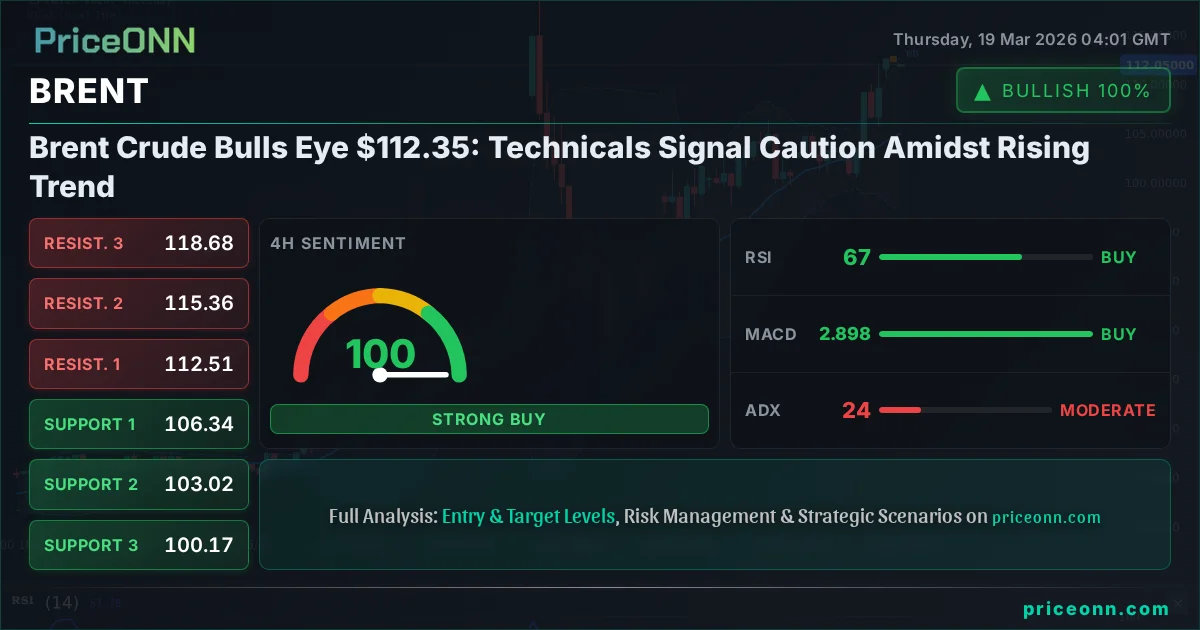
Traders should closely monitor the geopolitical developments in the Middle East. The key levels to watch for Brent crude are immediate resistance around $115 per barrel and support at $108 per barrel. For WTI, resistance is seen near $100 per barrel, with support around $95 per barrel. The market sentiment is currently risk-on for energy commodities, suggesting that any further escalation could push prices higher, while de-escalation might lead to a correction.
Key factors to track include official statements from the involved nations and major global powers, the extent of the damage to energy facilities, and the duration of any operational suspensions. The potential for further retaliatory actions remains a significant risk. Traders looking to capitalize on volatility might consider short-term plays on upward price momentum, but should maintain strict risk management protocols. A sustained de-escalation could present opportunities for bearish positions, but the underlying geopolitical risk premium may keep a floor under prices for the foreseeable future.
Outlook
The immediate outlook for oil prices remains sensitive to the evolving situation in the Middle East. While President Trump's intervention may signal a temporary pause in direct strikes on Iranian facilities, the underlying tensions are far from resolved. Any renewed aggression could quickly push crude prices back towards or even above recent highs. Market participants will be watching for signs of de-escalation or further escalation in the coming days. Upcoming economic data releases, particularly those related to global demand, will also play a role in shaping price movements, but geopolitical risk is likely to be the dominant factor in the short term.
Frequently Asked Questions
What is the immediate impact of the Iran-Israel strikes on oil prices?
Oil prices surged by approximately 3%, with Brent crude reaching around $112.34 per barrel and WTI trading near $97.62 per barrel. This jump is attributed to fears of supply disruptions following strikes on key energy infrastructure, including a major gas field and an LNG export terminal.
Which energy assets were most affected by the recent conflict?
The world's largest natural gas field, South Pars (North Field), and QatarEnergy's LNG export terminal at Ras Laffan were directly targeted. These disruptions have heightened concerns for both natural gas and crude oil supply chains, given the region's critical role in global energy markets.
What key levels should traders watch for Brent and WTI crude?
Traders should monitor immediate resistance for Brent crude around $115 per barrel and support at $108 per barrel. For WTI, key resistance is near $100 per barrel, with support located at $95 per barrel. These levels will be crucial in determining short-term price direction.
Track markets in real-time
Empower your investment decisions with AI-powered analysis, technical indicators and real-time price data.
Join Our Telegram Channel
Get breaking market news, AI analysis and trading signals delivered instantly to your Telegram.
Join Channel

PriceONN