
Brent Crude Surges Past $112 as Middle East Tensions Escalate

Brent crude prices have surged past the $112 per barrel mark, fueled by a dramatic escalation of geopolitical tensions in the Middle East. This sharp rise in energy prices dominated global markets as key oil and gas infrastructure became targets of retaliatory attacks, disrupting supply routes and injecting significant risk premium into the market.
Market Context
The latest surge in oil prices saw Brent crude climb to $112.00, representing a 4.27% increase, while the U.S. benchmark, West Texas Intermediate (WTI), rose 2.73% to $98.95. This dramatic price action occurred in early Asian trading on Thursday, following reports of Iran launching strikes against energy infrastructure across the Middle East. These actions are understood to be a response to earlier attacks on Iran's South Pars gas field. Qatar confirmed that Iranian missile strikes caused damage near the vital Ras Laffan industrial complex, a major hub for liquefied natural gas (LNG) production. The ripple effect was felt across the region, with operations at the Habshan gas facility in the United Arab Emirates halted and other energy assets, including the Bab oil field, reportedly impacted.
Analysis & Drivers
The primary driver behind the current oil price rally is the escalating conflict and direct targeting of energy infrastructure in the Middle East. The coordinated attacks, affecting Saudi Arabia, Kuwait, Iraq, and Bahrain, suggest a strategic intent to disrupt the region's energy backbone. Beyond the direct impact on production and supply, these events also heighten concerns for maritime security, particularly around the Strait of Hormuz, a critical chokepoint for global oil transit. The United Kingdom's Maritime Trade Operations reported a vessel catching fire east of the strait after being struck by an unidentified projectile, underscoring the pervasive risks. In response to these developments, Saudi Arabia reported neutralizing a significant number of drones and missiles aimed at its territory.
Amidst this volatile energy market, central bank policy, specifically from the U.S. Federal Reserve, took a secondary role. The Fed maintained its interest rate at 3.5-3.75% as widely expected. Fed Chair Powell adopted an agnostic stance on the persistence and duration of current geopolitical events and their impact on inflation and economic activity. While the Fed raised its economic growth and inflation projections for the coming years, Powell stressed that these forecasts have diminished relevance in the current environment. He indicated that the central bank would monitor the impact of higher energy prices on inflation expectations. Despite Powell’s measured commentary, market reactions showed increased concern over inflation, leading to a bear flattening of the yield curve.
Trader Implications
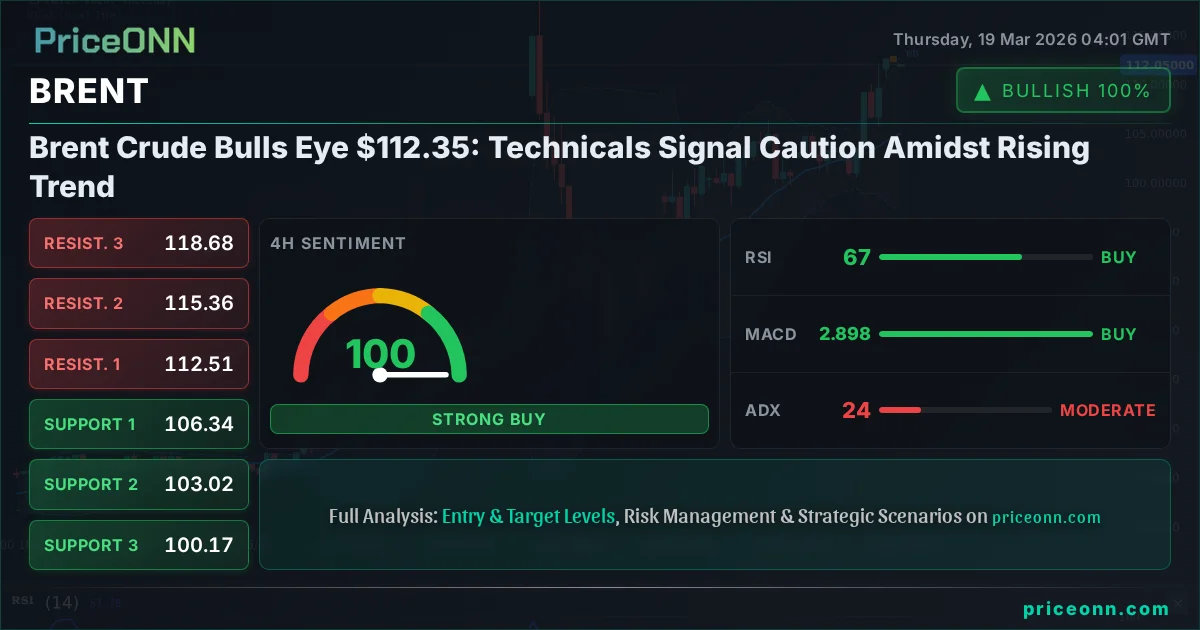
Traders should closely monitor the evolving geopolitical situation in the Middle East. Key levels to watch for Brent crude are immediate resistance around the $112.00 mark and support potentially forming near the $105.00 level if tensions de-escalate. For WTI, resistance lies around $99.00, with support near $95.00. The risk of further supply disruptions remains elevated, suggesting potential for continued price volatility. Traders should also be aware of any official statements from OPEC+ regarding production adjustments, though the immediate focus is on the physical supply threats. The Federal Reserve's forward guidance, while less influential currently, will still be a factor for broader market sentiment, particularly regarding interest rate cut expectations.
Outlook
The immediate outlook for oil prices remains heavily dependent on the trajectory of the Middle East conflict. Should the attacks on energy infrastructure continue or expand, prices could see further upward pressure, potentially testing higher resistance levels. Conversely, a swift de-escalation or diplomatic resolution could lead to a rapid price correction. Market participants will be keenly watching for any signs of sustained damage to production capacity or shipping routes. The interplay between geopolitical risk and central bank policy will continue to shape market sentiment, with energy prices now a significant factor in inflation outlooks.
Frequently Asked Questions
What is the current price of Brent crude oil?
As of the latest reports, Brent crude oil prices have surged past $112.00 per barrel, marking a significant increase of 4.27% due to escalating Middle East tensions.
How is the Middle East conflict impacting oil supply?
The conflict has directly targeted critical energy infrastructure, including the Ras Laffan LNG complex in Qatar and the Habshan gas facility in the UAE, leading to operational halts and concerns over supply chain disruptions. Maritime security risks have also increased.
What is the Federal Reserve's stance on the current energy price surge?
Fed Chair Powell has adopted an agnostic view, stating the central bank will closely monitor the impact of higher energy prices on inflation expectations but acknowledges current forecasts have diminished relevance due to geopolitical uncertainties.
Track markets in real-time
Empower your investment decisions with AI-powered analysis, technical indicators and real-time price data.
Join Our Telegram Channel
Get breaking market news, AI analysis and trading signals delivered instantly to your Telegram.
Join Channel


PriceONN