
Gold Under Pressure Below $5,150 as Oil Surge Fuels Inflation Fears


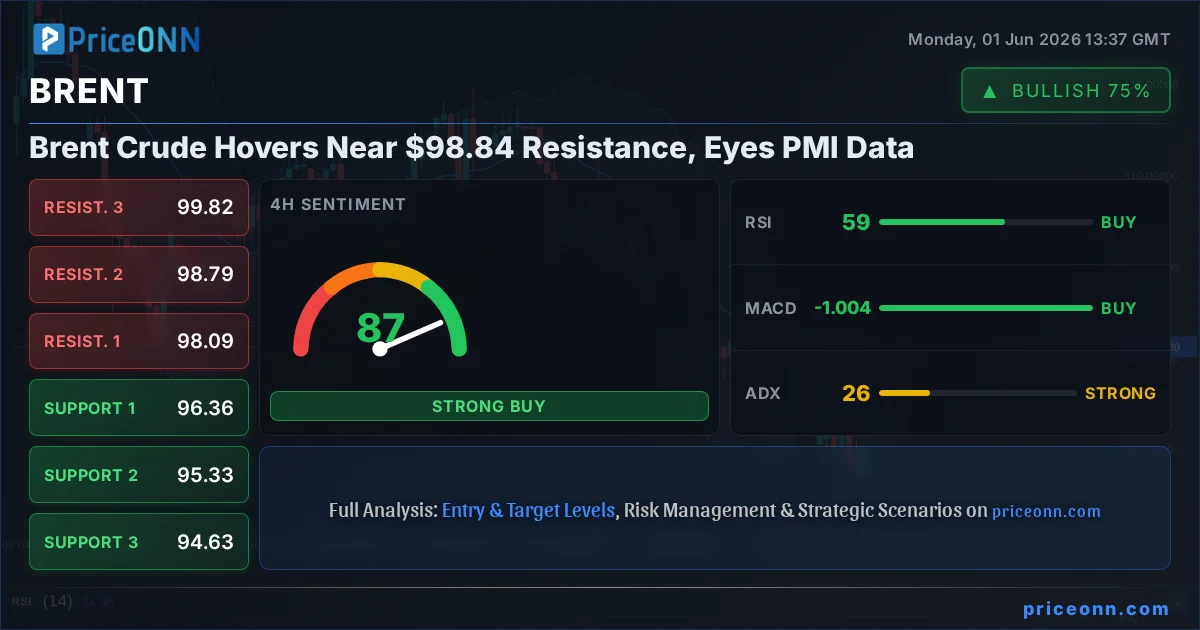
Gold prices are facing headwinds, dropping below $5,150 per ounce on Thursday, marking a second consecutive day of declines. The precious metal is under pressure as a sharp rise in oil prices intensifies inflation risks, reducing the likelihood of imminent interest rate cuts by central banks. The surge in oil prices, particularly Brent crude approaching $97 a barrel, is a key driver impacting market sentiment.
Market Context
The current market dynamic is heavily influenced by rising oil prices and their potential impact on inflation. Oil's recent rally, spurred by geopolitical tensions and concerns over supply disruptions, is overshadowing otherwise moderate inflation data. Despite US headline inflation holding steady near 2.4% year-over-year and core inflation around 2.5%, investor unease persists. The International Energy Agency's (IEA) decision to release a record amount of strategic oil reserves – 400 million barrels – initially aimed to stabilize prices, but the effect has been limited. Instead, the substantial release has raised concerns about the potential longevity of supply issues, further fueling price increases.
A stronger US dollar and rising Treasury yields are also contributing to the downward pressure on gold. As inflation expectations increase, the market is pricing in fewer Federal Reserve rate cuts for the remainder of the year. The US 2-year Treasury yield, a key indicator of Fed expectations, has climbed to around 3.70%, its highest level since September. Similarly, the European benchmark 10-year yield has risen to approximately 2.95%, a multi-year high.
Analysis & Drivers
The primary driver behind gold's recent weakness is the interplay between rising oil prices and shifting central bank expectations. The market's perception of risk is evolving, with a move towards “risk-off” sentiment. This shift favors safe-haven assets like the US dollar, while simultaneously dampening the appeal of gold. The rise in oil prices is not solely a supply-side issue; it also reflects concerns about ongoing geopolitical instability, particularly in the Middle East. The attacks on vessels in the Gulf region exacerbate these concerns, further supporting higher oil prices.
The IEA chief's statement that only the resumption of normal trade through the Strait of Hormuz will alleviate the situation highlights the severity of the geopolitical risk premium embedded in current oil prices. This situation complicates the outlook for inflation, as rising energy costs feed into broader price pressures across the economy. Central banks, including the Federal Reserve and the European Central Bank, are now facing a more challenging policy environment. The prospect of persistent inflation reduces their flexibility to implement rate cuts, which would typically support gold prices.
Trader Implications
Traders should closely monitor oil prices and their impact on inflation expectations. Key levels to watch for XAU/USD include the $5,135 level, a break below which could signal further downside towards $4,953, according to technical analysis. Conversely, a break above $5,196 could indicate a potential growth wave towards $5,390. The strength of the US dollar remains a critical factor. Traders should also pay attention to upcoming economic data releases, particularly inflation figures and central bank statements, for further clues about the direction of monetary policy.
Given the current “risk-off” environment, safe-haven currencies like the Japanese Yen and Swiss Franc may offer alternative opportunities. The commodity-linked currencies, such as the Australian Dollar, Canadian Dollar, and New Zealand Dollar, could face headwinds if risk sentiment continues to deteriorate.
Outlook
Looking ahead, gold's performance will likely remain sensitive to developments in the oil market and the evolving outlook for monetary policy. Any escalation in geopolitical tensions or further supply disruptions in the oil market could exacerbate inflationary pressures, putting additional downward pressure on gold. Conversely, a significant easing of geopolitical risks or a dovish shift in central bank policy could provide support for the precious metal. Traders should remain vigilant and adapt their strategies to the changing market dynamics.
Track markets in real-time
Empower your investment decisions with AI-powered analysis, technical indicators and real-time price data.
Join Our Telegram Channel
Get breaking market news, AI analysis and trading signals delivered instantly to your Telegram.
Join Channel PriceONN News
USD/JPY is testing the critical 160 level as stalled US-Iran negotiations and hawkish Federal Reserve rhetoric fuel inflation concerns and a potential for further rate hikes. Traders are closely watching upcoming US Non-Farm Payrolls and Eurozone CPI data for direction.
PriceONN News
The USD/JPY pair is flirting with the 160 level as stalled US-Iran negotiations and hawkish Federal Reserve rhetoric fuel inflation concerns. Traders are closely watching upcoming US Non-Farm Payrolls and Eurozone CPI data.
PriceONN News
The EUR/USD faces headwinds as core US PCE inflation unexpectedly rose to 3.3% year-over-year, reinforcing a 'higher for longer' interest rate narrative. Meanwhile, a US-Iran ceasefire extension boosted global risk appetite, potentially drawing capital away from safe-haven currencies.
PriceONN News
The US Dollar experienced a notable decline last week as markets priced in a potential diplomatic resolution to the US-Iran conflict, leading to a drop in oil prices and Treasury yields. This shift in sentiment suggests a move away from stagflation fears towards a more stable economic outlook.
PriceONN News
USD/CAD faces pressure as Canada's economy shows signs of stalling, with Q1 GDP contracting 0.1% and domestic demand weakening. This comes as trade negotiations and geopolitical shifts add layers of uncertainty.
PriceONN News
EUR/USD stalled below 1.1660 as the US Dollar defied expectations, refusing to weaken despite reports of a US-Iran ceasefire extension. Market participants remain cautious, awaiting concrete confirmation and assessing lingering inflationary pressures.
PriceONN News
The US Dollar experienced a notable dip as a renewed ceasefire between the US and Iran spurred a rally in global equities, particularly in tech stocks. However, persistent core PCE inflation at 3.3% YoY continues to fuel 'higher for longer' rate expectations.
PriceONN News
EUR/USD closed at 1.1640, showing resilience amid mixed signals. Easing US-Iran tensions initially pressured the dollar, but persistent inflation concerns and political ratification hurdles are keeping the greenback surprisingly steady.
PriceONN News
The USD/JPY pair is showing signs of upside exhaustion, struggling to overcome the 159.65 resistance level and trading below a key bullish trend line. This technical setup raises concerns about a potential pullback in the near term.
PriceONN News
EUR/USD stabilized around 1.1640 as reports of a US-Iran ceasefire extension and potential Strait of Hormuz reopening eased inflation fears. However, the US Dollar's resilience suggests lingering caution among forex traders.
PriceONN News
Key insights from the week that was. In Australia, GDP rose 0.3% (2.5%yr) in Q1, in line with our expectations. Our analysis suggests the data centre build-out was responsible for all of the growth in the quarter. This manifested as the largest jump in new business investment since the early 2010s mining investment boom – […] The post Cliff Notes: Downside Risks to Persist appeared first on ActionForex.
PriceONN News
USDJPY has returned to the area of previous interventions. The ECB is moving towards a rate hike in June. The US dollar retreated on Friday amid new record highs for stock indices and rumours of amendments to the US-Iran agreement. However, tit-for-tat exchanges between the adversaries pushed the dollar index back into the support zone […] The post Yen Braces for a New Storm appeared first on ActionForex.