
With Hawkish ECB Minutes, Focus Turns to Euro Area Inflation Prints
 PriceONN Editorial Desk
Multi-source verification
PriceONN Editorial Desk
Multi-source verification

Euro Area Inflation Under Scrutiny Amidst ECB Policy Signals
Markets are keenly awaiting the release of flash inflation data for May across the euro area's largest economies. Reports from Germany, France, Italy, and Spain, which collectively account for approximately 75% of the bloc's total inflation measure, will offer critical insights into the price environment. Current expectations point to a modest increase in the Harmonised Index of Consumer Prices (HICP) to 3.2% year-over-year in May, a slight uptick from April's 3.1%.
This anticipated rise is largely attributed to persistent energy costs, particularly at the pump, with energy expected to remain the dominant factor influencing headline inflation. While core inflation, which excludes volatile food and energy prices, is also projected to inch higher to 2.3% year-over-year, this is seen as more of a statistical effect from base comparisons than a genuine acceleration in underlying price momentum.
Nordic Economies Show Mixed Signals
Beyond the core euro area, economic indicators from Sweden and Norway present a more nuanced picture. Sweden's Q1 national accounts are due, with forecasts suggesting a 0.2% quarter-over-quarter and 2.4% year-over-year growth rate, potentially exceeding initial estimates. Although household spending showed some softness early in the year, recent upticks in consumption indicators and retail sales offer a more optimistic outlook.
Norway's labor market, meanwhile, continues to demonstrate resilience. Despite some minor indications of increasing unemployment, the seasonally adjusted rate is expected to remain stable at 2.1% in May. However, Norwegian households are contending with headwinds from slower real wage growth, moderating employment gains, and elevated mortgage rates, which are gradually expected to temper consumption. Consequently, retail sales in April are anticipated to have flatlined after a slight contraction in March.
Global Economic Developments and Market Reactions
Overnight, Japan's Tokyo core CPI, a key gauge for the Bank of Japan, registered a 1.6% year-over-year increase in May, falling short of the 1.8% consensus and April's 1.9%. Despite this, markets are bracing for potential policy tightening from the BoJ, with a 25 basis point rate hike to 1.0% largely priced in for the upcoming meeting, driven by elevated oil prices and a weaker yen.
The European Central Bank's recently released minutes revealed a decidedly hawkish tone, framing future rate hikes as a matter of 'when' rather than 'if'. The central bank appears poised for a potential June increase, with members emphasizing the need for more data. While risks to inflation have escalated and growth prospects have dimmed since March, creating a challenging policy dilemma, officials were careful to note the absence of strong 'second-round effects' in price setting.
In a slight reprieve for the ECB, May's European Commission business survey indicated a marginal decrease in firms' selling price expectations in both industry and services. Industry price expectations remain high, though below 2022 peaks, suggesting continued price pressures on core goods. The cooling in services expectations, outside of transportation, offers some comfort, implying the energy shock is not broadly seeping into service sector pricing.
Meanwhile, reports of a potential 60-day ceasefire extension between the US and Iran have influenced oil markets, pushing Brent crude down to around USD 92 per barrel, its lowest point since early April. This development, however, is viewed as fragile, with risks of a return to prices above USD 100 per barrel remaining. A significant draw of 9 million barrels from US strategic reserves also contributed to easing immediate oil price pressures.
In Norway, Q1 mainland GDP growth of 0.2% quarter-over-quarter came in below Norges Bank's expectations, potentially lowering the probability of a June rate hike. The revisions to GDP data were also negative, placing the GDP level approximately 0.45 percentage points lower than forecast. Despite this, May inflation figures and the upcoming Regional Survey are still considered decisive for the central bank's June decision.
Sweden's NIER survey saw a slight improvement in May, with consumer confidence and the manufacturing index edging up. Notably, firms' price plans also increased, aligning with rising input costs and supporting expectations of future inflation pressures. These price plans, which typically precede inflation by about three months, will be closely monitored for any shifts in firms' pricing behavior.
In the United States, April's core PCE inflation registered a lower-than-expected 0.2% month-over-month, prompting a dovish market reaction with falling yields and a weaker US dollar. Real private consumption continued to expand, as consumers absorbed higher costs through savings. Goods prices are increasingly influencing core inflation, while Q1 GDP was revised down to 1.6% annualized. Fed's Williams indicated that monetary policy is well-positioned but warned that persistent inflation could necessitate higher rates.
Market Ripple Effects
The divergence in economic outlooks and central bank postures is creating distinct market dynamics. US equities have shown remarkable outperformance against European counterparts since late March, driven by momentum in technology sectors and a strong macro backdrop. This trend is expected to persist, with Asian markets also experiencing significant rallies.
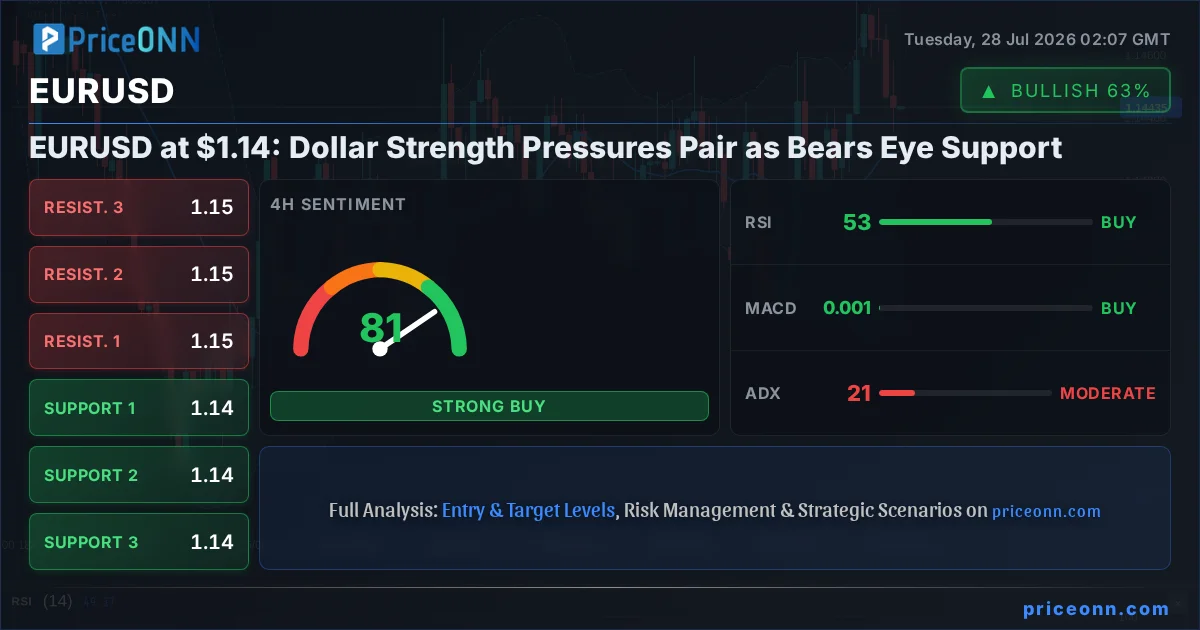
The tentative US-Iran deal has had a muted impact on rates and FX markets, despite the fall in oil prices. US Treasury yields have declined, with the 30-year yield moving firmly below the 5.00% level, and the swap curve has bull-flattened. The EUR/USD pair is trading around 1.1640. In Scandinavian currencies, while short-end rate spreads have widened for the Norwegian Krone (NOK) against the Euro, they have remained stable for the Swedish Krona (SEK). Both EUR/SEK and EUR/NOK have shown stability, with SEK outperforming NOK.
Track markets in real-time
Empower your investment decisions with AI-powered analysis, technical indicators and real-time price data.
Join Our Telegram Channel
Get breaking market news, AI analysis and trading signals delivered instantly to your Telegram.
Join Channel PriceONN News
The US stock market is not factoring in the existing risks. Investors are increasingly focusing on the cash flows of S&P 500 companies. US stock indices have closed in the red the last two weeks, something that hasn’t happened since March. The stock market has weathered both the armed conflict in the Middle East and […] The post It’s Time to Weigh Up the Risks for the S&P 500 appeared first on ActionForex.
PriceONN News
The ceasefire in the Middle East has disrupted the greenback’s plans. Strong PMI data and falling oil prices are helping the euro. The US dollar faced a downward gap at the start of the week as the Middle East de-escalation of the conflict came as an unwelcome surprise to speculators who had built up net […] The post De-Escalation Undermines the Greenback appeared first on ActionForex.
PriceONN News
(RTTNews) - Gold prices traded higher on Monday as oil prices tumbled amid eased Middle East tensions, helping ease inflation and interest-rate concerns ahead of crucial Fed, BoE and BoJ central bank meetings due this week.
PriceONN News
EUR/USD enters the final week of July at 1.1369. Friday’s modest decline in energy prices reduced expectations that the Federal Reserve could raise rates as early as its upcoming meeting, scheduled for Tuesday and Wednesday. At the same time, the main currency pair remains very close to the monthly low recorded in late June. Markets […] The post EUR/USD Ahead of a Key Week: Holding Near Lows appeared first on ActionForex.
PriceONN News
On 21 July, Stats NZ reported an acceleration in inflation: the Consumer Price Index rose 1.5% in the second quarter, while the annual inflation rate climbed to 4.1%, its highest level in more than two years and slightly above analysts’ consensus forecast of 4.0%. The increase was driven primarily by higher fuel prices amid tensions […] The post NZD/USD: Inflation Surge Meets Strong US Dollar Pressure appeared first on ActionForex.
PriceONN News
Market Overview The crypto market trended lower at the end of Monday, mirroring the US equity market, as it fell from a peak of $2.23T to $2.16T before returning to recent local lows of $2.18T by Tuesday morning. This marks yet another test of the 50-day moving average (MA) as support, which sellers have been […] The post Bitcoin Has Failed to Break Away from Its Long-Term Trend appeared first on ActionForex.
PriceONN News
Gold fell to 4,047 USD per ounce on Tuesday, erasing gains from the previous session. Pressure on the metal is mounting amid fears that the Federal Reserve may raise rates as early as this week. Markets currently estimate the probability of such a move on Wednesday at over 33% – an unusually high level of […] The post Gold Declines, Focus on Fed and Falling Oil Prices appeared first on ActionForex.
PriceONN News
The de-escalation of the conflict in the Middle East has sent Brent prices tumbling. The oil market could return to a surplus as early as the end of 2026. The US dollar and oil have lost their correlation. Brent recorded its worst daily fall in three months after reports of a ceasefire in the Middle […] The post Oil: A Surplus on the Horizon appeared first on ActionForex.
PriceONN News
I am already riding two EURUSD sell entries. Another possible sell opportunity could be forming for traders that are not in yet. EURUSD Possible Bearish Scenario Watch for price to tap 4 Hour FVG (Purple) first. Watch for a bearish shift and bearish reversal signs in the FVG zone. Wait for all above to play […] The post Riding EURUSD Sellside appeared first on ActionForex.
PriceONN News
The Trump administration is weighing whether to extend access to some Chinese rare earth materials beyond the January 1, 2027 cutoff after U.S. producers acknowledged they cannot build sufficient domestic processing and magnet capacity before the deadline, Reuters reported on Monday. Industry executives and Pentagon suppliers told Reuters that U.S. processing and magnet manufacturing capacity remains insufficient to meet despite billions of dollars in federal support for new mines, separation...
PriceONN News
The dollar heads into a pivotal week trading near 101.80, just off a 15-month high, with the Fed’s July 29 meeting standing as the clear focal point. Markets currently price roughly a 65% chance of a hold, though renewed Middle East escalation has kept a hike back on the table for later this year. Energy […] The post US Dollar Index: a Defining Week for the King of the Markets appeared first on ActionForex.
PriceONN News
European Central Bank Governing Council member Peter Kazimir from Slovak reinforced the hawkish bias on Monday, arguing that policymakers will likely need to raise interest rates at least once more and warning that a worsening energy shock could ultimately require even more tightening than markets currently anticipate. His remarks come just days after the ECB […] The post ECB’s Kazimir Sees At Least One More Rate Hike, Warns Oil Shock Could Require More appeared first on ActionForex.