How War in Iran Could Cripple the Global Digital Economy
Semiconductor Supply Chains Face Existential Threat
The global economy's reliance on semiconductors has quietly become a critical vulnerability. These essential components, powering everything from smartphones to sophisticated defense systems, depend on a complex web of resources and logistics. A major disruption to this intricate network could send shockwaves across industries worldwide. The ongoing conflict involving Iran presents just such a threat, casting a long shadow over the stability of semiconductor production and distribution.
While recent statements suggest a swift resolution to the conflict, the potential for a protracted crisis looms large. Such a scenario would not only result in devastating human and environmental consequences but would also severely impact global supply chains, with the semiconductor industry at the epicenter.
Semiconductors are the unsung heroes of the digital age. As one tech blog put it, these chips are "embedded in everything from satellites and smartphones to medical devices and electric vehicles." Any significant impediment to their availability or affordability could trigger widespread instability for both producers and consumers globally.
Geopolitical Flashpoints Expose Critical Vulnerabilities
Although Taiwan dominates advanced computer chip production, accounting for over 90 percent of the global output, the Middle East remains an indispensable link in the semiconductor supply chain. Qatar, for instance, supplies over a third of the world's helium, a vital element in semiconductor manufacturing for cooling systems and circuitry printing. The absence of readily available substitutes makes the industry exceptionally vulnerable to disruptions in helium supply, whether stemming from production or transportation bottlenecks.
The semiconductor industry was already grappling with existing challenges, notably the concentration of production in Taiwan, a region facing its own energy security concerns. Taiwan's heavy reliance on imports and the ever-present geopolitical tensions with China have long been sources of instability. The current disruption of global oil supplies, exacerbated by the Middle East conflict, could further cripple Taiwan's energy resources if prolonged.
The closure of the Strait of Hormuz due to the U.S.-Israel conflict in Iran has triggered what is arguably the largest oil supply disruption in history. Data indicates a nine-day interruption affecting 20 percent of global oil shipments. This surpasses the previous record set during the Suez crisis of 1956 by a factor of two. Consequently, oil prices have surged, exceeding $100 per barrel and continuing to climb. This poses a significant challenge for import-dependent nations like Taiwan, with potentially dire consequences for the global economy.
South Korean semiconductor manufacturers face even greater immediate challenges. These companies are the primary producers of memory chips, a market already strained by the explosive growth of artificial intelligence. Should memory chip prices escalate significantly, it could trigger a slowdown in the AI sector's rapid expansion.
Escalating Threats Target Tech Infrastructure
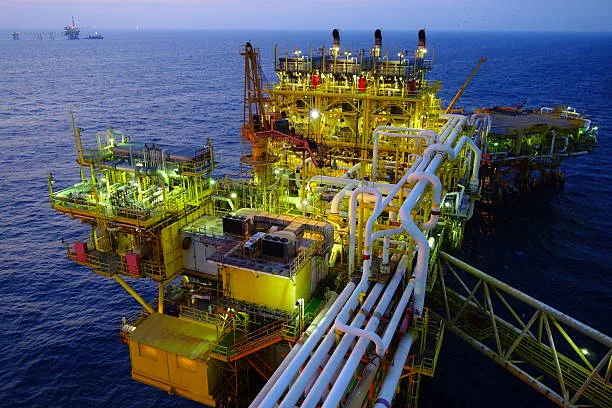
The conflict has taken a disturbing turn with direct threats to critical technology infrastructure. A news agency affiliated with Iran's IRGC recently published a list of "Iran's new targets," which included regional offices, cloud infrastructure, and data centers associated with major tech companies like Google, Amazon, Microsoft, Nvidia, IBM, Oracle, and Palantir.
These threats have already materialized into tangible attacks. Iranian drone strikes have targeted three AWS data centers in the UAE and Bahrain, marking the first military strikes on U.S. hyperscalers. These attacks resulted in fires, power outages, and subsequent disruptions to banking and payment services throughout the region. In response, AWS has advised its customers to relocate workloads out of the Middle East entirely, underscoring the severity of the situation.
Portfolio Impact: Navigating the Tech Turmoil
The escalating conflict in the Middle East presents a complex scenario for investors. Disruptions to semiconductor supply chains and rising energy costs are likely to create volatility across various asset classes. Here's what smart money is watching:
- Technology Stocks: Companies heavily reliant on semiconductors, particularly those with significant operations in affected regions, face increased risk. Monitor the performance of key players like TSMC and Samsung.
- Energy Markets: Crude oil prices are highly sensitive to geopolitical tensions. Traders should closely observe Brent Crude and WTI Crude futures for potential spikes.
- Currency Markets: The USD/JPY pair may experience increased volatility as investors seek safe-haven assets.
- Inflation: Supply chain disruptions and rising energy costs could exacerbate inflationary pressures, prompting central banks to reassess monetary policy.
Investors should consider diversifying their portfolios to mitigate risk and closely monitor geopolitical developments for further signs of escalation.
Track markets in real-time
Empower your investment decisions with AI-powered analysis, technical indicators and real-time price data.
Join Our Telegram Channel
Get breaking market news, AI analysis and trading signals delivered instantly to your Telegram.
Join Channel