
Internation Energy Agency Said Oil from Emergency Reserves Will Soon Start Flowing
 PriceONN Editorial Desk
Multi-source verification
PriceONN Editorial Desk
Multi-source verification
Global Markets on Edge Amid Soaring Energy Costs
Financial markets faced a turbulent Friday and continued this morning to dissect the economic ramifications of persistently high oil prices, with Brent crude hovering near the $100 per barrel mark. The broader impact on economies and the potential reaction function of central banks are under intense scrutiny, particularly as visibility on the resolution of geopolitical conflicts, specifically in the Middle East, remains critically low.
The pressure from potentially sustained inflation, coupled with growing concerns about inflation expectations becoming unanchored, is increasingly filtering into the longer end of the yield curve. In the United States, the yield curve experienced a slight steepening on Friday. While yields at the short-end saw a temporary easing, with the 2-year Treasury note shedding 2.3 basis points, the long-end extended its upward trend. The 30-year Treasury yield climbed by 2.2 basis points, pushing the US 10-year yield towards its year-to-date peak levels near 4.3%.
Across the Atlantic, European yields maintained their upward trajectory. German yields rose between 1.5 and 2.7 basis points across maturities from 5-year to 30-year. Notably, the 10-year Eurozone swap yield breached the 3% barrier for the first time since late November 2023. Similarly, the UK yield curve reflected growing inflation anxieties affecting longer maturities, with the 30-year gilt yield approaching the 5.5% level.
Equities, meanwhile, continued to falter under the weight of these economic pressures. The S&P 500 index registered a decline of 0.61%, while the Eurostoxx 50 index fell by 0.56%. The foreign exchange market saw the U.S. dollar emerge as the default beneficiary, with the United States perceived as being best positioned to navigate energy-related uncertainties. The DXY index, tracking the dollar's strength against a basket of major currencies, challenged its range top, a level that has guided trading since May of the previous year, closing near 100.36. The EUR/USD pair is now testing crucial support near the early August low of 1.1392, having closed Friday at 1.1417.
As the conflict involving the US, Israel, and Iran enters its third week, the uncertainty surrounding military outcomes, geopolitical shifts, and the critical passage of oil through the Strait of Hormuz remains exceptionally high. President Trump has publicly urged allies, including NATO members and China, to bolster the defense of this vital waterway, yet concrete steps or clear visibility on future actions are absent.
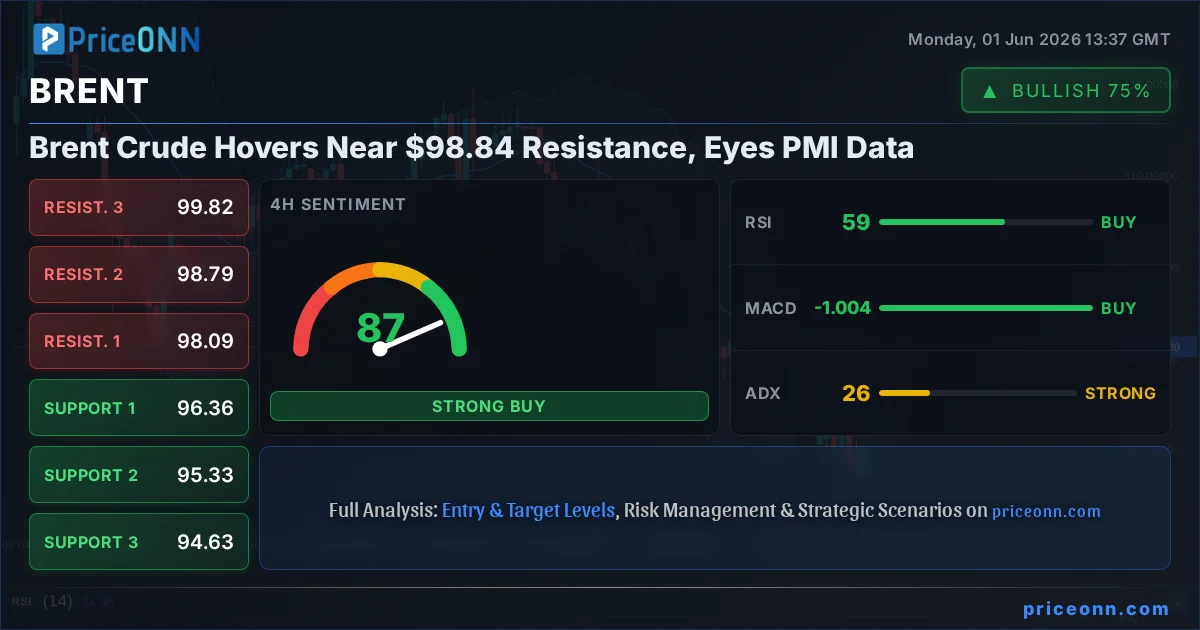
Brent crude oil continues to trade firmly above the $100 per barrel threshold, currently priced around $104. Asian equity indices presented a mixed performance, largely trading lower. U.S. futures indicated tentative gains in early trading. The dollar exhibited marginal softness but remained within striking distance of key resistance levels across major currency pairs.
Today's economic calendar offers limited market-moving data, with U.S. Empire manufacturing and production figures expected to be non-decisive. The latter half of the week will be dominated by a series of central bank policy meetings.
Central Bank Crossroads Amid Inflationary Headwinds
The Reserve Bank of Australia (RBA) is anticipated to raise its policy rate for a second consecutive meeting tomorrow, with markets pricing in a greater than 60% probability of a move to 4.10%. This potential hike, already debated prior to the Middle East conflict, now adds to existing inflationary risks.
Later in the week, the U.S. Federal Reserve and the Bank of Canada are scheduled to announce their policy decisions on Wednesday. On Thursday, the Bank of England, European Central Bank, Riksbank, Swiss National Bank, and the Czech National Bank will convene. The Bank of Japan will conclude the central bank parade on Friday.
Current market expectations suggest that most of these central banks will maintain their current policy stances, opting to observe the impact of recent geopolitical developments. However, in this rapidly evolving environment, policymakers face a delicate balancing act. With inflationary pressures mounting, particularly at the longer end of the yield curve, central banks will need to assuage market fears regarding their commitment to keeping inflation expectations anchored, especially if elevated energy prices persist and trigger secondary effects.
Market Ripple Effects
The immediate announcement from the International Energy Agency (IEA) regarding the release of oil from emergency reserves signals a proactive attempt to inject supply and temper soaring crude prices. Member countries committed last week to making 400 million barrels of oil available. Implementation plans indicate that supplies will be dispatched to Asia and Oceania promptly, with releases in the Americas and Europe commencing by the end of March. This coordinated release aims to alleviate market tightness driven by geopolitical tensions and robust demand.
The implications for global markets are multifaceted. For crude oil traders, this move could provide a temporary reprieve, potentially pushing prices back from the $100 psychological level. However, the duration and effectiveness of this reserve release in counteracting sustained supply disruptions remain key questions. Investors will be closely monitoring Brent and WTI crude price action for signs of a sustained downtrend or a reassertion of bullish momentum.
The U.S. dollar's strength, currently buoyed by its safe-haven appeal and the U.S.'s perceived resilience to energy shocks, may face some headwinds if oil prices stabilize or decline. This could lead to a softening of the DXY index and offer support to currency pairs like EUR/USD and USD/JPY. Furthermore, the announcement could influence inflation expectations, potentially easing pressure on bond yields, especially at the longer end of the curve, which has been a significant concern for central banks.
The impact on equity markets could be a much-needed boost. A cooling in energy prices would reduce cost pressures for businesses and potentially improve consumer sentiment, offering a tailwind for sectors sensitive to energy costs, such as transportation and manufacturing. However, the overarching geopolitical uncertainty and the broader economic outlook will continue to play a dominant role in equity performance.
Track markets in real-time
Empower your investment decisions with AI-powered analysis, technical indicators and real-time price data.
Join Our Telegram Channel
Get breaking market news, AI analysis and trading signals delivered instantly to your Telegram.
Join Channel PriceONN News
USDJPY has returned to the area of previous interventions. The ECB is moving towards a rate hike in June. The US dollar retreated on Friday amid new record highs for stock indices and rumours of amendments to the US-Iran agreement. However, tit-for-tat exchanges between the adversaries pushed the dollar index back into the support zone […] The post Yen Braces for a New Storm appeared first on ActionForex.
PriceONN News
Markets are pricing in a potential de-escalation in the US-Iran conflict, leading to a significant drop in crude oil prices and a weakening US Dollar as diplomatic efforts appear to be gaining traction.
PriceONN News
The US Dollar experienced a notable decline last week as markets priced in a potential diplomatic resolution to the US-Iran conflict, leading to a drop in oil prices and Treasury yields. This shift in sentiment suggests a move away from stagflation fears towards a more stable economic outlook.
PriceONN News
USD/CAD is showing signs of potential upward movement as Canada's economy grapples with a significant slowdown, marked by weak domestic demand and stalled investment, while trade negotiations loom large.
PriceONN News
USD/JPY is testing the critical 160 level as stalled US-Iran negotiations and hawkish Federal Reserve rhetoric fuel inflation concerns and a potential for further rate hikes. Traders are closely watching upcoming US Non-Farm Payrolls and Eurozone CPI data for direction.
PriceONN News
The USD/JPY pair is flirting with the 160 level as stalled US-Iran negotiations and hawkish Federal Reserve rhetoric fuel inflation concerns. Traders are closely watching upcoming US Non-Farm Payrolls and Eurozone CPI data.
PriceONN News
EUR/USD stalled below 1.1660 as the US Dollar defied expectations, refusing to weaken despite reports of a US-Iran ceasefire extension. Market participants remain cautious, awaiting concrete confirmation and assessing lingering inflationary pressures.
PriceONN News
The US Dollar experienced a notable dip as a renewed ceasefire between the US and Iran spurred a rally in global equities, particularly in tech stocks. However, persistent core PCE inflation at 3.3% YoY continues to fuel 'higher for longer' rate expectations.
PriceONN News
The Japanese Yen is showing signs of renewed pressure, with USD/JPY approaching the psychologically significant 160 level. This comes as traders brace for key US jobs data and Eurozone inflation figures, all while lingering US-Iran tensions add a layer of uncertainty to market sentiment.
PriceONN News
EUR/USD closed at 1.1640, showing resilience amid mixed signals. Easing US-Iran tensions initially pressured the dollar, but persistent inflation concerns and political ratification hurdles are keeping the greenback surprisingly steady.
PriceONN News
The EUR/USD faces headwinds as core US PCE inflation unexpectedly rose to 3.3% year-over-year, reinforcing a 'higher for longer' interest rate narrative. Meanwhile, a US-Iran ceasefire extension boosted global risk appetite, potentially drawing capital away from safe-haven currencies.
PriceONN News
EUR/USD stabilized around 1.1640 as reports of a US-Iran ceasefire extension and potential Strait of Hormuz reopening eased inflation fears. However, the US Dollar's resilience suggests lingering caution among forex traders.