
Japan Taps Reserves as Hormuz Blockade Squeezes Global Oil Supply

Japan has initiated the release of its strategic petroleum reserves, a decisive step to mitigate the impact of the protracted closure of the Strait of Hormuz. This action is aimed at stabilizing supply amid escalating geopolitical tensions that have effectively halted commercial traffic through the vital waterway.
Market Context
The ongoing transit freeze in the Strait of Hormuz has led to a severe contraction in global oil supply, with approximately 7 million barrels per day of crude production taken offline. This represents a significant 7% of total global liquids demand. Japan, heavily reliant on Middle Eastern oil imports, is releasing 15 days’ worth of national oil consumption from its reserves, with an additional 30 days’ supply planned for the end of the month. This move underscores the vulnerability of energy supply chains to regional conflicts. Domestic reports indicate that Japanese refiners, who depend on the Middle East for 95% of their feedstock, had urged the government to access stockpiles. The last time Japan drew on its emergency reserves was in 2022.
Analysis & Drivers
The root cause of the current supply crunch is the escalating conflict in the Middle East, which has led to the de facto closure of the Strait of Hormuz. This chokepoint normally facilitates the transit of roughly 20% of the world’s oil supply. The immobilization of approximately 15 million barrels per day of crude exports from Gulf Cooperation Council (GCC) nations has created immense market pressure. This disruption has already led to oil prices testing the $100 per barrel mark. U.S. shale producers could see a significant boost, with projections suggesting an additional $63.4 billion in free cash flow if prices average $100 for the year. However, concerns remain about the long-term stability and the potential for further supply curtailments, with some analysts warning of a possible regional output drop to 6 million bpd in a pessimistic scenario. International diplomacy is also in play, with the U.S. reportedly urging major oil-importing nations, including China, to assist in securing the passage. China, which receives over one-third of its oil via Hormuz, has publicly called for de-escalation rather than directly addressing the request for assistance.
Trader Implications
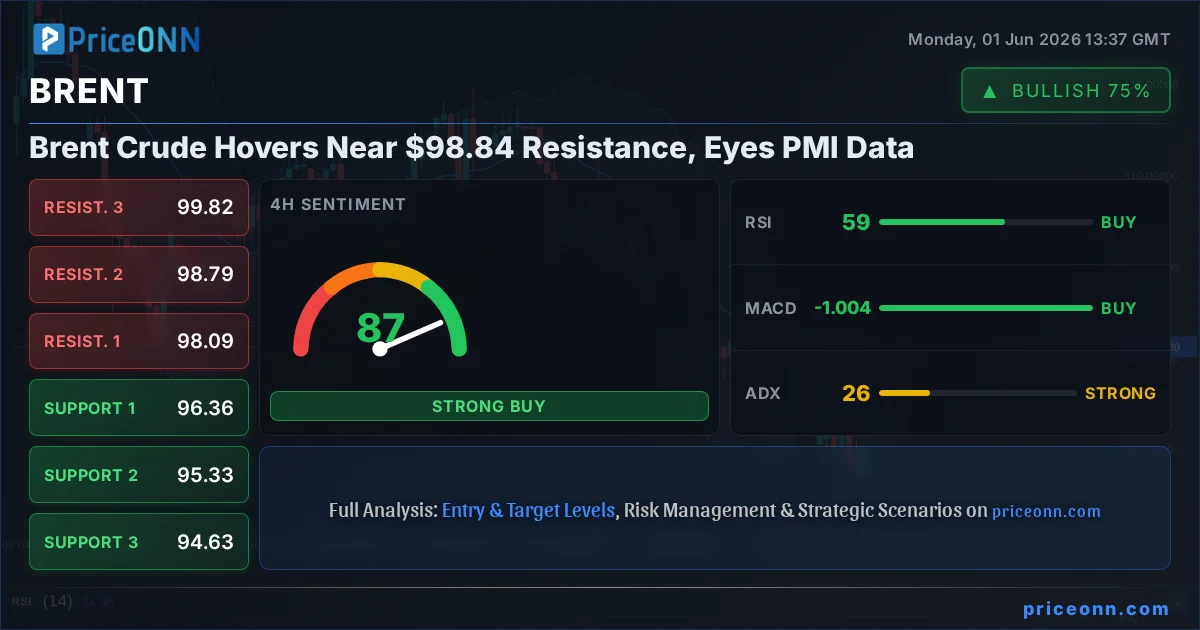
Traders should monitor key price levels for crude oil benchmarks like WTI and Brent, with $100 per barrel acting as a significant psychological and technical threshold. The ongoing naval coalition efforts to escort commercial shipping through Hormuz will be critical. Any signs of success could lead to price retracement, while further disruptions or escalations could push prices higher. The market will also be watching inventory data, particularly from the U.S., and any indications of increased production from shale operators. The actions of major importers like China and Japan in managing their strategic reserves and diplomatic efforts will also influence sentiment. Key support levels to watch for Brent crude are currently around $80-$85, while resistance could emerge near the recent highs around $100-$105.
Outlook
The immediate outlook for oil prices remains volatile, heavily influenced by the geopolitical situation in the Middle East and the effectiveness of international efforts to reopen the Strait of Hormuz. While Japan’s reserve release offers a temporary buffer, the fundamental supply deficit persists. Traders should brace for continued price swings as market participants react to news flow concerning the conflict, diplomatic interventions, and potential production changes. The longer the Hormuz blockade persists, the greater the likelihood of sustained elevated prices and potential economic repercussions globally.
Frequently Asked Questions
How much oil is currently being kept off the market due to the Strait of Hormuz closure?
Approximately 7 million barrels per day of crude oil supply has been removed from global markets due to the ongoing disruption at the Strait of Hormuz, representing about 7% of daily global demand.
What is the potential financial impact on U.S. shale producers if oil prices average $100 per barrel?
U.S. shale oil producers could generate an estimated additional $63.4 billion in free cash flow if the benchmark U.S. crude price averages $100 per barrel for the year.
What is Japan doing to address the oil supply shortage?
Japan has begun releasing oil from its strategic petroleum reserves, initially providing 15 days’ worth of national consumption, with plans for another 30 days’ supply later this month, to counter potential shortages caused by the Hormuz blockade.
Track markets in real-time
Empower your investment decisions with AI-powered analysis, technical indicators and real-time price data.
Join Our Telegram Channel
Get breaking market news, AI analysis and trading signals delivered instantly to your Telegram.
Join Channel PriceONN News
The Iran war suddenly turned what had started as a year of oversupply in global oil and LNG markets into the worst oil and gas supply disruption in history. Three months after the U.S.-Israeli strikes on Iran began on February 28, the world has already lost 1 billion barrels of crude oil supply, oil and gas prices have found a new, much higher floor, and whipsaw with violent volatility nearly every day, trade routes have shifted, and tanker rates have spiked. Actual supply shortages are...
PriceONN News
Crude oil prices experienced a significant drop, with WTI futures falling over 1.8% to $87.25, as optimism grew for a U.S.-Iran deal potentially reopening the Strait of Hormuz.
PriceONN News
Crude oil prices experienced a significant downturn as market sentiment shifted towards optimism about a potential US-Iran Memorandum of Understanding that could reopen the Strait of Hormuz. WTI futures fell nearly 2% on the news.
PriceONN News
(RTTNews) - Crude oil prices have tumbled on Friday as expectations of the U.S. and Iran signing a Memorandum of Understanding run high. The MoU would allow for immediate reopening of the Strait of Hormuz and pave the way for the resumption of oil and energy trade.
PriceONN News
Crude oil futures experienced a dramatic intraday reversal on Thursday, soaring overnight on geopolitical fears only to pull back significantly as reports of a potential diplomatic understanding between the U.S. and Iran emerged.
PriceONN News
Crude oil futures experienced a dramatic intraday reversal, soaring to $92.52 before pulling back significantly on Thursday. The volatile session was driven by shifting geopolitical narratives and U.S. inventory data.
PriceONN News
Crude oil futures experienced a dramatic reversal, soaring overnight to $92.52 before plummeting nearly 6% to $89 a barrel. This volatility was driven by escalating US-Iran tensions followed by reports of a potential preliminary diplomatic understanding.
PriceONN News
(RTTNews) - Crude oil futures skyrocketed overnight but have shown a significant pullback over the course of the trading day on Thursday.
PriceONN News
The market’s faith in an imminent US-Iran peace breakthrough has clearly weakened today - but it has not disappeared yet. Oil prices jumped again in after fresh military escalation around the Strait of Hormuz reignited fears of prolonged supply disruptions across the Gulf. Brent crude pushed back toward the mid-$90s after new U.S. strikes inside […] The post Brent Oil Holding Below $100 Suggests Markets Still See Room for a US-Iran Deal appeared first on ActionForex.
PriceONN News
(RTTNews) - Extending the losses from yesterday's session, crude oil prices have gone into freefall on Wednesday as investor expectations on a potential U.S.-Iran agreement continue to rise despite the U.S. refusing to ease its demands.
PriceONN News
(RTTNews) - Crude oil prices have tumbled on Tuesday as optimism about a U.S.-Iran peace deal that could lead to reopening of the Strait of Hormuz soon grows despite reports of fresh U.S. strikes on Iran yesterday.
PriceONN News
Crude oil benchmarks experienced a sharp decline of over 5% this week, driven by renewed optimism surrounding U.S.-Iran peace talks and a potential easing of Middle East tensions. Both Brent and WTI futures saw significant drops as market sentiment shifted towards de-escalation.